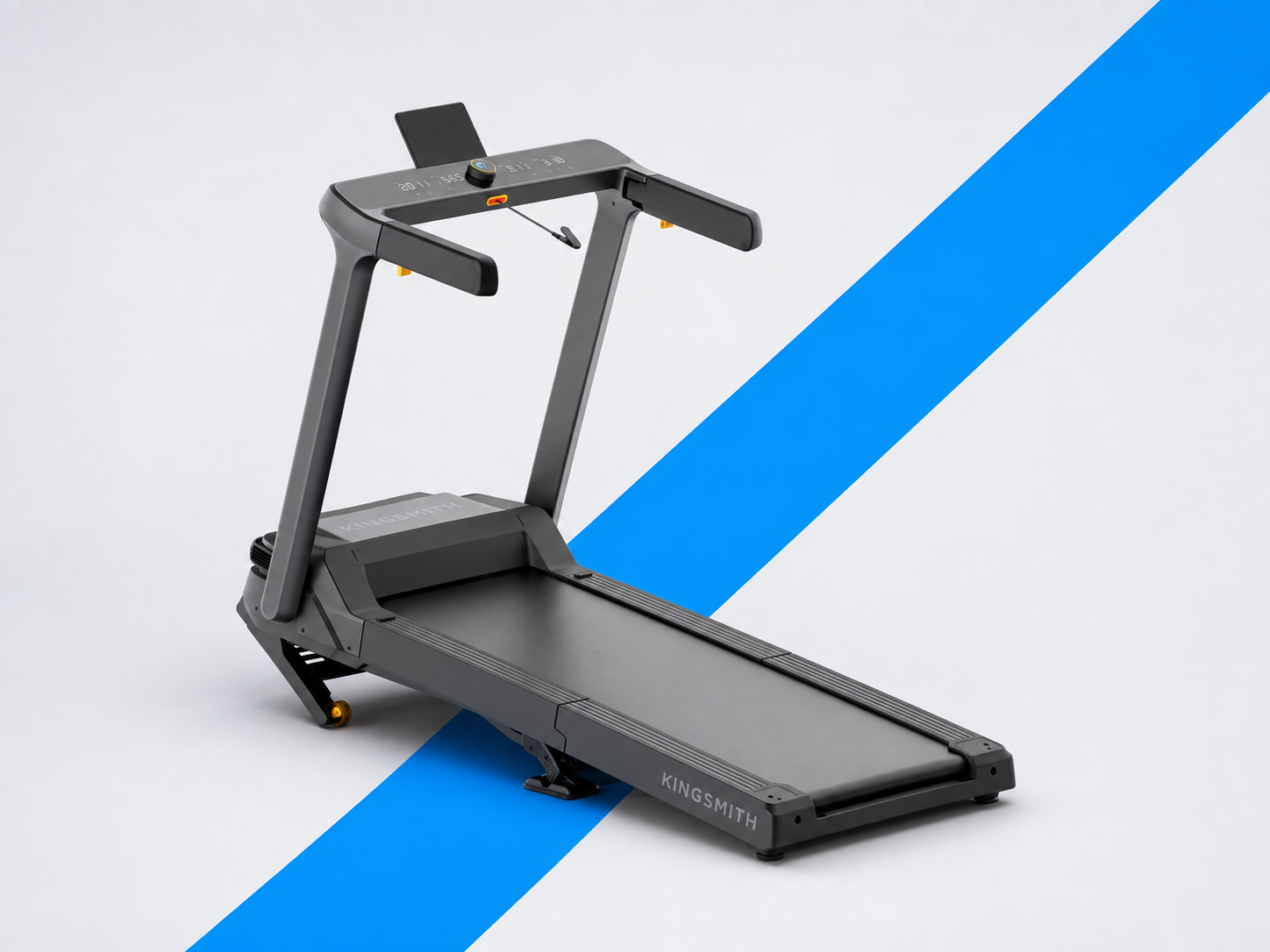

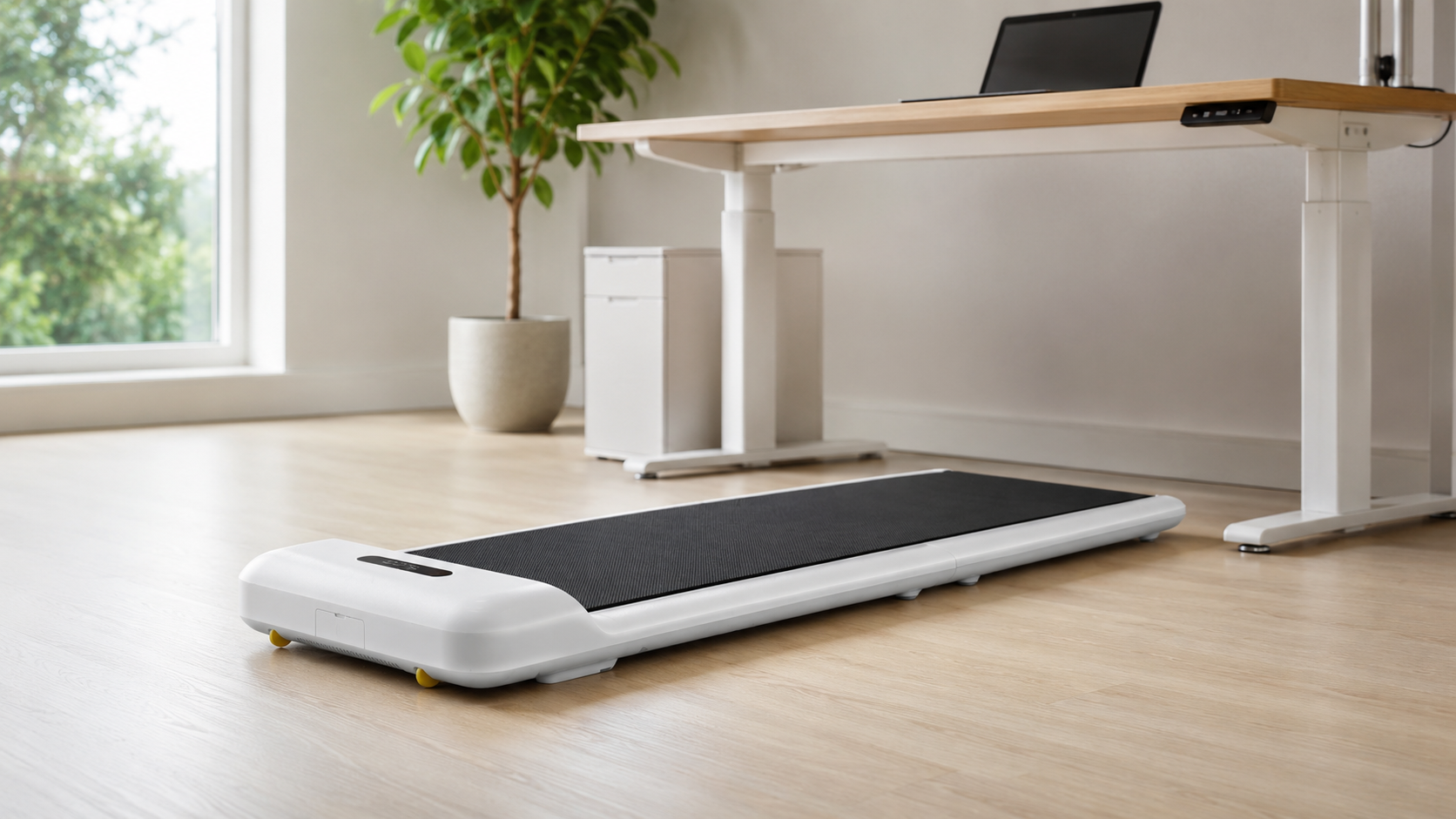
These seven workouts are built to work two ways: on a walking pad at home, or outdoors on a pavement, in a park or up a hill. The routines, paces and cadences are the same in both, the one real difference being that a pad lets you dial in an exact speed while outdoors you go by feel, helped by anything that tracks your pace. Each workout flags whatever changes between the two. They run from a slow under-desk or around-the-block walk through to brisk intervals and, for those ready for it, a light jog. Speeds are given in mph as a guide, every session fits a 20 to 60 minute slot, and the only kit you need is the pad itself or a supportive pair of shoes. Cadence figures (steps per minute) are a handy way to judge effort either way.
Why Walking Pace Still Counts
The value of a walking pad is not in any single hard session, it is in the volume of easy movement it adds across a day. Most people sit far more than they realise, and a pad slots walking into hours that were previously sedentary. That extra daily movement, what physiologists call NEAT (non-exercise activity thermogenesis), is one of the biggest swing factors in losing weight on a treadmill or pad, and it is far easier to sustain than a punishing gym routine.
A note on machines. Most UK walking pads top out around 3.7 to 4 mph, which is brisk walking rather than running, and many are completely flat. If you want incline or hill work, that lives on a different machine and in our incline treadmill workout guide. For the famous 12 per cent hill session, see the full 12-3-30 guide. To pick a pad with the right speed ceiling, our best walking pads UK guide has current picks.
The 7 Walking Pad Workouts at a Glance
| Workout | Duration | Level | Peak Speed | Calories* |
|---|---|---|---|---|
| Daily Step Builder | 40 min | Beginner | 3.0 mph | 150-220 |
| Beginner 20-Minute Walk | 20 min | Beginner | 3.0 mph | 80-120 |
| Japanese Interval Walking | 30 min | Intermediate | 3.7 mph | 130-190 |
| Brisk Power Walk | 30 min | Intermediate | 4.0 mph | 160-230 |
| Speed or Hill Intervals | 25 min | Intermediate | 4.0 mph | 130-200 |
| Everyday Habit Walk | 30-90 min | Beginner | 2.2 mph | 90-220 |
| 6 mph Jog Session | 25 min | Advanced | 6.0 mph | 250-350 |
*Calorie estimates based on a 70 kg user. Your actual burn varies with body weight, fitness, and effort.
1. The Daily Step Builder
The daily step target that now feels like settled health advice actually began as an advertising slogan. In 1965, riding the fitness wave that followed the 1964 Tokyo Olympics, the Japanese firm Yamasa launched a pedometer called the manpo-kei, which translates as the 10,000 step meter. The round number was picked because it was catchy and easy to remember, not because a study had landed on it, and modern research finds clear health benefits well below that figure. None of that changes the underlying point: a steady daily walk is the habit the rest of your fitness is built on, and this routine exists to bank those steps without you having to think about it.
Steady Walk for Hitting Your Step Target
Beginner| Time | Speed | Cadence | Effort |
|---|---|---|---|
| 0-5 min | 2.0 mph | 90 spm | Warm-up walk |
| 5-35 min | 2.8 mph | 100 spm | Steady, conversational pace |
| 35-40 min | 2.0 mph | 90 spm | Cool-down walk |
Pad or outdoors: On a pad, run it under your desk while you work. Outside, walk it as a loop from your door. The 2.8 mph target is the same either way.
2. Beginner 20-Minute Walk
There is nothing branded or clever about this one, which is rather the point. Walking is the most accessible exercise there is, and for most people the obstacle is starting rather than the effort itself. Twenty minutes is the sweet spot for a first session: long enough to feel worthwhile, short enough that you never have to talk yourself into it. Treat it as the on-ramp to everything else on this page.
Your First Structured Walking Pad Session
Beginner| Time | Speed | Cadence | Effort |
|---|---|---|---|
| 0-3 min | 2.0 mph | 90 spm | Warm-up |
| 3-8 min | 2.5 mph | 95 spm | Easy |
| 8-13 min | 3.0 mph | 100 spm | Steady |
| 13-17 min | 2.8 mph | 100 spm | Steady |
| 17-20 min | 2.0 mph | 90 spm | Cool-down |
Pad or outdoors: Identical on a belt or a pavement. If you are outdoors, pick a flat, familiar route so you can settle into the pace rather than navigate.
3. Japanese Interval Walking
This is the one workout here with a genuine research pedigree. Interval walking training was developed by Professor Hiroshi Nose and Associate Professor Shizue Masuki at Shinshu University in Matsumoto, Japan, and first published in 2007. The origin is telling: an earlier version of their study asked people to walk hard for 30 minutes straight and almost nobody could stick with it, so the team broke the effort into intervals. Alternating three minutes brisk with three minutes easy proved both sustainable and more effective, improving fitness, leg strength and blood pressure more than walking at one steady pace. It went viral as “Japanese walking” in 2025, but the protocol below is the same one from the lab.
Three Minutes Easy, Three Minutes Brisk, Five Times
Intermediate| Time | Speed | Cadence | Effort |
|---|---|---|---|
| 0-3 min | 2.5 mph | 95 spm | Easy |
| 3-6 min | 3.7 mph | 115 spm | Brisk |
| 6-9 min | 2.5 mph | 95 spm | Easy |
| 9-12 min | 3.7 mph | 115 spm | Brisk |
| 12-15 min | 2.5 mph | 95 spm | Easy |
| 15-18 min | 3.7 mph | 115 spm | Brisk |
| 18-21 min | 2.5 mph | 95 spm | Easy |
| 21-24 min | 3.7 mph | 115 spm | Brisk |
| 24-27 min | 2.5 mph | 95 spm | Easy |
| 27-30 min | 3.0 mph | 100 spm | Cool-down brisk |
Pad or outdoors: On a pad, set the belt to your top walking speed for the brisk blocks. Outdoors, take the brisk blocks up a gentle slope and the effort climbs again for free.
4. Brisk Power Walk
Power walking had its heyday in the 1980s fitness boom, all visors and pumping arms, and it has been quietly mocked ever since. The idea behind it has aged far better than the image. Walking briskly enough to breathe harder while still being able to talk holds you in what coaches now call Zone 2, the heart rate band where the body leans on fat as its main fuel. It is unfashionable and genuinely effective, which is why endurance athletes spend the bulk of their training at roughly this effort.
Sustained Brisk Walking for Cardio
Intermediate| Time | Speed | Cadence | Effort |
|---|---|---|---|
| 0-5 min | 3.0 mph | 100 spm | Warm-up |
| 5-25 min | 3.8 mph | 115 spm | Power walk, arms swinging |
| 25-30 min | 3.0 mph | 100 spm | Cool-down |
Pad or outdoors: On a pad, hold 3.8 mph on the console. Outdoors, choose a long uninterrupted loop so you are not stopping at junctions, and let your arm swing carry the pace.
5. Speed or Hill Intervals
Interval training, hard efforts broken up by recovery, is one of the oldest ideas in athletics, used by middle distance runners since the mid 20th century to fit more quality work into less time. The wrinkle on a flat walking pad is that you cannot raise the effort with a hill the way you would on a full treadmill. So this version does it with speed instead: short pushes at your top walking pace, each followed by an easy recovery, lift the average intensity of the session well above a steady stroll without the belt ever leaving walking range.
Speed Intervals Indoors, Hill Repeats Outdoors
Intermediate| Time | Speed | Cadence | Effort |
|---|---|---|---|
| 0-4 min | 2.5 mph | 95 spm | Warm-up |
| 4-5 min | 4.0 mph | 120 spm | HARD interval |
| 5-7 min | 2.8 mph | 100 spm | Recovery |
| 7-8 min | 4.0 mph | 120 spm | HARD interval |
| 8-10 min | 2.8 mph | 100 spm | Recovery |
| 10-11 min | 4.0 mph | 120 spm | HARD interval |
| 11-13 min | 2.8 mph | 100 spm | Recovery |
| 13-14 min | 4.0 mph | 120 spm | HARD interval |
| 14-16 min | 2.8 mph | 100 spm | Recovery |
| 16-17 min | 4.0 mph | 120 spm | HARD interval |
| 17-20 min | 3.0 mph | 105 spm | Steady |
| 20-25 min | 2.5 mph | 95 spm | Cool-down |
Pad or outdoors: Indoors on a flat pad, use the speed pushes in the table. Outdoors you have a better option: swap each speed push for a two to three minute climb up a hill and recover on the way down, which loads the legs in a way speed alone cannot.
6. Everyday Habit Walk
The thinking here traces back to Dr James Levine, the Mayo Clinic researcher who coined the term NEAT and is widely credited with the original treadmill desk. His work showed that the movement we do outside formal exercise, the standing, fidgeting and strolling about, accounts for a surprisingly large slice of daily energy use, and that this background activity often separates leaner and heavier people more than their time in the gym does. An under-desk walk is simply NEAT made deliberate, turning otherwise sedentary working hours into steps.
All-Day Movement, Desk or Pavement
Beginner| Time | Speed | Cadence | Effort |
|---|---|---|---|
| Calls, reading | 1.8-2.2 mph | 85 spm | Light, hands free |
| Typing, admin | 1.5 mph | 75 spm | Very light |
| Fine mouse work | Step off | – | Pause the belt |
Pad or outdoors: On a pad this is your under-desk walk. Without one, the same idea is the walking commute: take calls on the move, get off the bus a stop early, loop the block after a meal.
7. The 6 mph Jog Session
The structure of this session, jogging broken up by walking breaks, is the basis of the run-walk-run method popularised by the former Olympic runner Jeff Galloway in the 1970s. His insight was that planned walking breaks let beginners cover more distance with less fatigue and lower injury risk than trying to run non-stop from day one. It remains the gentlest honest route from a walking habit to genuine running, provided your pad is actually built for the speed.
Run Intervals for Running-Capable Pads Only
Advanced| Time | Speed | Cadence | Effort |
|---|---|---|---|
| 0-5 min | 3.5 mph | 110 spm | Warm-up walk |
| 5-8 min | 5.0 mph | 150 spm | Easy jog |
| 8-10 min | 3.0 mph | 100 spm | Walk recovery |
| 10-13 min | 5.5 mph | 155 spm | Steady jog |
| 13-15 min | 3.0 mph | 100 spm | Walk recovery |
| 15-18 min | 6.0 mph | 160 spm | Brisk jog |
| 18-20 min | 3.0 mph | 100 spm | Walk recovery |
| 20-22 min | 5.5 mph | 155 spm | Steady jog |
| 22-25 min | 3.0 mph | 100 spm | Cool-down walk |
Pad or outdoors: On a pad, only on a running-capable model rated near 6 mph. Outdoors, any quiet path works, and soft verges or a park are kinder to the legs than pavement or a short belt.
Posture check
The faster you walk, the more it matters that you are not hunched over a laptop. Set the screen at eye level for brisk sessions, stand tall with your shoulders back, and let your arms swing. Wear supportive shoes rather than going barefoot for anything above a slow desk walk, and step off the belt for tasks that need fine mouse control. If you ever feel unsteady, slow the belt rather than gripping the desk.
How Often Should You Use a Walking Pad?
Because most of these workouts are at walking pace, a walking pad suits daily use in a way a running treadmill does not. The right mix depends on your goal:
- Daily steps as the priority: the Everyday Habit Walk and Daily Step Builder can be done every day without overtraining
- Weight loss: 4-5 sessions a week, mostly the Brisk Power Walk and Japanese Interval Walking, with one intervals session
- General fitness: 3 sessions a week, alternating Japanese Interval Walking and Brisk Power Walk
- Building toward running: the 6 mph Jog Session twice a week on a running-capable pad, with full walking days in between
Beginners should start with the 20-minute walk two or three times a week and add length before adding intensity. The most common reason people stop is boredom rather than fatigue, so pairing the slower sessions with a programme or podcast you actually look forward to does more for consistency than any single workout choice.
Best walking pads for these workouts
The spec that matters most is the speed ceiling. For the walking sessions, almost any pad will do. For the intervals and the jog session, you need more headroom and a longer deck.
- For walking and intervals: a pad reaching 3.7 to 4 mph handles every walking workout here. The JTX MoveLight is a popular slim option for desk use.
- For light jogging: look for a top speed near 6 mph and a longer, cushioned deck. The UREVO range includes models built for more than walking.
- For value: the DeerRun walking pads cover the budget end, best suited to the walking-pace sessions.
For current picks, prices and speed ceilings, see our best walking pads UK guide. If you want hill work, a powered-incline machine from our best treadmills with incline guide opens up the incline workouts too. Heading outdoors instead? You need nothing but a supportive pair of shoes, though for dark evenings and wet weather a pad keeps the habit going indoors.
Walking Pad Workout FAQs
How fast should I walk on a walking pad?
For daily steps, 2.5 to 3.0 mph suits most people and sits at roughly 100 steps a minute. For a workout that raises your heart rate, aim for 3.5 to 4 mph or use the interval sessions above. Let how you feel guide you more than the number on the console, since the same speed feels very different from one person to the next.
Is a walking pad good for weight loss?
It can be, with a realistic frame. Weight loss comes from a sustained calorie deficit, and a walking pad helps by raising how much you move each day, often by a lot, because it removes the friction of getting outside or to a gym. The people who lose weight with one are the people who use it daily, not those chasing a single hard session. Pair it with sensible eating and the deficit takes care of itself.
How many steps will a 30-minute walk give me?
At a steady 2.8 mph you cover roughly 100 steps a minute, so about 3,000 steps in 30 minutes. The exact figure depends on your stride length and pace. Two 30 minute walks a day will put most people comfortably over a 6,000 step target before any other walking is counted.
How many calories does a walking pad burn?
For most adults, steady walking burns somewhere in the region of 150 to 250 calories an hour, more at a brisk pace and more again if you weigh more. The workouts above range from about 80 calories for the short beginner walk to 350 for the jog session, based on a 70 kg user. Treat any console calorie count, and these figures, as estimates rather than precise measurements.
Can you run on a walking pad?
On most of them, no. The majority are built for walking, with a top speed near 3.7 to 4 mph and a shorter deck not designed for the impact of running. A small number are rated for light running and reach around 6 mph with a longer deck. If running matters to you, check the maximum speed and deck length before buying, and read can you run on a walking pad first.
Can you do the 12-3-30 on a walking pad?
Only if your pad has a 12 per cent incline, which most do not. Many walking pads are completely flat. If you want that workout, you need an incline-capable machine, covered in our incline treadmill workout guide and the full 12-3-30 guide. On a flat pad, the Brisk Power Walk above is the closest equivalent for calorie burn.
Is it OK to use a walking pad every day?
Yes. Because the walking workouts here are low impact and at gentle pace, daily use is fine for most people and is exactly how a pad delivers its main benefit. The one exception is the jog session, which should have rest or walking days in between, like any running.
Do walking pads have incline?
Most do not. A handful of models offer a small fixed or adjustable incline up to around 7 per cent, but the steep gradients used in hill workouts need a full treadmill with powered incline. If incline matters to you, see the best treadmills with incline guide rather than a walking pad.
Should I do these on a walking pad or outdoors?
Whichever you will actually do. Outdoors gives you hills, fresh air and varied terrain for free, which is hard to beat for enjoyment and for pushing effort. A walking pad gives you a controlled pace, a weatherproof session and a safe option after dark, which is what keeps the habit alive through a British winter. Most people are best served by both, walking outside when they can and stepping onto a pad when they cannot. Our best walking pads UK guide covers the indoor side.
HomeTreadmill.co.uk is reader-supported. When you buy through links on our site, we may earn an affiliate commission at no extra cost to you. The workouts in this guide are general fitness suggestions, not personalised training plans. Consult a GP before starting a new exercise programme if you have existing health conditions.