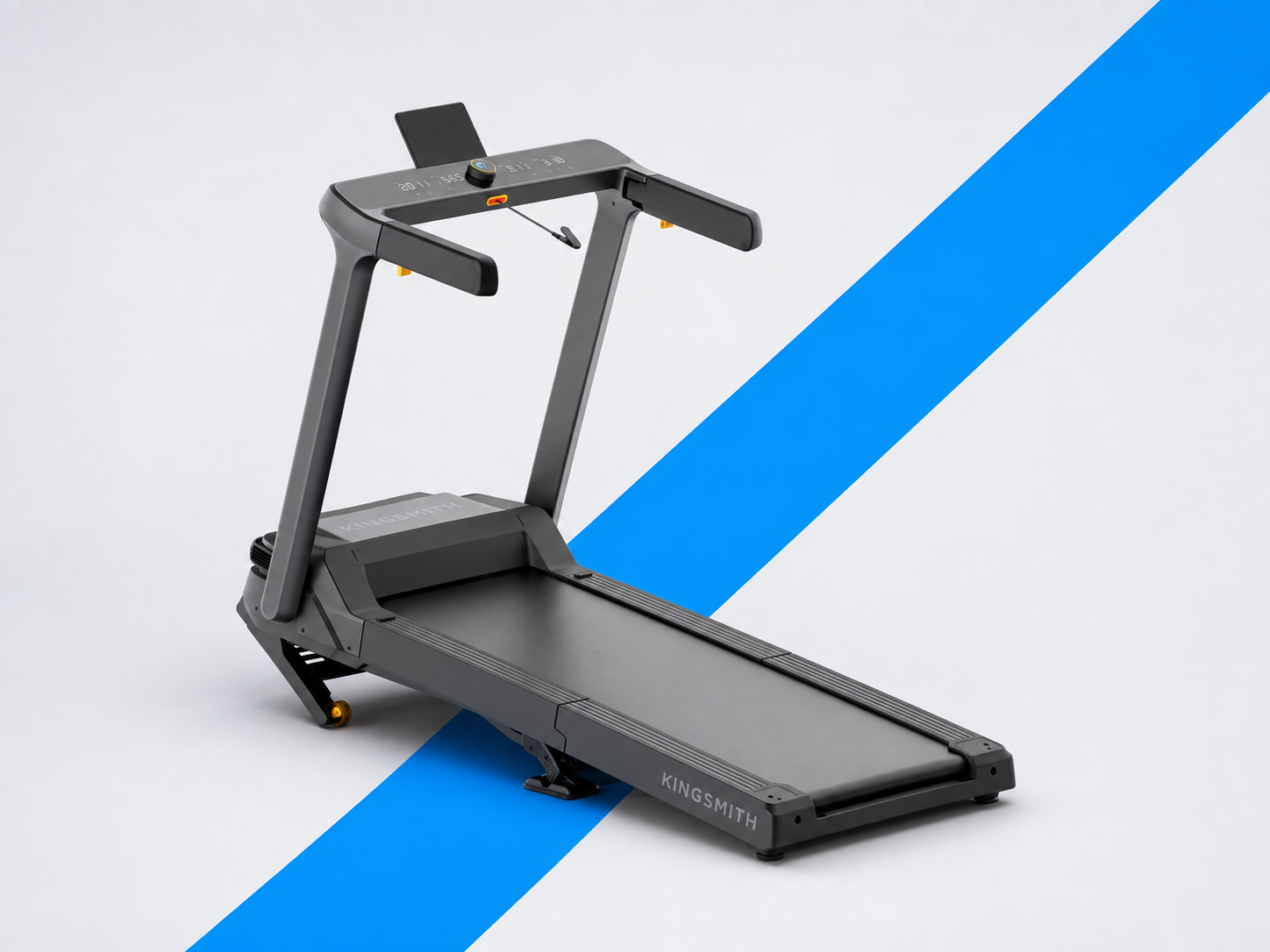

Maintenance Guide
Most treadmills that die early do not fail because they were cheap. They fail because nobody lubricated the belt. It is a ten-minute job every few months, it costs a few pounds, and it is the single biggest thing you can do to keep a machine running smoothly for years. This guide covers lubrication, belt tension, fixing a slipping or drifting belt, cleaning, and knowing when a belt is finished.
Before you touch anything: unplug the treadmill at the wall. Not the power switch, the plug. A treadmill that starts while your hands are under the belt causes serious injuries. Remove the safety key as well if your machine has one.
Check your manual first, because some belts must not be lubricated
This is the step people skip, and on a modern machine it matters. A number of treadmills now ship with belts that are pre-lubricated and sealed for life, and adding silicone to one of those can make the belt slip and attract dirt. Others have a dedicated lubrication port so you never need to lift the belt at all. Others still specify a particular type or quantity of lubricant, and using the wrong one can void your warranty.
Two minutes with the manual, or a search for your model plus the word lubrication, tells you which of those you own. If you cannot find the manual, most manufacturers publish them as PDFs, and UK brands that sell direct will usually answer the question by email.
Never use WD-40 on a treadmill belt
This is the mistake that ruins machines. WD-40 is a water-displacing solvent, not a lubricant. Sprayed under a treadmill belt it strips the existing silicone, degrades the deck surface and attracts dust, and the belt ends up worse than before. The same applies to cooking oil, engine oil, furniture polish and anything petroleum-based. The only thing that belongs under a treadmill belt is 100% silicone treadmill lubricant, unless your manual specifies otherwise.
Silicone treadmill lubricant is inexpensive and a single bottle typically lasts a year or two of normal use. It comes as a liquid in a bottle with a nozzle, as a syringe applicator, or as a spray. Which format suits you depends on your machine, and the three below cover the options between them.
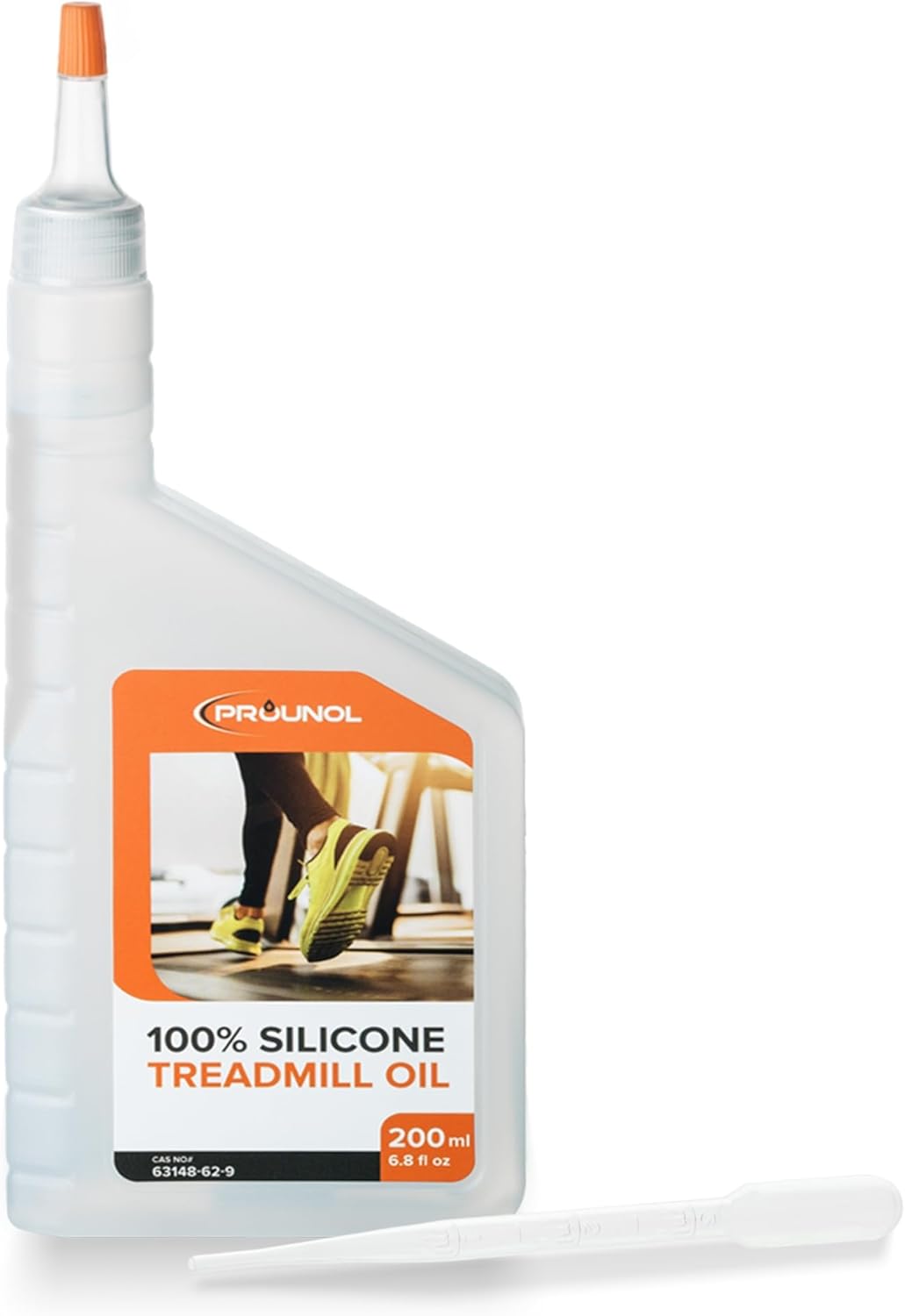
- Bottle with nozzle
- 15,000+ reviews
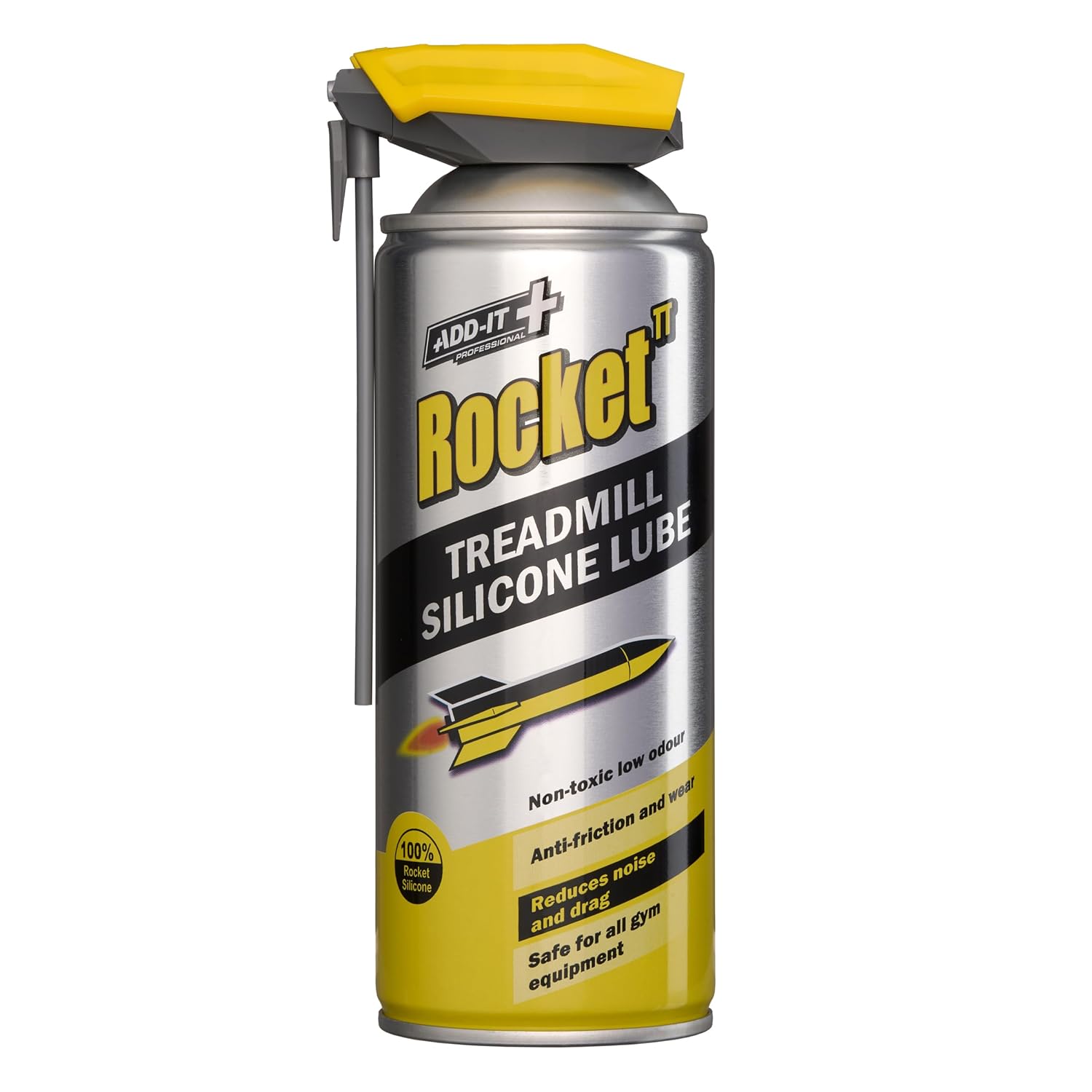
- Spray can, no lifting
- Quick, even coverage
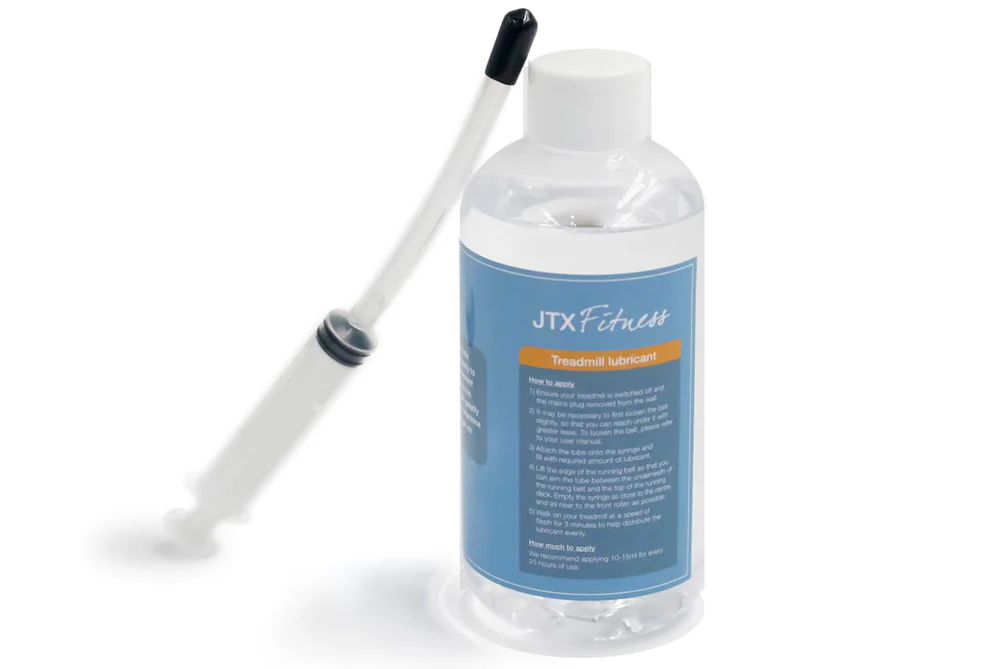
- Syringe applicator
- Reaches under the belt
All three are 100% silicone and safe for treadmills and walking pads. Prices checked regularly. We may earn a commission, at no extra cost to you.
Any of the three does the same core job. The Prounol is the default pick: a nozzle bottle at £11.99 with more owner reviews behind it than anything else in the category, which makes it the safe choice if you just want something proven. The Rocket TT spray at £12.99 is the one to choose if you find lifting the belt fiddly, since you can apply it quickly and evenly with less mess. And the JTX lubricant at £15 comes with a syringe applicator, which is the neatest way to reach the deck on machines with a lubrication port or very little clearance under the belt.
How to lubricate a treadmill belt
The whole job takes about ten minutes. You need silicone lubricant, a clean cloth, and the Allen key that came with your treadmill if you need to loosen the belt.
- Unplug the machine at the wall and remove the safety key.
- Wipe the belt clean with a dry or very slightly damp cloth. Applying lubricant over grit just grinds it into the deck.
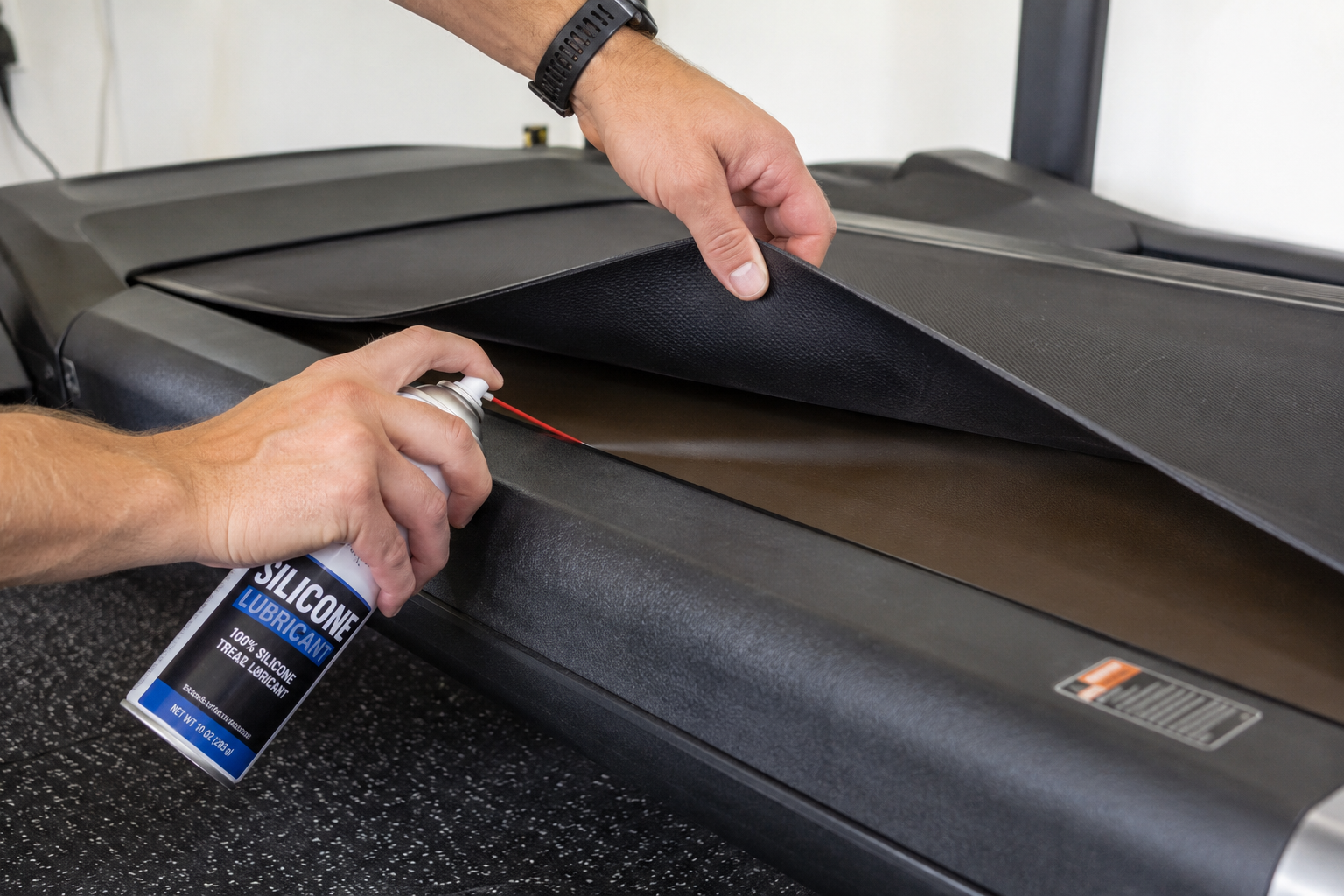
- Lift the edge of the belt at one side, roughly a third of the way down from the front roller. It should lift a few centimetres without force. If it will not lift, your belt is too tight, and the tension section below covers that.
- Apply the lubricant to the deck, not the belt. Run the nozzle along the underside centre of the deck in an S shape or a straight line, working from the front roller towards the back. Repeat on the other side.
- Use the amount your manual specifies, typically somewhere between 10 and 30 ml depending on deck size. More is not better: excess lubricant seeps out at the edges, attracts dust and can make the belt slip.
- Plug in and walk on it at a slow speed, around 2 mph, for three to five minutes. This spreads the lubricant evenly across the deck.
- Wipe away any excess that has worked its way to the edges.
Lubricating without lifting the belt
If your treadmill has a lubrication port, usually a small covered hole in the deck or frame, you simply insert the nozzle and apply, which is easier and cleaner. Machines without a port need the belt lifting, but there is a trick that makes it easier: loosen the rear roller bolts by a quarter turn each side first, which gives you slack to work with, then retension afterwards using the test below. Some long-nozzle applicator bottles are designed to slide under a belt without lifting it much at all, and they are worth the couple of extra pounds if you find the job fiddly.
How often should you lubricate?
| Use | Roughly | Interval |
|---|---|---|
| Light, a few walks a week | Under 3 hours a week | Every 6 months |
| Regular, most days | 3 to 5 hours a week | Every 3 to 4 months |
| Heavy, daily or multiple users | 5 hours a week or more | Every 2 to 3 months |
Most manufacturers express this as every 40 to 50 hours of use, which is the more accurate way to think about it. The belt itself will tell you when it is due: reach underneath with the machine unplugged and touch the deck. It should feel slightly slick, like a waxed surface. If it feels dry, squeaky or tacky, it is time.
Belt tension: how tight should a treadmill belt be?
There is a simple test. With the machine unplugged, stand at the side, grip the belt at the centre of the deck and lift. It should rise about 5 to 7 cm, roughly two to three inches, off the deck. Much more than that and it is too loose. If you can barely lift it, it is too tight.
Both extremes cause damage. A loose belt slips under your foot, wears unevenly and puts strain on the motor as it fights inconsistent load. An over-tightened belt is worse: it puts constant pressure on the roller bearings and the motor, and it is one of the more common causes of premature motor failure on home machines. When in doubt, slightly loose is safer than slightly tight.
How to adjust the tension
Tension is set by the two bolts at the rear of the machine, one at each end of the back roller, usually adjusted with an Allen key. Turning them clockwise tightens; anticlockwise loosens.
- Unplug the machine.
- Turn each bolt a quarter turn at a time, and always the same amount on both sides. This is the part people get wrong: uneven adjustment is what sends a belt off-centre.
- Retest with the lift test after each adjustment.
- Once it feels right, plug in, run at a slow walking speed for a minute and check it tracks straight and does not slip.
Why is my treadmill belt slipping?
Slipping, where the belt hesitates or stutters under your foot, has three usual causes, and they are worth checking in this order.
It needs lubricating. This is the most common cause by a distance, and it is the cheapest to fix. Friction between belt and deck rises as the lubricant wears off, the motor struggles to pull the belt smoothly, and you feel it as a stutter. Lubricate first before assuming anything is broken.
The belt is too loose. Run the lift test. If the belt rises much more than 7 cm, tighten a quarter turn each side and retest.
The drive belt or motor is at fault. If lubrication and tension are both correct and it still slips, the internal drive belt connecting the motor to the front roller may be worn or loose. That is a job for the manufacturer or an engineer rather than a DIY fix, and on a machine still under warranty, opening the motor cover yourself may invalidate the cover. Check your warranty terms before going further.
Belt drifting to one side
A belt that creeps left or right is an alignment problem, not a tension one, and it is fixed differently. Adjust one side only: if the belt is drifting to the right, tighten the right rear bolt by a quarter turn. If it drifts left, tighten the left. Run the belt at a slow speed for a minute after each quarter turn and watch. Small adjustments, checked one at a time, will centre it. Resist the urge to make a big correction, because it usually overshoots and sends the belt the other way.
Some drift is normal when you first assemble a machine and it settles in. Persistent drift after several corrections can mean the treadmill is not sitting level on the floor, so check the levelling feet before assuming a fault.
Cleaning the belt and deck
Dust, grit and hair are what actually wear a belt out, and most of it comes in on shoes. Wipe the belt surface with a dry cloth weekly, and vacuum around and underneath the machine every few weeks, including under the motor cover if your manual says it is safe to remove. Avoid household cleaners and solvents on the belt itself; a slightly damp cloth is enough, dried off afterwards.
A treadmill mat underneath helps more than people expect. It cuts the amount of carpet fibre and dust drawn into the motor, protects your floor, and reduces vibration through to the room below if you are upstairs or in a flat.
When does a belt need replacing?
Belts are consumable, and on a well-maintained home machine one should last many years. Signs it is genuinely worn rather than just needing attention include fraying or lifting at the edges, a visibly smooth or shiny centre strip where the texture has gone, cracks in the underside, or a belt that still slips after correct lubrication and tension. If the deck underneath is also worn, and it often is by that point, replacing both together is usually the better job.
Whether it is worth doing depends on the machine. On a treadmill that cost several hundred pounds and is otherwise sound, a belt replacement is straightforward economics. On a budget machine several years old, the cost of parts and labour can approach the price of a new one, which is the point at which people usually replace. If you reach that stage, our best home treadmills guide and best folding treadmills guide cover the current field, and walking pads are worth a look if your needs have shifted towards steps rather than running.
A maintenance routine that takes five minutes a month
Frequently asked questions
What lubricant should I use on a treadmill belt?
100% silicone treadmill lubricant, unless your manual specifies something different. Never WD-40, cooking oil, engine oil or any petroleum-based product: they strip the existing lubricant, damage the deck surface and attract dust. Silicone is inexpensive and one bottle usually lasts a year or more.
Can I lubricate a treadmill without lifting the belt?
Yes, in two situations. If your machine has a lubrication port, insert the nozzle and apply through it. If it does not, loosening the rear roller bolts a quarter turn each side creates enough slack to slide a long-nozzle applicator underneath, then retension afterwards. Some applicator bottles are designed specifically for this.
How tight should a treadmill belt be?
Lifted at the centre of the deck with the machine unplugged, the belt should rise about 5 to 7 cm, or two to three inches. If it lifts much further it is too loose and will slip. If it barely lifts it is too tight, which strains the bearings and motor. Adjust in quarter turns, equally on both rear bolts.
Why does my treadmill belt slip when I step on it?
Usually it needs lubricating, which is both the most common cause and the cheapest fix, so try that first. If it still slips, check belt tension with the lift test and tighten a quarter turn each side if needed. If both are correct and it continues, the internal drive belt or motor may be at fault, which is a job for the manufacturer rather than a DIY repair.
How often should a treadmill be lubricated?
Most manufacturers say every 40 to 50 hours of use, which works out at roughly every three to six months for typical home use. Heavier use means more often. The simplest check is to reach under the belt with the machine unplugged: the deck should feel slightly slick. Dry, squeaky or tacky means it is due.
Do walking pads need lubricating too?
Yes, and they are often neglected because they seem simpler. Most walking pads use the same deck and belt arrangement as a treadmill and need the same silicone lubricant on a similar schedule. Several brands include a bottle in the box for exactly that reason. Check your manual, as a few pads ship pre-lubricated.
Will maintaining it myself void my warranty?
Routine lubrication and belt tensioning are normal owner maintenance and are usually expected rather than penalised, and many warranties actually require evidence of it. Opening the motor cover or attempting internal repairs is a different matter and can invalidate cover on some machines. If your treadmill is under warranty and the problem is not solved by lubrication or tension, contact the manufacturer before taking anything apart.
This guide is general maintenance information for UK treadmill owners. Always follow your own manufacturer’s manual, as lubrication requirements and adjustment methods vary between machines, and contact the manufacturer if your treadmill is under warranty and something is wrong. HomeTreadmill is reader-supported: if you buy through links on this page we may earn a commission, at no extra cost to you.