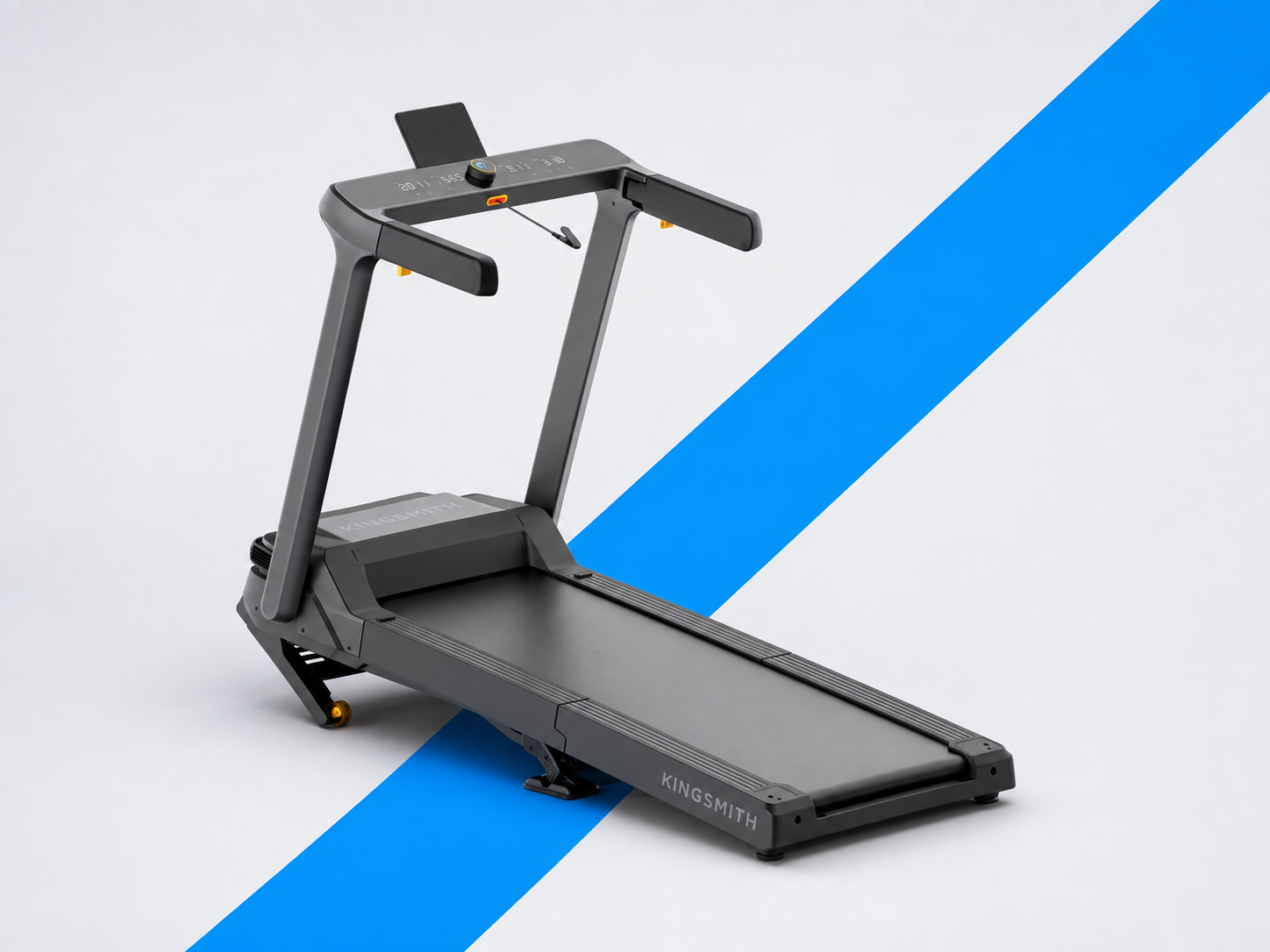

Buying guide
A treadmill mat is a dense, protective mat that sits under your machine. It is a small purchase, usually somewhere between £15 and £40, but it does more than it looks: it protects your floor, cuts noise and vibration, keeps dust out of the motor, and stops the machine creeping across the room. This guide covers whether you actually need one, which type suits your floor, and what to look for before you buy.
The short version. Most people should use one. On hard floors a mat prevents scratches and dents; on carpet it stops fibres reaching the motor and keeps the machine stable; and on any floor it dampens noise and protects the treadmill itself. The main exception is a very thick carpet, where a mat can add to heat and instability rather than solve it.
Do you need a mat under a treadmill?
In most homes, yes, and for more reasons than floor protection alone. A treadmill is heavy, it vibrates, and its motor pulls in air and dust from directly beneath it. A mat addresses all three. There are a few situations where you can get away without one, but it is worth understanding what you are giving up before you skip it.
It is also worth checking your treadmill’s manual. Some manufacturers recommend, and a few require, a mat as a condition of the warranty, on the basis that dust and an uneven surface shorten a machine’s life. If yours does, using a mat is not optional if you want the cover to stand.
What a treadmill mat actually does
Protects your floor. The weight of a treadmill, concentrated on small feet and shifted by every footfall, marks floors. On laminate, wood or vinyl it causes scratches and dents; on carpet it crushes and discolours the pile. A mat spreads the load and takes the wear.
Keeps dust out of the motor. This is the one owners overlook. A treadmill motor draws in air from underneath, and with it whatever is on the floor: carpet fibres, pet hair, household dust. Over time that builds up inside the machine and is a genuine cause of early motor wear. A mat is the first line of defence, alongside regular cleaning covered in our treadmill belt maintenance guide.
Cuts noise and vibration. A dense mat absorbs a surprising amount of the low rumble a treadmill sends into the floor, which matters most if you are upstairs, in a flat, or training while others are asleep.
Keeps the machine stable. A treadmill that rocks slightly on a hard floor, or sinks unevenly into carpet, both wears unevenly and feels worse to run on. A mat gives it a consistent, grippy base.
Reduces static. On carpet especially, the friction of a running belt builds static that can, over time, affect the electronics. A mat helps break that path.
Treadmill mat for carpet
Carpet is where a mat earns its keep most clearly, for two reasons beyond protecting the carpet itself. The first is the motor: carpet sheds fibres constantly, and a treadmill sitting directly on it feeds those fibres straight into the fan and motor housing. The second is stability, because a heavy machine sinks into pile unevenly and can rock as you run.
There is one caveat. On a thick or deep-pile carpet, a mat sits on top of an already soft, insulating surface, which can trap heat under the motor and still allow some movement. If you have deep pile, look for a firm, high-density mat rather than a soft foam one, make sure the machine sits level, and keep an eye on motor temperature during longer sessions.
Treadmill mat for laminate, wood and vinyl floors
On hard floors the job is simpler: prevent damage and stop the machine sliding. Laminate and engineered wood scratch and dent under concentrated weight, and vinyl can mark or compress. A mat with a slightly textured underside grips the floor so the treadmill does not walk forwards over time, which hard floors otherwise encourage. Here you can use a thinner mat than you would on carpet, since stability is less of an issue, though thickness still helps with noise.
Noise, vibration and training upstairs
If your treadmill is on an upper floor or in a flat, vibration through the structure is often a bigger complaint than the sound in the room, because it carries to the space below. A dense mat is the single easiest fix, absorbing much of the low-frequency rumble before it reaches the floor. For a machine already prone to noise, pairing a good mat with correct belt tension and lubrication, again covered in the maintenance guide, makes a noticeable difference. A mat will not silence a treadmill, but it takes the edge off the part neighbours actually notice.
How to choose a treadmill mat
Mats look interchangeable, but a few things separate a good one from a false economy.
| Thickness | Aim for at least 6mm. Thin mats do little for noise or stability. For heavy machines, upstairs use, or thick carpet, 8mm or more is better. |
| Material | High-density PVC or rubber lasts and dampens well. Cheap low-density foam compresses, loses its shape and offers little protection. Rubber is the most durable but heavier. |
| Size | Bigger than the treadmill’s footprint, so the feet sit well inside the edges with room to spare at the back for the belt overhang. Measure before you buy. |
| Grip | A textured underside stops the mat sliding on hard floors and helps keep the machine from creeping. |
| Odour | Some cheaper mats have a strong chemical smell when new. Look for ones described as low-odour or phthalate-free, and air them before use. |
What size mat do you need?
Measure the length and width of your treadmill, then add a margin so the feet sit comfortably inside the mat rather than on its edges. A little extra length at the rear is useful, since that is where the belt sits and where sweat and debris tend to land. A mat that is slightly too big is never a problem; one that is too small leaves feet on the bare floor and defeats the point. If you own a compact machine or a walking pad, a smaller mat is fine, and our walking pads guide covers those machines.
The treadmill mats we would recommend
Four mats worth your money, each suited to a different situation. There is no single best mat, because the right one depends on your machine and your floor.
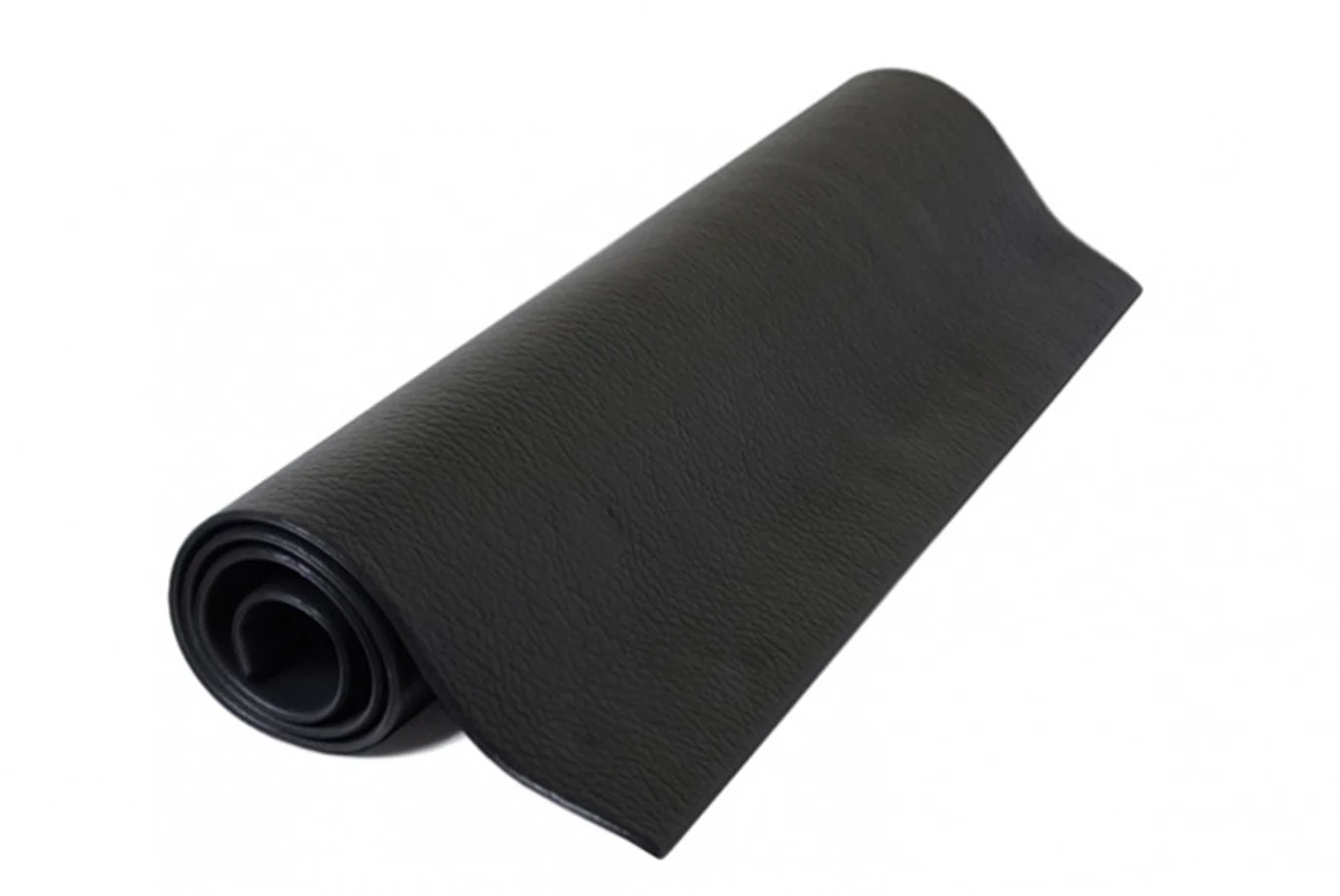
- Thickness 6 mm
- Sizes 5 options
- Largest 250 cm
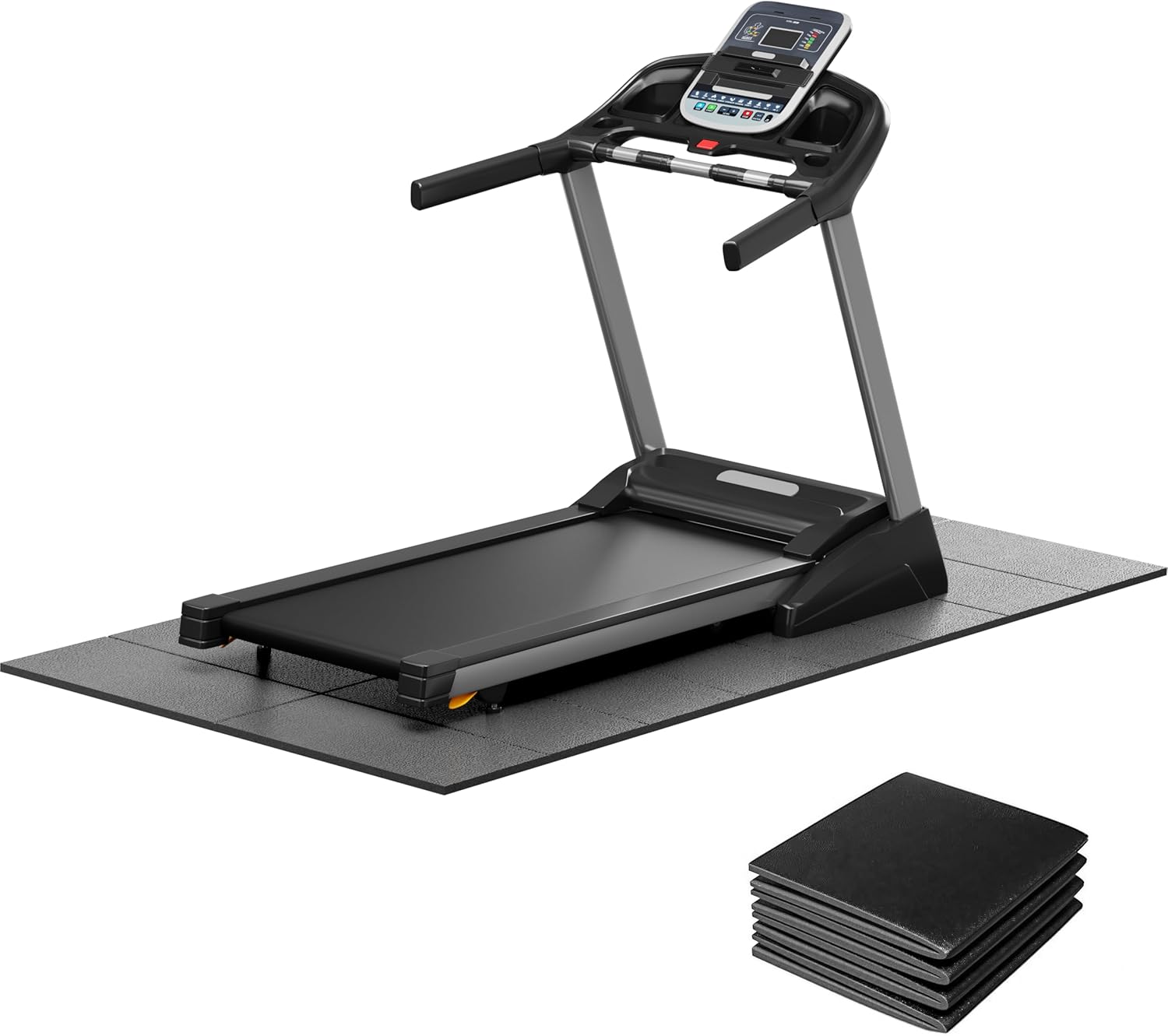
- Type High-density
- Grip Non-slip
- Sizes 5 options
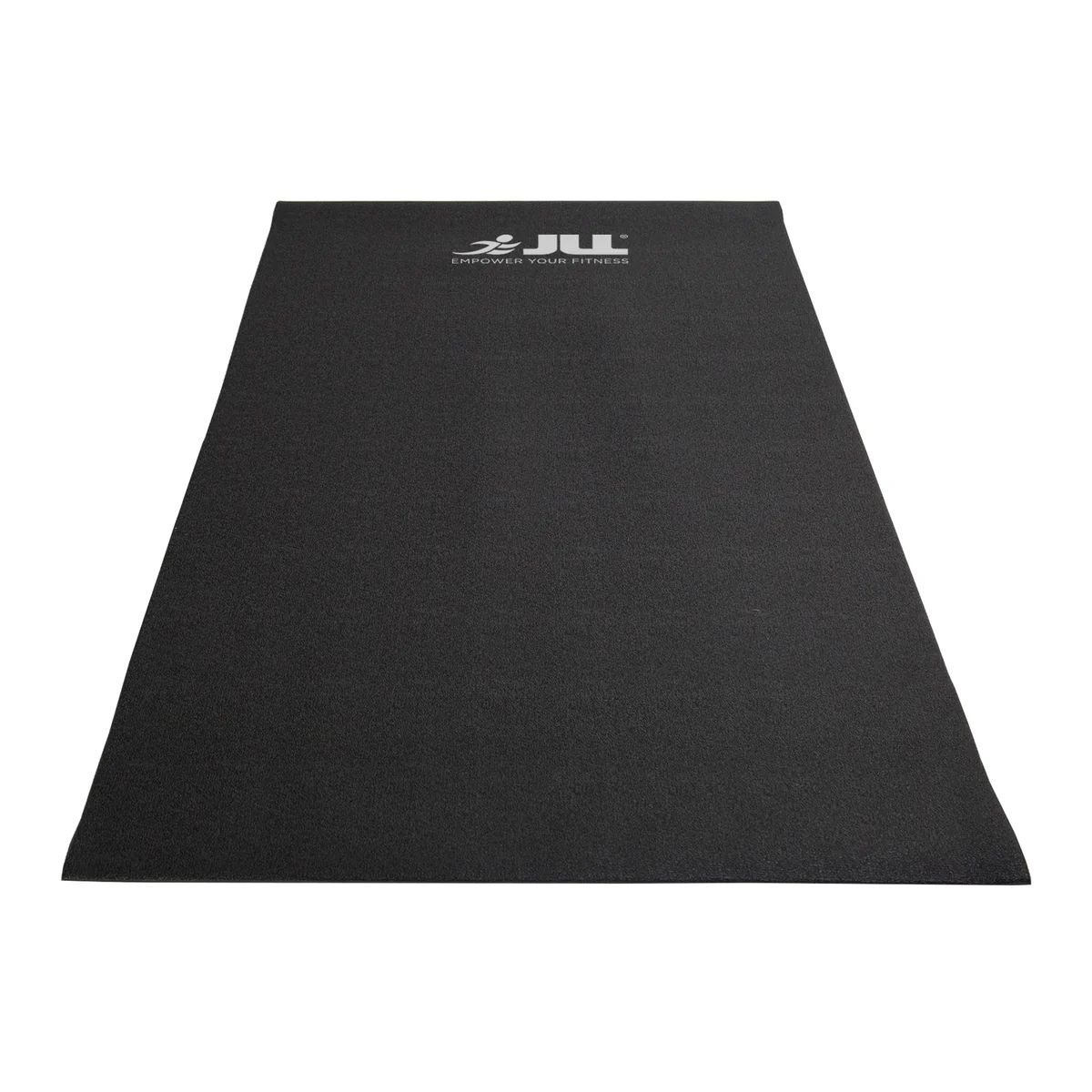
- Material Rubber
- Size 180 x 80 cm
- Feel Premium, stable
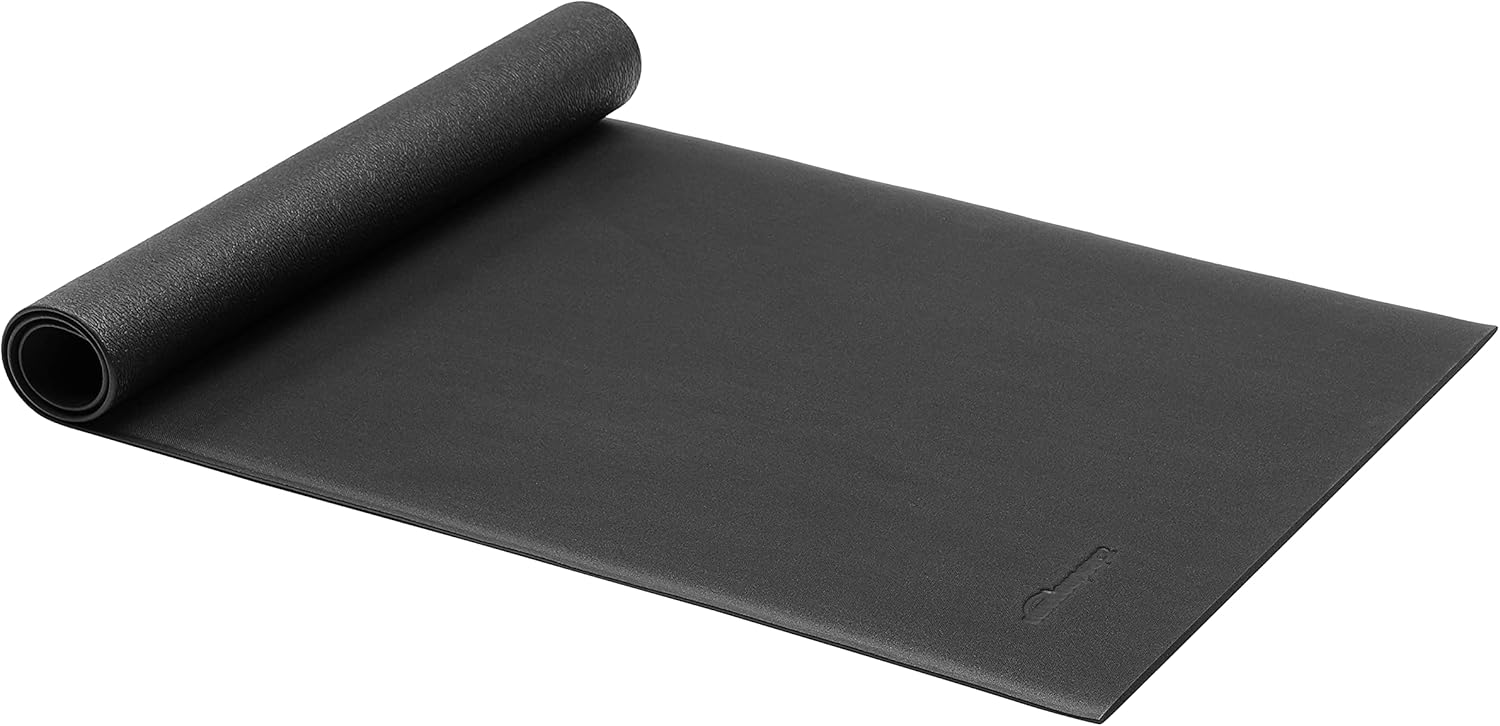
- Material PVC
- Thickness 8 mm
- Size 76 x 183 cm
Prices checked regularly and change with sales and size. We may earn a commission, at no extra cost to you.
Any of these will do the core job; the right one depends on your machine and floor. For a full-size treadmill the JTX Floor Mat Range is the most flexible, with five sizes up to 250 cm and a genuine 6 mm thickness, from a British brand with UK delivery. If your treadmill sits on carpet, the Stepwaver is built for it: a high-density, non-slip mat in sizes up to 200 by 100 cm. The JLL Cardio Machine Mat is the one to choose for dense rubber and maximum stability, also a UK brand. And the Amazon Basics mat is the value pick at under £15, though at 183 cm long it suits a walking pad or a compact machine better than a large runner.
Frequently asked questions
Do you really need a mat under a treadmill?
In most homes, yes. On hard floors it prevents scratches and dents; on carpet it stops fibres reaching the motor and keeps the machine stable; and on any floor it dampens noise and protects the treadmill from dust. Some manufacturers also require one for the warranty to stand, so it is worth checking your manual.
What kind of mat is best for a treadmill on carpet?
A firm, high-density PVC or rubber mat rather than a soft foam one. On carpet the priorities are keeping fibres out of the motor and giving the machine a stable, level base, which a dense mat does and a soft one does not. On thick pile, keep an eye on motor heat during longer runs.
Does a treadmill mat reduce noise?
Yes, particularly the low-frequency vibration that travels through floors, which is what people below you tend to notice. A dense mat absorbs much of it. It will not make a treadmill silent, but combined with correct belt tension and lubrication it makes a clear difference, especially upstairs or in a flat.
How thick should a treadmill mat be?
At least 6mm for a meaningful effect on noise and stability, and 8mm or more for heavy machines, upstairs use or thick carpet. Below about 6mm a mat mainly protects the floor and does little else.
Can you use a treadmill without a mat?
You can, but you accept more floor wear, more dust in the motor, more noise through the floor and a machine more likely to creep or rock. On a hard floor in a ground-floor room you might decide the trade is acceptable; on carpet or upstairs, a mat is well worth the small cost. Check your warranty terms first, as some require one.
Is gym flooring the same as a treadmill mat?
They overlap but are not identical. Interlocking gym floor tiles cover a whole workout area and are great for dropped weights, while a treadmill mat is a single dense sheet sized to one machine, shaped to protect the floor and dampen vibration underneath it. For a treadmill alone, a purpose-made mat is simpler and usually cheaper.
HomeTreadmill is reader-supported. When you buy through links on our site we may earn an affiliate commission, at no extra cost to you. Prices and specifications are checked regularly but can change, so confirm the current details with the retailer before purchase. Always follow your treadmill manufacturer’s guidance on flooring and mats, particularly where the warranty depends on it.