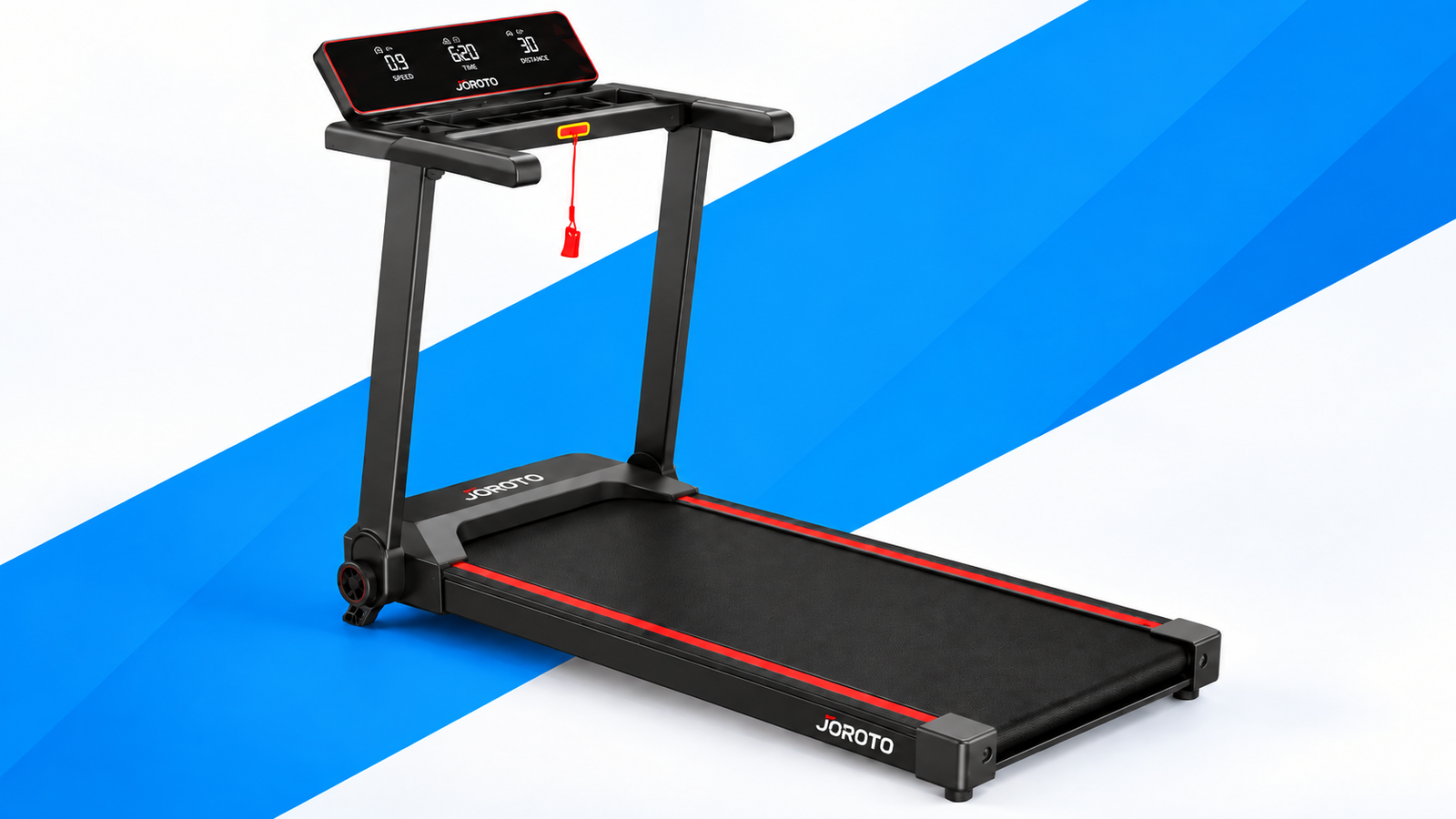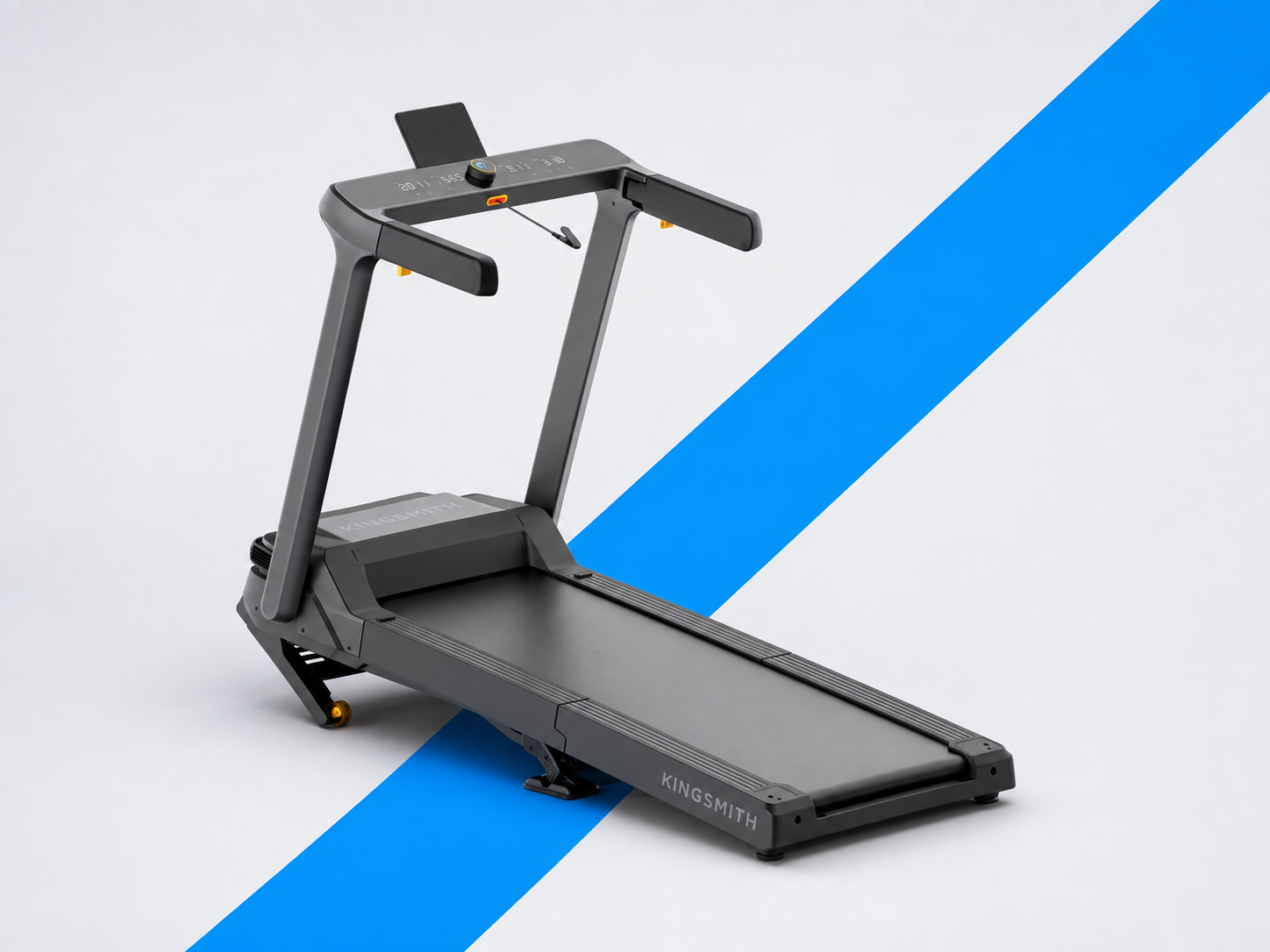

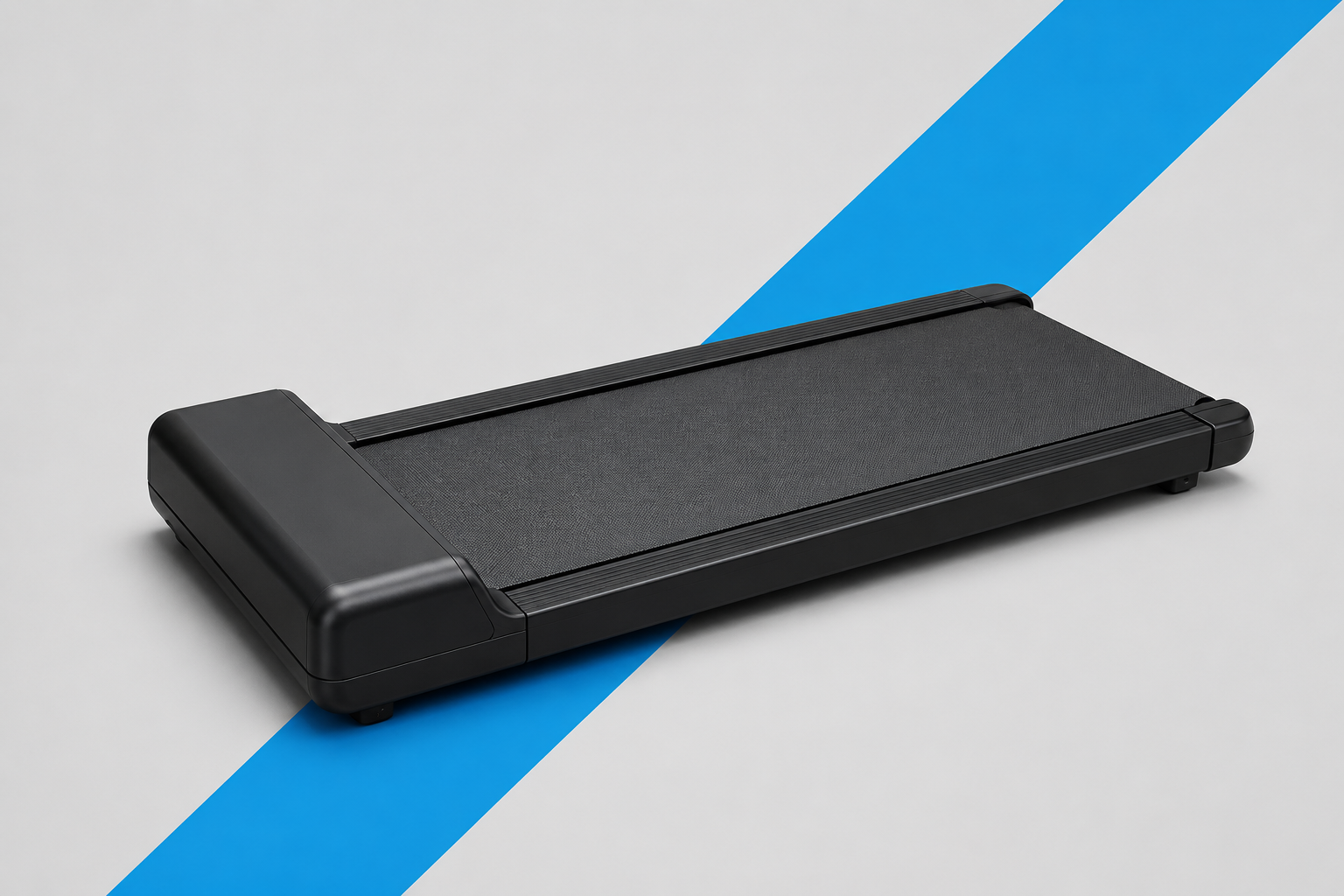
Work out how many calories you burn walking, whether that is a slow stroll on a walking pad at your desk or a brisk incline walk. Unlike calculators that use a single flat figure, this one factors in your pace and the gradient, then shows the extra you burn on top of simply sitting.
Want to put this into practice at your desk? See our guide to the best walking pads, including the incline-capable models that lift the numbers above.
How the calculator works
Most calorie calculators multiply your time by a single fixed value, which ignores how much harder you work as the pace or the gradient rises. This walking calorie calculator instead uses the walking equation published by the American College of Sports Medicine, the same method that sits behind a good treadmill calorie calculator, which estimates the oxygen your body uses from your speed and the incline, then converts that into calories using your body weight.
calories/min = VO2 x weight(kg) / 1000 x 5
Speed is measured in metres per minute and grade is the incline as a fraction. The figure of 3.5 is the oxygen you use at rest, which is also roughly what you burn sitting still, so subtracting it gives the extra calories that the walking itself adds. That "extra versus sitting" number is the one worth watching, because it is the genuine gain from being on your feet rather than in your chair.
How many calories does 10,000 steps burn?
This is how most people think about a day's walking, so it is worth answering plainly. There is no single number, because the calories you burn depend on your weight, your pace and your stride, but as a rough guide 10,000 steps is around four to five miles and burns somewhere in the region of 300 to 500 calories for most adults. Lighter walkers burn less, heavier walkers more, and a brisker pace or an incline pushes it higher. The same logic scales: 5,000 steps is roughly half that, while 15,000 or 20,000 steps burn proportionally more.
If you would rather think in steps than minutes, set your usual pace and read the estimated daily step count next to the calories, or work it backwards. To burn around 500 calories, most people need somewhere between 10,000 and 15,000 steps, fewer if they add an incline. Converting steps to calories will always be an estimate, but doing it from your own pace and weight is far closer than any flat per-step figure.
Calories burned walking, per hour and per mile
For a sense of the rate rather than a step count, walking burns very roughly 150 to 250 calories an hour at an easy pace, and somewhere around 50 to 100 calories per mile, depending again on your weight and how brisk you are. These are deliberately wide ranges, because a 60 kg walker and a 90 kg walker covering the same mile end up a long way apart. The point of the calculator is to turn those ranges into a figure for you specifically, with per hour and per week totals that a generic "calories burned walking" number cannot give you.
Why incline matters so much
Raising the gradient is the quickest way to burn more without walking faster, which is exactly what you want at a desk where a fast pace is impractical. In the equation, incline carries far more weight than speed, so nudging an under-desk walking pad to a modest gradient can lift your burn noticeably while you stay at a comfortable, typeable pace. It is the single biggest reason to consider an incline walking pad over a flat one.
A sensible way to read the numbers
Walking at your desk is not a substitute for structured exercise, and the calories here are an estimate rather than a measurement. The useful way to use them is as encouragement: a couple of hours of slow walking spread across a working day quietly adds up, both in calories and in the wider benefits of breaking up long stretches of sitting. If you would rather follow something with a bit of shape, our walking pad workouts turn that loose time into simple routines. Either way, aim to be a little less still, a little more often, and let the totals look after themselves.