 sponsored
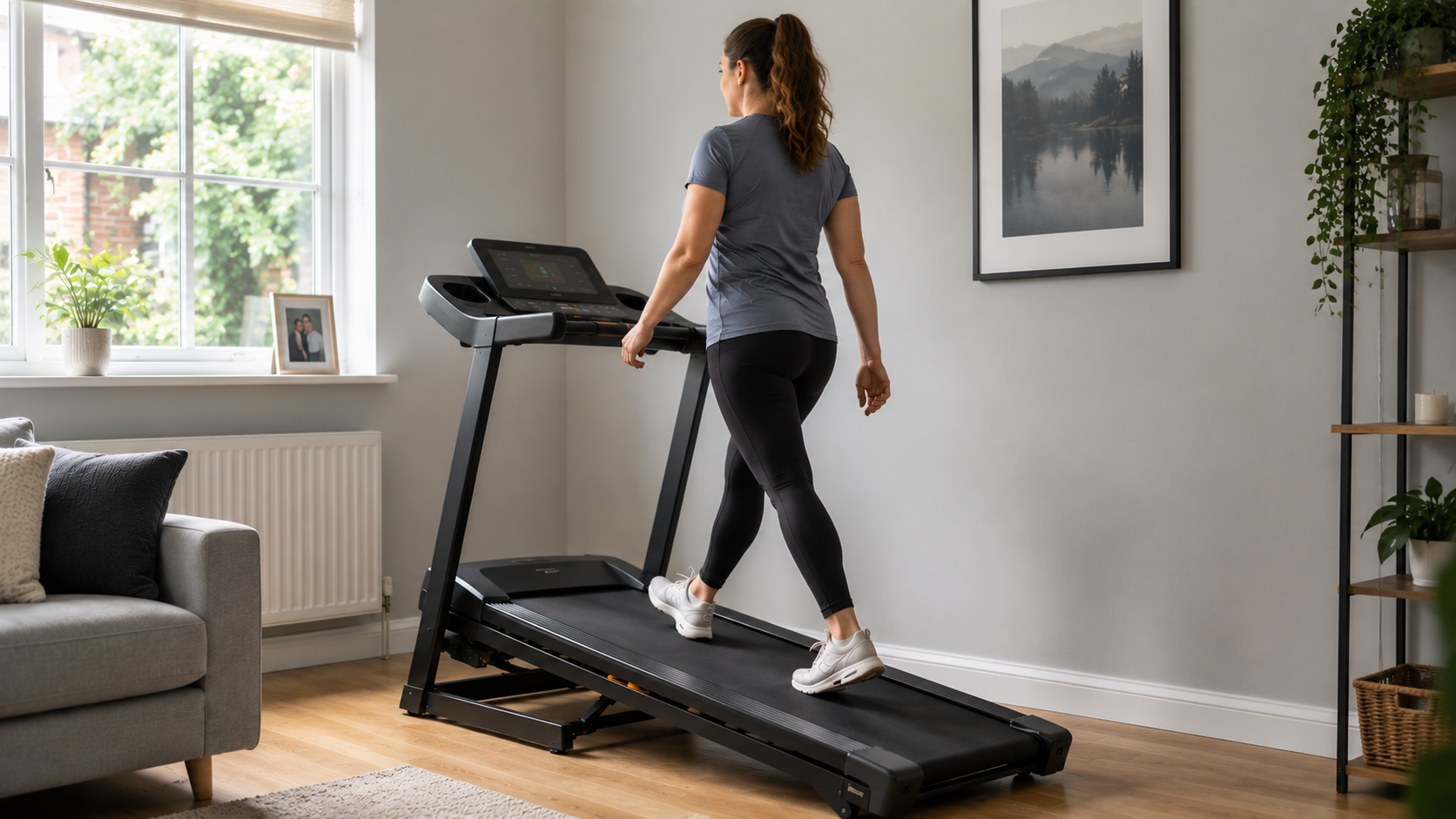
- There is no single “fat-burning” setting. Fat loss comes from the total energy you burn over a week, plus your diet, not from one magic speed.
- For most people the best value is brisk incline walking: a 10 to 15 percent incline at 3 to 4 mph, which burns well while staying easy on the joints and sustainable for 30 to 45 minutes.
- The popular 12-3-30 (12 percent incline, 3 mph, 30 minutes) is simply one tidy version of that, and a good place to start.
Search for the best treadmill settings for fat loss and you get a wall of confident, contradictory numbers. None of them is quite right, because no single speed or incline melts fat by itself. Fat loss comes from the energy you burn across the week set against what you eat, and the treadmill is one efficient, repeatable way to add to that total. Some settings just get you there more comfortably, and with less chance of giving up, than others. Those are the ones below.
Why there is no single “fat-burning” setting
You may have seen a “fat-burning zone” marked on a treadmill console, usually a gentle effort around 60 to 70 percent of your maximum heart rate. It is real in one narrow sense: at lower intensities a greater proportion of the calories you burn comes from fat. But the total calories are what matter for fat loss, and harder efforts burn more of those overall. Chasing the zone on its own is not the shortcut it looks like.
So the question worth asking is not “which setting burns fat?” but “which settings let me burn the most energy, often enough, without getting hurt or packing it in?” For most people that means incline walking, with faster running and intervals as options once you are fitter.
The best treadmill settings for fat loss, by goal
Here is a practical starting grid. Treat the numbers as sensible opening settings to adjust to your own fitness, not fixed prescriptions. Speeds are in mph, as on most UK consoles.
| Goal / level | Incline | Speed | Time |
|---|---|---|---|
| Beginner, low impact | 4-6% | 2.5-3.0 mph | 30-40 min |
| Brisk incline walk (the value pick) | 10-15% | 3.0-4.0 mph | 30-45 min |
| 12-3-30 | 12% | 3.0 mph | 30 min |
| Steady jog | 1-2% | 5.0-6.5 mph | 25-40 min |
| Intervals (time-efficient) | 1-2% | Alternate 6.5+ mph / walk | 20-30 min |
None of these is exotic. Incline walking sits at the top of the list because it burns fast for how easy it feels, it spares your knees next to running, and people actually stick with it. That last point does more for fat loss than any clever setting.
The brisk incline walk: the best value setting
If you take one thing from this page, take this. Set a 10 to 15 percent incline and walk at a pace where you can manage a broken sentence but not a chat, usually 3 to 4 mph. The gradient is what pushes your effort and your burn well past flat walking, while your joints get a fraction of the pounding running would give them. You can hold it for 30 to 45 minutes, and a walk you can repeat most days is the kind that shifts weight.
The 12-3-30 workout
The 12-3-30 (12 percent incline, 3 mph, 30 minutes) blew up on social media, and it earns the attention: it is a clean, memorable take on the brisk incline walk, and it works. Good on-ramp if you like being handed exact numbers. If 12 percent at 3 mph leaves you gasping rather than walking, drop the incline and work up. The method and how to progress it are in the full 12-3-30 guide.
Intervals, when you are short on time
Once you have a base of fitness, alternating hard and easy blocks burns a lot in a short window and keeps your metabolism raised afterwards. A simple version: after a walk to warm up, alternate one minute fast (a pace that feels properly hard) with two minutes easy, for 20 to 30 minutes. Intervals are demanding, so two or three a week alongside easier walks is plenty for most people.
Turn a goal pace into a belt speed
Not sure what 3.5 mph or a 10-minute mile looks like on the console? Our converter turns any pace into the exact speed to set, in mph or km/h.
Incline or speed: which matters more for weight loss?
Both raise calorie burn, but incline is usually the better lever for fat loss because it adds intensity without adding impact. Walking up a steep gradient can burn at a rate close to a gentle jog while keeping both feet under more control and your joints happier, which means longer, more frequent sessions. If running suits you and your knees are fine with it, by all means use speed too. For most people losing weight, though, dialling up the incline beats simply walking faster on the flat. It is also why a machine with a true motorised incline earns its place; our best treadmills with incline guide covers the ones worth buying.
Settings for fat loss and muscle gain together
A lot of people search for this, and it is a sensible aim. A treadmill is a cardio tool, so in a “lose fat, gain muscle” plan it handles the fat side and your conditioning while the muscle comes from resistance training. The setting that fits best is, again, incline walking: it burns well for fat loss without the heavy fatigue of long runs that eats into your strength sessions and recovery. Keep most treadmill work to brisk incline walks, lift weights two or three times a week, and eat enough protein. Hammering long, hard runs every day tends to work against muscle, not for it.
What about belly fat specifically?
This one deserves a straight answer, because plenty of pages promise something the body cannot do. You cannot steer fat loss to your belly, or anywhere else, with a particular treadmill setting. Spot reduction is a myth. What happens instead is that as you lose fat overall through a sustained calorie deficit, it comes off your whole body, the middle included, in the order your genetics decide. So the “best setting for belly fat” is just the best setting for overall fat loss, done consistently: brisk incline walking most days, harder efforts when you can, alongside sensible eating. Anyone selling you a belly-specific belt speed is selling you snake oil.
The setting that beats all the others
Consistency. A moderate incline walk you do five times a week will out-burn the “perfect” interval session you do twice and then abandon. Pick settings you will come back to, and let the weeks add up.
How often, and how to progress
For general health the NHS suggests at least 150 minutes of moderate activity a week, which works out at five 30-minute brisk incline walks. For fat loss, meet that first and build from there as your fitness allows: a little more time, a touch more incline, the odd interval session, rather than jumping straight to daily hard runs. Steady progression is what keeps you off the injury list and still walking in three months, and three months in is where you actually see the change.
Best Treadmill Settings for Fat Loss FAQs
What are the best treadmill settings for fat loss?
For most people, a brisk incline walk: a 10 to 15 percent incline at 3 to 4 mph for 30 to 45 minutes. It burns hard for the effort, spares your joints, and is easy enough to repeat most days, which is the part that drives fat loss. The popular 12-3-30 (12 percent, 3 mph, 30 minutes) is one version of it.
What is the best treadmill setting for weight loss for beginners?
Start gentle: a 4 to 6 percent incline at 2.5 to 3 mph for 30 to 40 minutes, at a pace where you can still talk. Build the incline and time up gradually over a few weeks before adding anything harder. Beginning at a level you can repeat matters far more than starting hard and stopping.
Is incline or speed better for losing weight?
Incline is usually the better lever, because it raises your effort and calorie burn without the joint impact of running faster. Walking a steep gradient can burn close to a gentle jog while staying easier on your knees, so you can do it for longer and more often. Use speed too if running suits you, but for most people incline wins for fat loss.
What are the best treadmill settings for belly fat?
The same as for overall fat loss, because you cannot target where fat comes off. Spot reduction is a myth: as you lose fat through a sustained calorie deficit, it comes off your whole body in the order your genetics decide. Brisk incline walking done consistently, paired with sensible eating, is the honest answer.
Can I lose fat and gain muscle with a treadmill?
A treadmill handles the fat-loss and cardio side; muscle comes from resistance training. Keep most treadmill work to brisk incline walks so you burn well without the heavy fatigue of long runs, lift weights two or three times a week, and eat enough protein. The two sides add up rather than cancel out.
Is the 12-3-30 workout good for weight loss?
Yes, for many people it is an effective, repeatable session, and the hype is fair. It is really just a memorable take on a brisk incline walk: 12 percent incline, 3 mph, 30 minutes. If the full numbers are too much at first, drop the incline and build up. See our 12-3-30 guide for how to progress it.
HomeTreadmill.co.uk is reader-supported. The guidance in this article is general information, not personalised training, nutrition or medical advice. If you have an existing health condition or are new to exercise, check with your GP before starting a new programme.