
Buying guide
A walking treadmill is a compact motorised machine built for walking and light jogging, with handlebars: something to hold as you climb a gradient, steady yourself, or ease back into exercise. This guide compares the best of them in the UK, ranked on how good they are to walk on rather than how small they fold. If you are looking for a dedicated walking pad, with no handrails or very lightweight folding ones, to slide under a standing desk, that is a different machine, and our best walking pads guide covers those. Every model here is scored on our RunRank system and prices are checked regularly.
- Incline 10% auto
- Speed 8.7 mph
- Max user 160 kg
 British brand
- Incline None
- Speed 9.9 mph
- Assembled Yes

- Incline 12 levels
- Speed 10 mph
- Deck 127 x 40 cm
- Incline 10 levels
- Speed 6 mph
- Motor 2.25 HP
- Incline 15 levels
- Speed 7.5 mph
- Screen 7 in LCD

- Incline 3 manual
- Speed 6 mph
- Warranty Lifetime frame
First, do you actually want a walking pad instead?
Search for a walking treadmill in the UK and two quite different machines come back, so it is worth settling which one you need before reading any further.
An under-desk walking pad is a slim deck a few inches tall, with no handrails or only a very lightweight folding one, that slides under a standing desk or a sofa. You stroll on it at a gentle pace, usually up to about 3.7 mph (6 km/h), often while you work. If the goal is to add steps to a sedentary day without interrupting it, that is the machine you want, and our best walking pads guide compares every one worth buying.
A walking treadmill, which is what this page covers, has proper handlebars and a console. It is a compact treadmill built around walking speeds, gradients and light jogging rather than fast running. You stand on it deliberately for a session rather than drifting on and off it through the working day, and in return you get powered incline, a more supportive deck and something solid to hold.
There is also an endurance difference that rarely makes the spec sheet. Most walking pads are rated for sessions of around 30 minutes to an hour a day at most: their compact motors are built for short, gentle stints and heat up if you push past that. A walking treadmill typically carries a higher-horsepower motor with the cooling and build to match, so it can endure longer sessions and heavier daily use without strain. If you plan to walk for more than an hour at a stretch, that alone decides it.
Put simply: if you want to walk while doing something else, buy a pad. If you want to walk as the thing you are doing, buy one of the machines below.
Why the handlebar changes the walk
Handrails sound like a minor detail next to motors and deck sizes, but on a walking machine they change what you can actually do.
The first reason is incline. Walking uphill is where the real intensity in a walking session comes from, and as the gradient steepens most people naturally want something to hold, particularly in the first few sessions. Every powered-incline machine on this page has rails for exactly that reason, and pads with incline, which are rare, tend to feel less secure at the top of their range.
The second is confidence. If you are returning to exercise after an injury, managing a joint problem, or simply not steady on your feet, a rail to rest a hand on is the difference between using the machine daily and leaving it folded in a corner. It is the single most common reason readers tell us they chose a treadmill over a pad.
The third is the console. Rails give the machine somewhere to put a screen, a fan, speakers and a tablet holder at eye level, so changing speed or incline mid-walk does not mean bending down to a floor-level deck.
Why use a walking treadmill?
Walking is the most sustainable form of exercise for most people, and a machine at home removes the barriers that usually stop it: weather, dark evenings, time, and a lack of safe pavements.
The NHS recommends adults get at least 150 minutes of moderate activity a week, and brisk walking counts. A walking treadmill lets you bank those minutes in short sessions that fit around work and family rather than carving out a trip to the gym.
Where these machines earn their place over a pad is intensity. Powered incline raises your heart rate far more than speed alone, so a 30-minute walk on a gradient does considerably more than 30 minutes on the flat, without ever asking your knees to absorb the impact of running. And because most of these machines stretch to a light jog, you have headroom on the days you want to push a little harder. That makes a walking treadmill a sensible choice for anyone easing back into exercise, managing a joint issue, or simply wanting to move more without the strain.
Best walking treadmills UK 2026 compared
Our top pick leads, then the rest in the order we rate them for walking: incline range, deck comfort, noise and support. All six have handlebars.
| Walking treadmill | Best for | Incline | Top speed | Deck | RunRank | Price |
|---|---|---|---|---|---|---|
| Wellfit TM032 | Best value overall | 10% auto | 8.7 mph | 112 x 43 cm | 4.2 / 5 | £284.99 £299.99with code HOMETREADMILL |
| JTX Slimline | Best British, flat-fold | None | 9.9 mph | 122 x 45 cm | 4.2 / 5 | £569.05 £599with code HOMETREADMILL5 |
| Echelon Stride 30 Sport | Best for incline | 12 powered levels | 10 mph | 127 x 40 cm | 4.1 / 5 | £499 £899 |
| Xterra TR260 | Best walking-first | 10 powered levels | 6 mph | 127 x 41 cm | 4.1 / 5 | £499 £699 |
| Viavito Praia | Steepest incline | 15 powered levels | 7.5 mph | 120 x 43 cm | 3.9 / 5 | £499 £699 |
| Xterra TR150 | Cheapest | 3 manual | 6 mph | 127 x 41 cm | 4.0 / 5 | £399 £599 |
The best walking treadmills in detail
Wellfit TM032Adjustable handrails
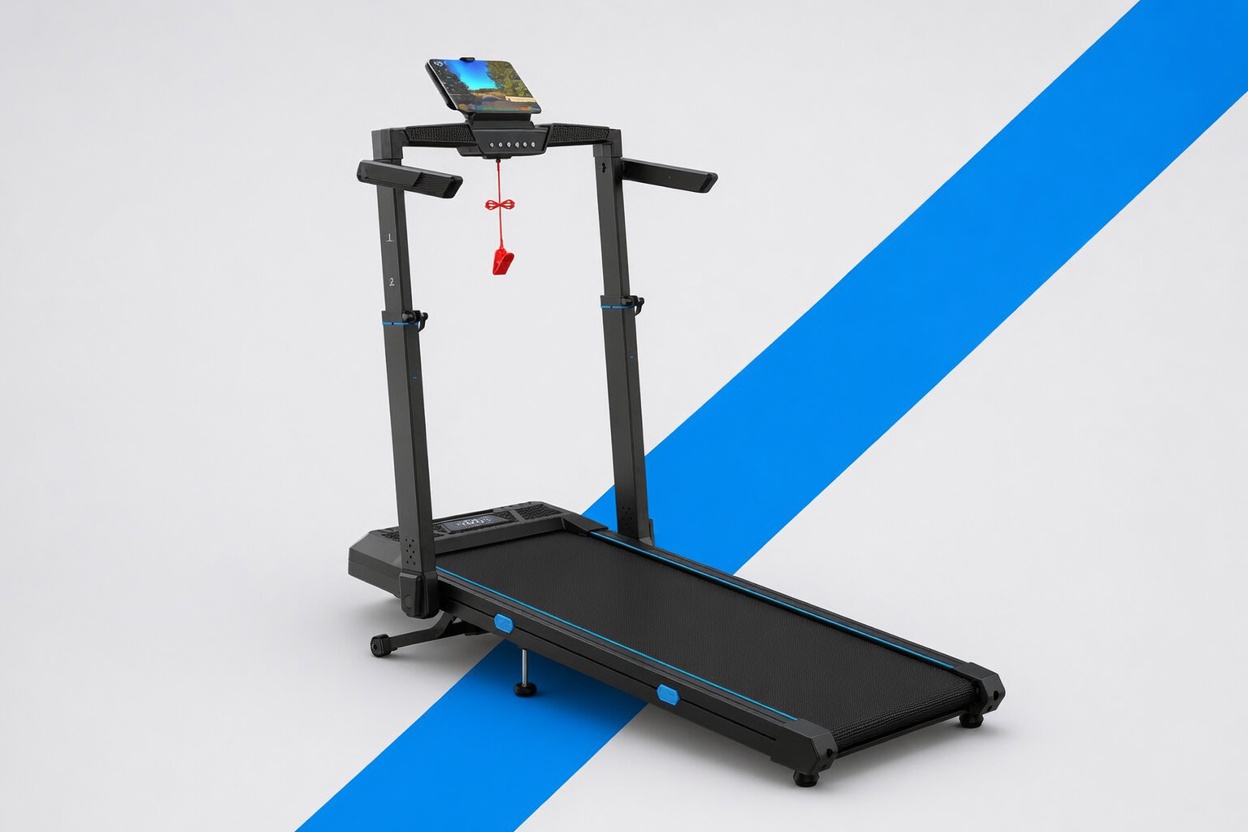
£299.99 £284.99The TM032 takes the top spot because nothing else on this page does as much for as little. It is the cheapest machine here by more than £100, yet it carries a powered 10% auto incline across five levels, a 3.5 HP brushless motor that runs quiet, 8.7 mph of speed for a light jog, and a 160 kg weight capacity that is comfortably the highest on the page. On the walking-first criteria this guide is ranked on, that combination at £284.99 with our code is unmatched.
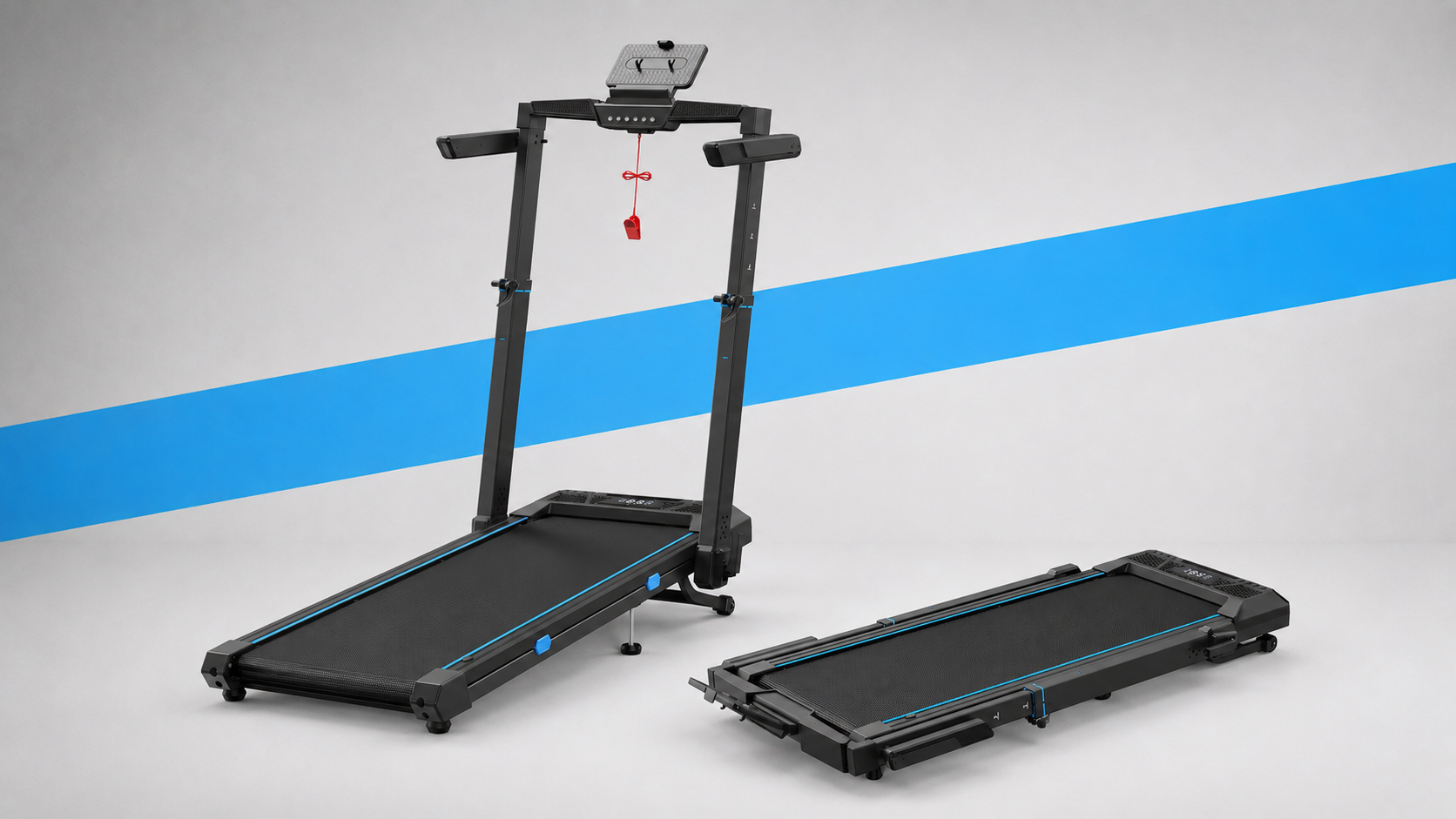
The handrails are the clever part. They are height-adjustable across five positions and drop away entirely with a quick release, so it works as a walking treadmill with rails up and a flat walking deck with them down. It is the only machine here that genuinely does both, which is why it also appears as the hybrid pick in our walking pads guide. It stores upright at just 17 cm deep, and we have had one in for a hands-on review, so unlike most sub-£300 machines this is one we have actually built and walked on.
The compromises are the deck and the cover. At 112 cm it is the shortest here, fine for walking but tight if you use the top speed for more than a short jog, and the warranty is one year where the two Xterras give a lifetime frame. Wellfit is also newer to the UK, and does not deliver to Northern Ireland or the Scottish Highlands and islands.
- Cheapest machine here at £284.99 with our code
- Powered 10% auto incline and a quiet 3.5 HP brushless motor
- Handrails adjust across five heights or drop away entirely
- 160 kg capacity, the highest on this page
- 8.7 mph covers walking and light jogging
- Stores upright at 17 cm deep
- The one machine here we have reviewed hands-on
- Shortest deck at 112 cm
- One-year warranty against the Xterras’ lifetime frame
- Newer UK brand, shorter track record
- No delivery to NI or the Scottish Highlands and islands


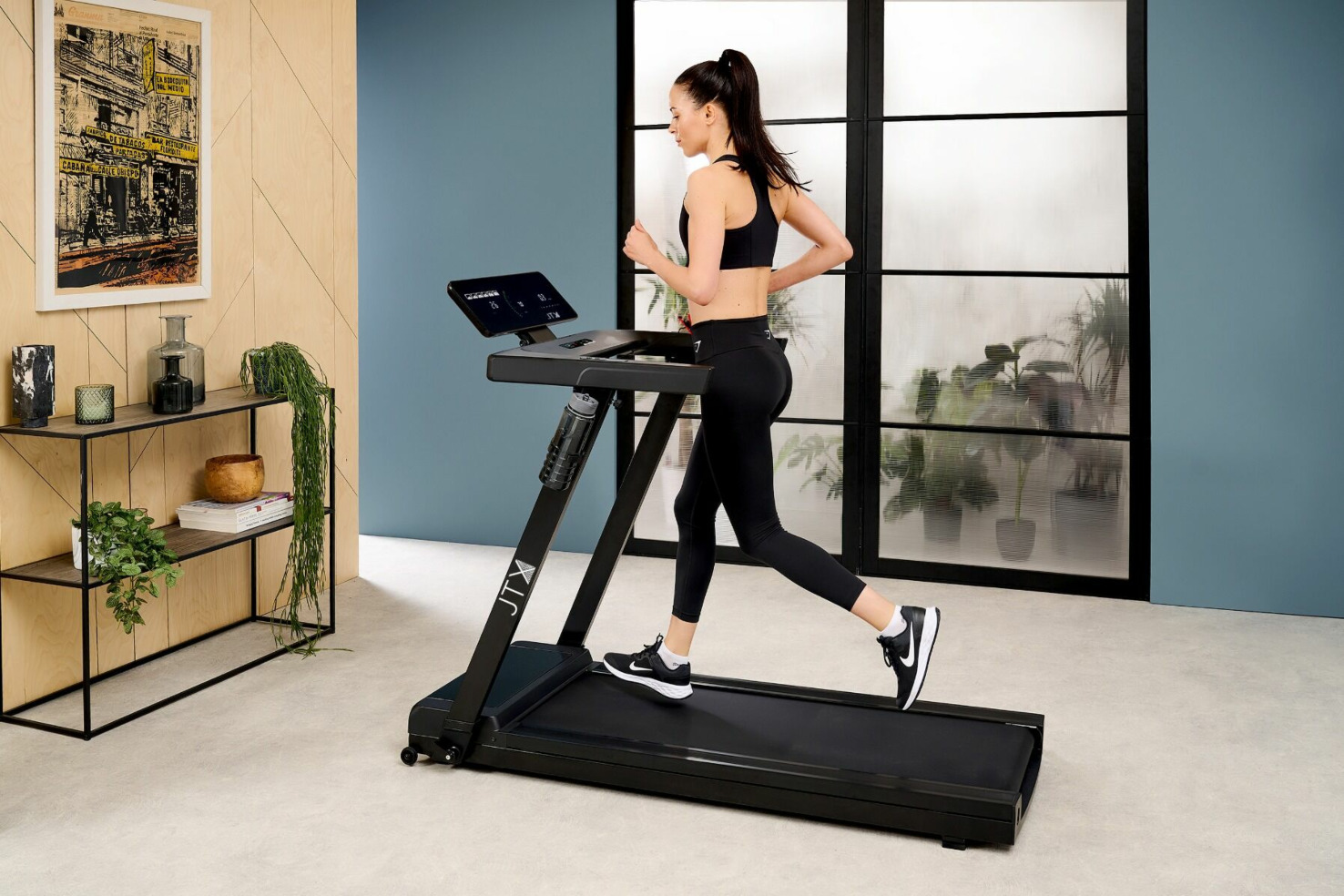
JTX SlimlineHandrails British brand
£599 £569.05The Slimline is the machine to buy on ownership grounds, and it ties the TM032 for the highest RunRank on the page. It has no incline at all, which on a page that rates gradient highly is a real gap, so if hill walking is your reason for buying, the incline machines below serve you better.
What it gives you instead is the least hassle of any machine on this page. It arrives fully assembled, so there is no flat-pack build in a hallway. It is British, bought direct from JTX, and backed by a two-year in-home warranty where an engineer comes to you rather than asking you to box up a 43 kg treadmill. And it folds dead flat, flat enough to slide under a bed, which none of the others manage.
For walking itself it is very good: a quiet 1.75 CHP motor, the widest deck here at 45 cm, and 9.9 mph of headroom, close to the most on the page, if you ever want to jog properly. The 100 kg user limit is the lowest here, so check that first.
- Arrives fully assembled, no build required
- Two-year in-home engineer warranty, the best cover here
- Folds dead flat to slide under a bed
- Widest deck on the page at 45 cm
- Quiet in use, subscription-free
- £569.05 with our HOMETREADMILL5 code
- No incline at any level, the main gap on this page
- 100 kg maximum user weight, the lowest here
- Dearest machine on the page even with the code
- No native app, Zwift only via a Runpod foot sensor
Echelon Stride 30 SportHandrails
£899 £499The Stride 30 Sport does the thing walking machines exist to do better than anything else at the price: it climbs. Twelve powered incline levels are more than almost any rival under £500 offers, adjustable at the touch of a button so you can build a gradient mid-session without stopping, and that is what turns a flat stroll into a workout that raises your heart rate properly.
The rest supports that well. A 2.0 HP motor is ample for walking speeds and stays quiet at them, the console runs 19 onboard programmes so you never need to think about what to do, and it folds up onto transport wheels when you are finished. The Echelon Fit app adds guided classes if you want them, though the treadmill works entirely without a membership, which is worth knowing before the sign-up prompts start. At £499 down from £899 it is also the biggest discount on this page.
- Twelve powered incline levels, the most useful spread here
- Quiet at walking speeds, suits flats and shared houses
- Nineteen onboard programmes, no subscription needed to use them
- Folds up with transport wheels
- A large saving off the £899 RRP
- Narrow 40 cm deck, the tightest of the six
- Membership is pushed hard in the app
- 113 kg maximum user weight
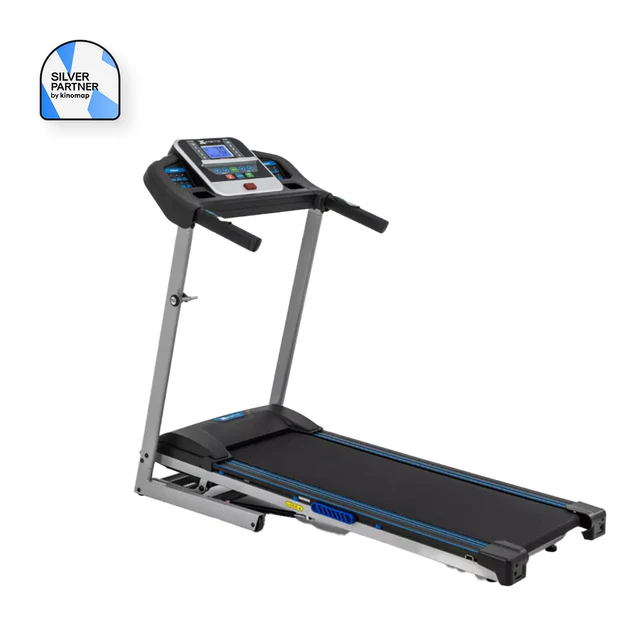
Xterra TR260Handrails
£699 £499The TR260 is the most honestly designed machine on this page. It caps at 6 mph, which sounds like a limitation until you notice what Xterra spent the saved money on: a 2.25 HP motor, the strongest conventional unit here, driving a machine that will only ever be asked to do walking speeds. That mismatch in your favour is why it feels unstressed and stays quiet where cheaper machines strain.
Ten powered incline levels cover hill walking properly, the cushioned 127 by 41 cm deck is comfortable for long steady sessions, and Bluetooth connects it to Zwift, Kinomap and the Xterra app if you want routes to follow. It folds with a soft-drop mechanism so the deck lowers itself rather than dropping, and the frame carries a lifetime warranty.
The trade is obvious and worth stating: you cannot jog on this. If there is any chance you will want to pick up the pace, the TM032 or the Echelon give you that headroom for the same money or less.
- Strong 2.25 HP motor, barely working at walking speeds
- Ten powered incline levels
- Cushioned deck built for long, steady walks
- Zwift and Kinomap support, no subscription required
- Lifetime frame warranty and soft-drop fold
- 6 mph ceiling rules out jogging entirely
- Basic LCD console
- Folds upright, not flat
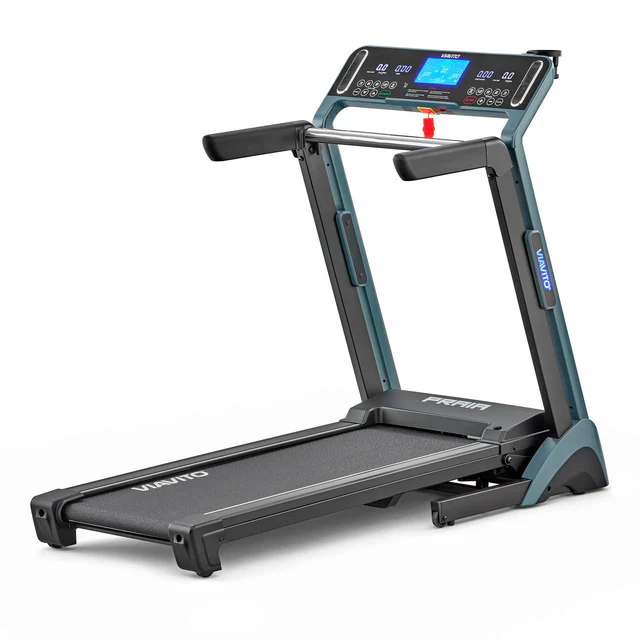
Viavito PraiaHandrails
£699 £499Fifteen powered incline levels is the most of any machine here, and if steep hill walking is specifically what you are after, the Praia goes further than anything else at this price. It is also the best-equipped console on the page: a 7 inch LCD, built-in Bluetooth speakers, and the FitShow app on board with nothing to subscribe to.
The catch is the motor. At 1.5 HP it is the weakest here, which is fine at the walking speeds this machine is built for but leaves little in reserve, and the 7.5 mph ceiling and 100 kg user limit keep it firmly in walking and gentle jogging territory. If you want the same incline ambition with more mechanical headroom, the Xterra TR260 has 2.25 HP for the same money with five fewer incline levels.
- Fifteen powered incline levels, the steepest range here
- 7 inch LCD with built-in Bluetooth speakers
- FitShow app included, no subscription
- Cushioned deck, comfortable for steady walking
- Weakest motor here at 1.5 HP
- 100 kg maximum user weight
- Lowest RunRank on this page
Xterra TR150Handrails
£599 £399The TR150 is the TR260 with the powered incline taken out, and at £399 that is a reasonable trade if you mainly walk on the flat. You keep the same 2.25 HP motor, the same cushioned 127 by 41 cm deck and the same lifetime frame warranty, which is a lot of machine for the money from a brand that has been doing this a while.
Incline is three manual settings you tilt before you start, so you cannot build a gradient mid-walk the way you can on the others. Thirteen onboard programmes, a 5 inch LCD and a tablet holder cover the basics, and it folds down with an easy-pull knob.
- A lot of Xterra for £399
- Same strong 2.25 HP motor as the TR260
- Lifetime frame warranty
- Simple and proven, nothing to subscribe to
- Manual incline only, set before you start
- 6 mph ceiling, walking and light jogging
- No app connectivity
What to look for in a walking treadmill
On a machine you will mostly walk on, the specifications that matter are not the ones the marketing leads with. Here is what actually decides whether you use it.
Incline
The single most important feature on a walking treadmill, and the main reason to buy one over a pad. Powered incline that adjusts mid-session lets you raise the intensity without walking faster, which is what makes routines like 12-3-30 possible. The Viavito Praia offers fifteen levels, the Echelon Stride 30 twelve, the Xterra TR260 ten and the Wellfit TM032 five levels up to 10%. Manual incline, as on the TR150, has to be set before you start and cannot be changed on the move.
Motor and noise
For walking, anything from 1.5 HP upwards is enough on paper, but a motor with headroom runs cooler and quieter than one working near its limit. That matters more than power itself here, because a walking treadmill usually lives in a room where noise is noticed. The bigger motor is also why these machines endure longer sessions than walking pads, most of which are rated for only 30 to 60 minutes of use a day. The Xterra pair are the strongest conventional units at 2.25 HP and the Wellfit runs a quiet brushless motor.
Deck size
Walking needs less deck than running, but a wider belt still feels more secure, especially on an incline. Look for 40 cm or more of width, and check the length if you are tall: the decks here run from 112 cm on the Wellfit to 127 cm on the two Xterras, with the JTX widest at 45 cm.
Max user weight
The figure that most often rules a machine out, and worth checking first. These range from 100 kg on the JTX Slimline and Viavito Praia up to 160 kg on the Wellfit TM032. Leave yourself a sensible margin rather than buying right at the limit.
Folding and storage
Decide where it will live before you buy. Most walking treadmills fold upright and stand against a wall; the JTX Slimline folds dead flat to go under a bed, and the Wellfit stores upright at 17 cm deep. Measure the space both in use and folded, and check the weight if you will move it regularly.
Warranty
Longer cover, and ideally in-home repair rather than parts-only, saves real hassle. The two Xterras carry a lifetime frame warranty, the JTX a two-year in-home engineer warranty, and the Wellfit one year handled by video and posted parts.
How much does a walking treadmill cost in the UK?
Walking treadmills sit in a narrower band than full-size machines, and the extra money mostly buys incline range, build quality, a quieter motor and a better warranty rather than speed.
Under £300. The Wellfit TM032 at £284.99 with our code is the only machine here at this level, and it is also our top pick: powered incline, adjustable rails and a 160 kg capacity at a price nothing else on the page approaches. Below this you are into dedicated walking pads, which we cover separately.
£300 to £500. Where four of our six picks sit. The Xterra TR150 at £399 covers flat walking with a lifetime frame warranty, and at £499 the Echelon Stride 30, Xterra TR260 and Viavito Praia all add powered incline, apps and better consoles.
£500 and up. Assembled delivery, stronger warranties and flat-fold storage, as on the JTX Slimline at £569.05 with our code. Above this bracket you move into full-size folding treadmills built for running, covered in our best treadmill under £1,000 guide.
Set your budget by the incline you want first, then buy the best-reviewed machine inside it rather than stretching for a top speed you will not use.
How to choose a walking treadmill
Walking with incline. Adding even a modest gradient raises your heart rate and calorie burn far more than walking faster on the flat, which is why incline walking and the 12-3-30 routine have taken off. If that is your goal, buy powered rather than manual incline so you can adjust mid-session, and hold the rails until the gradient feels familiar. For routines and pacing, see our treadmill training section.
Frequently asked questions
What is the difference between a walking treadmill and a walking pad?
A walking treadmill has handlebars and a console and is built for deliberate walking and light-jogging sessions, usually with incline. A walking pad is a slim deck with no handrails, or a very lightweight folding one, that slides under a standing desk for gentle walking while you work, typically capped around 3.7 mph. Pads are also usually rated for sessions of around 30 minutes to an hour a day at most, whereas a walking treadmill’s larger motor endures longer daily use. This page covers walking treadmills; our best walking pads guide covers pads.
What is the best walking treadmill for home use?
The Wellfit TM032 at £284.99 with our code is our top pick: a powered 10% auto incline, height-adjustable handrails, light-jogging speed and a 160 kg capacity for the least money on the page. If incline range is the point of your walking, the Echelon Stride 30 Sport’s twelve powered levels make it the climber’s choice, and if you know you will never jog the Xterra TR260 spends its budget best.
Are there discount codes for any of these?
Two, and they are easy to confuse. HOMETREADMILL, without a 5, takes 5 percent off the Wellfit TM032, bringing it to £284.99. HOMETREADMILL5 takes 5 percent off any JTX treadmill, bringing the Slimline to £569.05; it does not apply to refurbished machines. The other machines here are already discounted against their RRP without a code.
Do I need incline on a walking treadmill?
If you want walking to improve your fitness rather than just add steps, yes. Walking on a gradient raises your heart rate far more than walking faster on the flat, and it is the main advantage a walking treadmill has over a pad. Powered incline that adjusts mid-session is considerably more useful than manual incline you set beforehand.
Can you run on a walking treadmill?
On some, briefly. The JTX Slimline reaches 9.9 mph, the Echelon Stride 30 10 mph and the Wellfit TM032 8.7 mph, so a light jog is possible, though the compact decks suit walking far better. The two Xterras cap at 6 mph and cannot be run on at all. For regular running, step up to a full-size treadmill from our under £1,000 guide.
Are walking treadmills good for bad knees?
Walking is low impact, so it is considerably kinder on knees, hips and ankles than running, and a cushioned deck softens it further. Handlebars also help if balance is a concern. Incline walking raises intensity without adding impact, which is why it suits people easing back into exercise. If you are managing an injury or a specific joint condition, check with your GP or physiotherapist before starting.
Do you need a subscription to use one?
No. Every machine here works fully without one. Echelon offers an optional Premier membership for classes, but speed, incline and the nineteen onboard programmes all work without it. The Xterra, Viavito, Wellfit and JTX machines are subscription-free by design.
How much space does a walking treadmill need?
Around 75 by 150 cm in use, plus clearance behind it to step on and off safely. Folded, most stand upright against a wall; the JTX Slimline folds flat enough to slide under a bed and the Wellfit TM032 stores upright at 17 cm deep. Measure both the in-use footprint and the folded size before you buy.
How many calories does walking on a treadmill burn?
As a rough guide, an average adult burns somewhere around 150 to 250 calories an hour walking at a steady pace on the flat, and noticeably more on an incline. The exact figure depends on your weight, the speed and the gradient, so treat any on-screen calorie readout as an estimate rather than a precise number.
Our pick: the Wellfit TM032
Powered 10% auto incline, height-adjustable handrails that drop away entirely, a quiet 3.5 HP brushless motor and a 160 kg capacity, all for £284.99 with our HOMETREADMILL code. If climbing is the whole point of your walking, the Echelon Stride 30 Sport and Viavito Praia are the incline specialists at £499.
We research and compare products independently using our RunRank system. Wellfit supplied the TM032 unit for our hands-on review; this did not affect its RunRank score or its placement here. If you buy through links on this page we may earn a commission, at no extra cost to you. Prices and stock are checked regularly and change with sales and discount codes, so always confirm the current price on the retailer’s site.