Why Treadmills Work for Weight Loss
Weight loss comes down to one fundamental principle: burning more calories than you consume. This is called a calorie deficit, and it’s the only way your body taps into stored fat for energy. A treadmill helps create that deficit by burning significant calories during each session.
The British Heart Foundation notes that regular physical activity like walking and running supports healthy weight management alongside improvements to cardiovascular health. Treadmills make this activity accessible regardless of weather, time of day, or how confident you feel exercising in public.
How many calories you burn depends on your body weight, workout intensity, and duration. As a rough guide:
Walking at 3.5 mph: Burns approximately 250 to 350 calories per hour depending on body weight.
Jogging at 5 mph: Burns approximately 400 to 600 calories per hour.
Running at 6.5 mph: Burns approximately 600 to 850 calories per hour.
And these numbers add up fast. Just four 30-minute sessions per week at a moderate jogging pace could burn an extra 800 to 1,200 calories weekly, which translates to meaningful fat loss over time. That’s equivalent to almost half a day’s calorie allowance, burned.
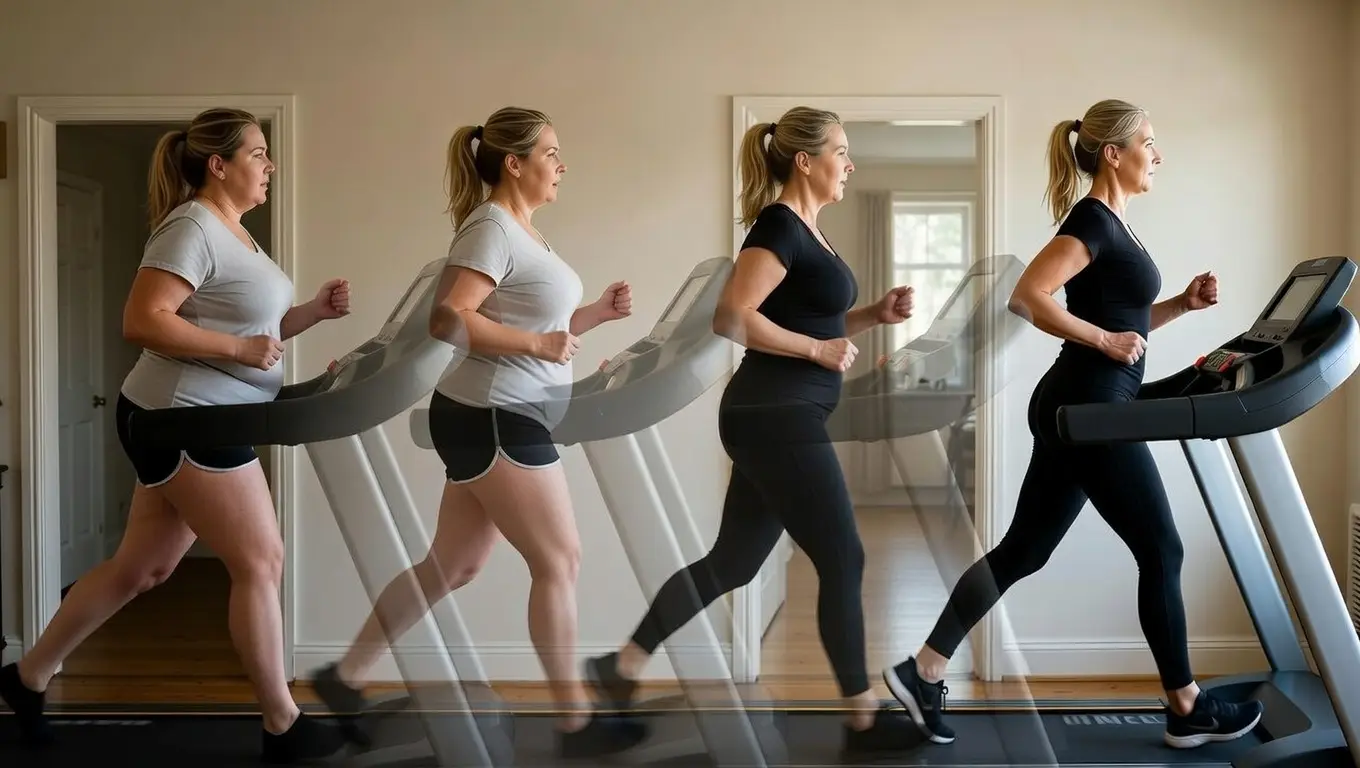
What Results Can You Expect?
Let’s talk honestly about timelines, because unrealistic expectations are the number one reason people quit.
You’ll find hundreds of weight loss and sports blogs that imply you will jump on a treadmill or exercise bike and the weight will just magically disappear within 2 weeks. But the reality is, consistent work over months is key.
We believe the most motivating goal is one you can realistically reach, so lets take an honest and holistic view of what your weight loss journey on a treadmill could look like. Obviously, your starting weight matters a lot here, so this is a general guide to getting started with a treadmill for weight loss.
The First Two Weeks
There are a lot of articles out there promising dramatic results in two weeks. And don’t get us wrong, the first two weeks have been shown to be hugely important for your journey, with weight loss of up to 4.5kg possible according to Mayo Clinic.
More realistically, in the first fortnight, you might lose 0.5 to 1.5kg, some of which will be water weight. Most importantly, you’ll likely notice improved energy levels, better sleep, and the beginnings of increased fitness. These early wins matter because they build momentum.
Don’t expect to see major changes in the mirror after 14 days. But do expect to feel like you’re finally doing something positive for your health.
The First Month
With consistent training (three to four sessions per week) and a moderate calorie deficit from your diet, losing 2 to 4kg or more in the first month is realistic and sustainable!
You’ll start to notice your clothes fitting differently and your cardiovascular fitness improving noticeably. You’ll also be sleeping better and more deeply, because your body is recovering from exercise.
Three Months & Beyond
This is where visible results really show. A realistic target is 0.5 to 1kg per week, which means 6 to 12kg over three months – that’s almost 2 stone on the upper end!
The NHS recommends aiming to lose weight gradually at this pace for sustainable, long-term results rather than crash dieting or extreme exercise regimes that don’t last.
The Best Treadmill Workouts for Weight Loss
Not all treadmill sessions are created equal. Here are the workout styles that deliver the best results for fat loss.
Steady-State Cardio
This is the classic approach: pick a moderate pace and maintain it for 30 to 60 minutes. Walking briskly at 3.5 to 4 mph or jogging at 5 to 5.5 mph keeps your heart rate in the fat-burning zone without exhausting you.
Best for: Beginners, recovery days, building aerobic base, people who want to watch TV or listen to podcasts while training.
Sample workout: 5-minute warm-up walk at 3 mph, 30 to 45 minutes at 4 mph with 1% incline, 5-minute cool-down.
Interval Training
Alternating between high-effort bursts and recovery periods burns more calories in less time and keeps your metabolism elevated after the workout ends. This afterburn effect, known as excess post-exercise oxygen consumption (EPOC), means you continue burning calories even after you’ve stepped off the treadmill.
Best for: Time-efficient fat loss, improving fitness quickly, breaking through plateaus.
Sample workout: 5-minute warm-up, then alternate 1 minute at 6 to 7 mph with 2 minutes at 3.5 mph. Repeat 8 to 10 times. Cool down for 5 minutes.
Incline Walking
Walking at a steep incline transforms a gentle stroll into a serious calorie burner. A 10 to 15% incline at 3 to 3.5 mph can burn as many calories as jogging on a flat surface, but with far less impact on your joints.
Best for: People who find running uncomfortable, those with joint issues, anyone who wants high calorie burn without high impact.
Sample workout: 5-minute flat warm-up, then 20 to 30 minutes at 3 mph with 10 to 12% incline, 5-minute flat cool-down.
The 12-3-30 Workout
This viral workout involves walking at 3 mph on a 12% incline for 30 minutes. It’s become popular because it’s challenging enough to deliver results but accessible enough for most fitness levels. It burns approximately 300 to 400 calories depending on your body weight and builds serious lower body endurance.
Best for: People who want a structured, repeatable workout without complicated intervals.
Progressive Runs
Start at an easy pace and gradually increase speed every few minutes until you’re working hard by the end. This approach builds fitness while burning plenty of calories and teaches your body to run faster over time.
Sample workout: Start at 4 mph, increase by 0.5 mph every 3 minutes until you reach a challenging pace, hold for 5 minutes, then reverse back down.
How Often Should You Use the Treadmill for Weight Loss?
Consistency beats intensity every time. Three to five sessions per week is the sweet spot for most people.
The World Health Organization recommends 150 to 300 minutes of moderate-intensity aerobic activity weekly for adults, or 75 to 150 minutes of vigorous activity. For weight loss specifically, aiming toward the higher end of these ranges accelerates results.
A practical weekly schedule might look like:
Monday: 30-minute interval session
Tuesday: Rest or light activity
Wednesday: 45-minute incline walk
Thursday: Rest
Friday: 30-minute steady jog
Saturday: 60-minute easy walk (could be outdoors)
Sunday: Rest
This gives you four treadmill sessions totalling around 2.5 to 3 hours, which is enough to drive meaningful fat loss when combined with sensible eating.
Walking vs Running: Which Burns More Fat?
Running burns more calories per minute than walking, but that doesn’t automatically make it better for weight loss.
Walking is sustainable. You can walk for an hour without feeling destroyed. You can do it daily without your joints complaining. You can do it while watching Netflix or taking work calls. For many people, especially beginners or those with significant weight to lose, walking delivers excellent results with lower injury risk.
Running is time-efficient. A 30-minute run burns roughly the same calories as a 60-minute brisk walk. If time is your limiting factor, running gets the job done faster.
The best choice is the one you’ll actually stick with. A walking routine you maintain for six months will always beat a running programme you abandon after two weeks because you hate it or get injured.
Many successful treadmill users combine both: walking on most days with one or two running or interval sessions per week for variety and an extra metabolic boost.
The Role of Diet: You Can’t Outrun a Bad Diet
Here’s the uncomfortable truth: treadmill training alone won’t overcome poor eating habits. You can burn 400 calories in a tough 30-minute session, but you can consume that many calories in five minutes with a couple of biscuits and a sugary coffee.
Exercise and diet work together. The treadmill creates a calorie deficit from the expenditure side; sensible eating creates a deficit from the intake side. Combine both and you get results far faster than either approach alone.
You don’t need extreme dieting. Small, sustainable changes make a significant difference: slightly smaller portions, fewer liquid calories, more protein and vegetables, less ultra-processed food. The goal is a moderate deficit of 300 to 500 calories per day, which combined with your treadmill training creates the conditions for steady fat loss.
Common Treadmill Weight Loss Mistakes
Most people who fail to lose weight on a treadmill make one or more of these errors.
Doing the same workout every time: Your body adapts quickly. If you’ve been walking at 3.5 mph for months, your body has become efficient at that exact task and burns fewer calories doing it. Vary your workouts with different speeds, inclines, and durations to keep challenging yourself.
Holding the handrails: Gripping the rails while walking or running reduces calorie burn significantly because your arms aren’t working and your core isn’t engaged for balance. If you need to hold on, you’re going too fast or the incline is too steep. Slow down and let go.
Overestimating calorie burn: Treadmill displays often inflate calorie counts. Treat them as rough estimates at best and don’t use them as justification for eating extra food. The “I earned this” mentality after a workout has derailed many weight loss efforts.
Skipping the effort: Scrolling your phone while barely moving the belt doesn’t count. You need to work hard enough that your breathing is elevated and you’re breaking a sweat. If you can comfortably have a full conversation, you’re probably not pushing enough for meaningful fat loss.
Ignoring rest: Training every single day without recovery leads to fatigue, increased appetite, and eventually burnout or injury. Rest days are when your body adapts and repairs. Take them seriously.
Expecting overnight results: Weight loss is slow. If you’re losing 0.5 to 1kg per week, you’re doing brilliantly, even if it doesn’t feel dramatic. Consistency over months beats intensity for days.
How to Stay Motivated on the Treadmill
Treadmill training can feel monotonous. Here’s how to stick with it long enough to see results.
Track your progress: Log your workouts, distances, and times. Watching your fitness improve is motivating even when the scale moves slowly.
Set non-weight goals: Aim to run your first 5K, complete a certain distance in a month, or master a challenging incline workout. These goals give you something to work toward beyond the number on the scale.
Create a distraction: Podcasts, audiobooks, music playlists, or streaming shows make time pass faster. Many people look forward to treadmill sessions because it’s their dedicated time to catch up on entertainment.
Schedule it like an appointment: Put your workouts in your calendar and treat them as non-negotiable. Waiting until you “feel like it” is a recipe for skipped sessions.
Find your time: Some people thrive with morning workouts before the day gets busy. Others prefer evenings to decompress. Experiment and find what works for your schedule and energy levels.
Frequently Asked Questions
Is a treadmill good for losing belly fat?
A treadmill helps you lose overall body fat, which includes belly fat. You cannot spot-reduce fat from specific areas through exercise. As you lose weight through consistent treadmill training and a calorie deficit, fat will reduce from your entire body, including your midsection.
How long should I walk on a treadmill to lose weight?
Aim for at least 30 minutes per session, ideally working up to 45 to 60 minutes for walking workouts. The longer you walk, the more calories you burn. If you’re doing higher-intensity intervals or running, 20 to 30 minutes can be equally effective.
Is 30 minutes on the treadmill enough to lose weight?
Yes, 30 minutes is enough to contribute to weight loss, especially if you’re working at a moderate to high intensity and training consistently three to five times per week. Combined with a sensible diet, 30-minute sessions deliver real results.
Should I do treadmill before or after weights?
For weight loss, it doesn’t matter much. If you have a preference or one feels better, go with that. Some research suggests doing cardio after weights may slightly increase fat burning, but the difference is minimal. Consistency matters far more than exercise order.
Will I lose weight walking on a treadmill every day?
Daily walking can certainly support weight loss, provided you’re also maintaining a calorie deficit through your diet. Listen to your body and take rest days if you feel fatigued. For most people, four to six days per week is sustainable long-term.
Why am I not losing weight on the treadmill?
The most common reasons are eating more than you realise, not burning enough calories during sessions, or not being consistent over a long enough period. Weight loss requires patience. If you’ve been training consistently for several weeks without results, examine your diet more closely and consider using a tracking app to log your sessions.