
Treadmill review
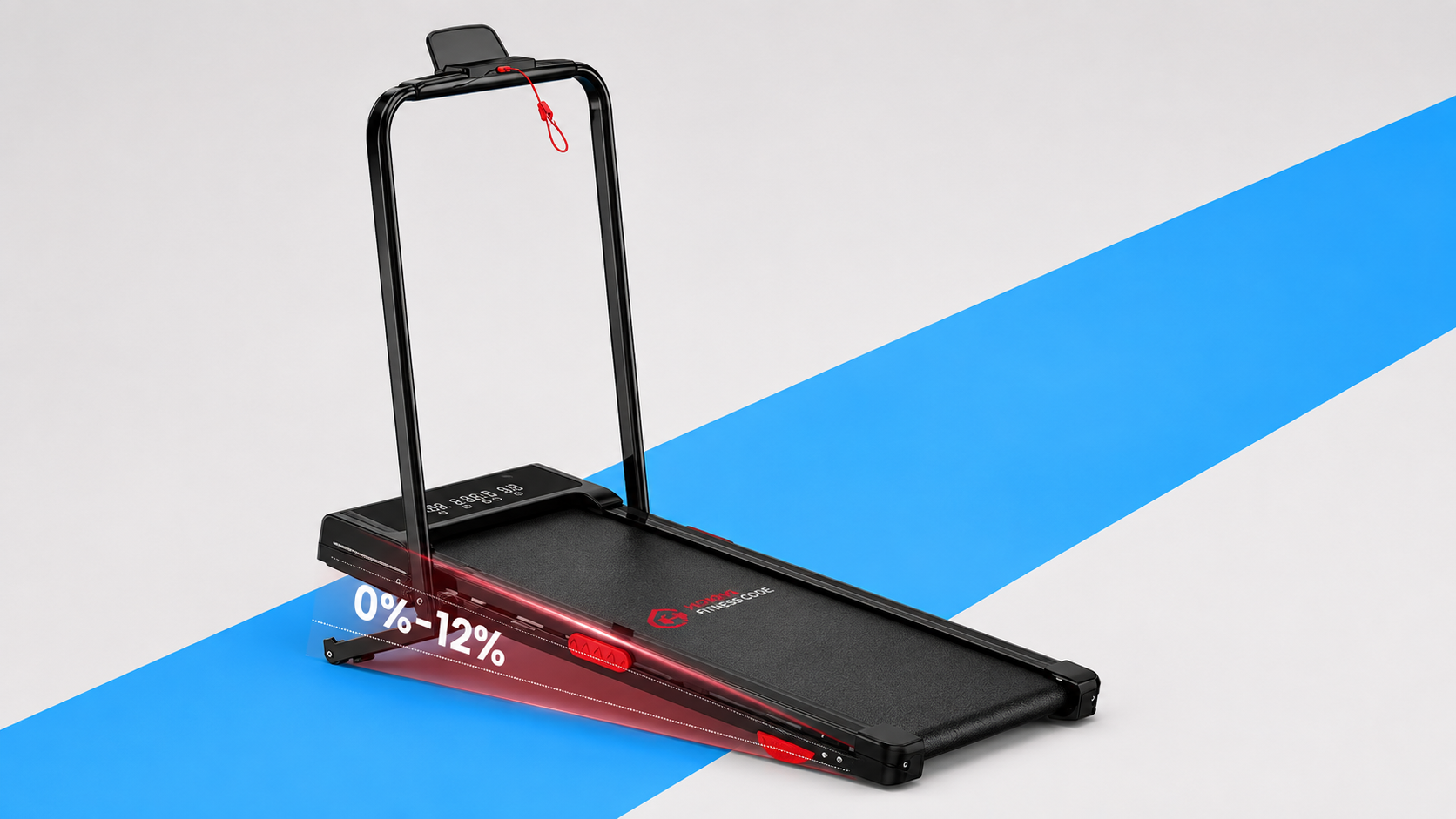
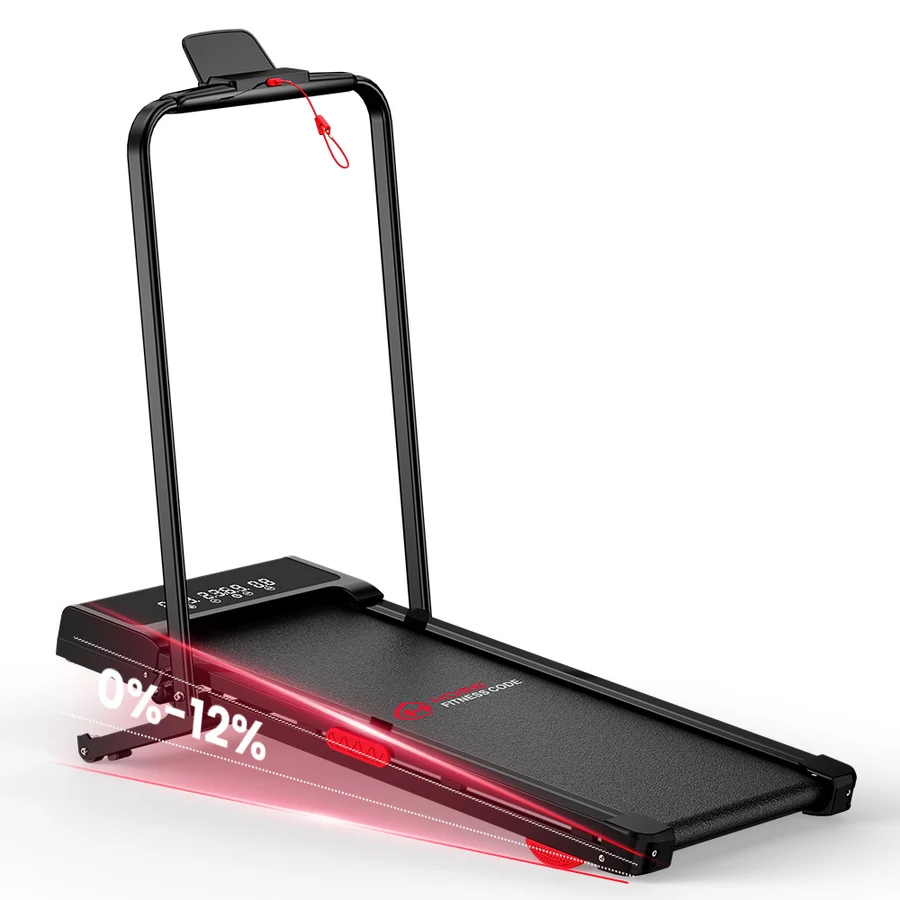
The Y3 exists for one reason: powered incline without a treadmill footprint. It pairs a quiet brushless motor with a 12% auto incline adjusted from a remote, in a slim-decked machine sold with a supportive handrail, for £169.99. This review covers what that incline is really worth, the honest limits of a 6.2 mph machine, and whether the cheaper Y1 does the same job.
Home Fitness Code Y3 at a glance
Home Fitness Code Y3
£279.99£169.99Sold in black and currently only with the handrail fitted: the standard version above, and a folding version at £189.99 whose handrail folds down for storage. Prices are the standing sale prices against RRP, checked August 2026.
Who the Y3 is for
The incline is the point
Flat walking at desk pace is gentle activity, not exercise; the physiology only changes when you add gradient. That is the problem the Y3 solves at a price almost nothing else matches: a powered 0 to 12% auto incline, adjusted from the remote mid-session rather than by hauling the deck onto fixed feet. Twelve percent at 3 mph is genuinely demanding, works the glutes, hamstrings and calves in a way flat walking cannot, and stays kind to the knees because there is no impact. It is also what brings routines like the 12-3-30 workout within reach of a machine that slides away after the session.
Two honest caveats. First, treat the headline figure as generous: on budget incline machines generally, the advertised maximum tends to feel shallower than the same number on a gym treadmill, and nothing about this price band suggests the Y3 is the exception. The jump from flat to maximum is still substantial and clearly felt. Second, the incline raises the walking surface, so check clearance if it will be used under a desk. If you want more gradient than this, the honest answer is a bigger machine: our best incline treadmills guide covers the options, and within the brand the Q8 Pro advertises up to 20%.
Motor and noise
The Y3 uses the same class of brushless motor as the Q2 Pro, rated at 2.5 HP peak and under 35 dB, and that rating is what separates it from the £20-cheaper Y1. Brushless designs run quieter and smoother than brushed units and have no carbon brushes to wear out, which matters more on an incline machine because the motor works harder on a gradient than on the flat. As always, the dB figure describes the motor at walking pace, not footsteps on the deck; owner feedback across the brand’s brushless machines consistently describes conversation and calls as comfortable at walking speed, and a mat underneath tames footfall on hard floors.
Speed: know what you are buying
The Y3 runs from 0.6 to 6.2 mph (1 to 10 km/h). At walking speeds, which is where an incline machine spends its life, that range is exactly right, and the remote makes mid-session changes easy. The top end is a light jog, and the combination of a 97 by 39 cm belt and a raised gradient means we would not treat jogging as more than an occasional gear. This is a deliberate design: the Y3 competes with walking pads on storage and with treadmills on training effect, not with either on speed. Buyers who expect to progress to running are better served from the start by the Q8, which is £10 more.
Size, build and the 150 kg rating
The deck measures 116 by 52 cm and 15 cm tall, only fractionally taller than the flat pads since the incline mechanism has to live somewhere, but the Y3 is currently sold only with the handrail fitted, so allow for its height when planning where the machine lives. The folding version folds the rail down to store slim; the standard version does not, and at 21 kg on transport wheels either is easy enough to move. The headline build figure is the 150 kg user rating, the joint-highest in the Home Fitness Code range and unusual at this price; heavier users who find the pads’ 120 kg limits marginal get real headroom here rather than a number to run at its edge. The console shows the essentials, with speed and incline handled from the remote, and there is no app, Bluetooth or programme suite anywhere in the range; the Y3 is no exception.
Y3 vs Y1: is the £20 worth it?
| Model | Motor | Noise | Incline | Max user | Versions | Price |
|---|---|---|---|---|---|---|
| Y3 | Brushless, 2.5 HP | <35 dB | 12% auto | 150 kg | Handrail; folding option | £169.99 £279.99 |
| Y1 | Brushed, 3.0 HP | <50 dB | 0–12% auto | 145 kg | Flat only | £149.99 £279.99 |
Same incline, same speed, £20 apart. The Y1 answers with a stronger 3.0 HP brushed motor and a slightly wider deck; the Y3 answers with the brushless unit, a 15 dB quieter rating, longer motor life, a handrail to hold on the gradient (the Y1 has none) and the folding option. Our view mirrors the C1 versus Q2 Pro call: if the machine shares a room with people, calls or a television, the Y3’s motor is worth every penny of the £20; if it lives somewhere noise is irrelevant, the Y1 is the value pick. Both sit in our Home Fitness Code treadmill guide alongside the Q8 machines.
What owners say
Feedback on the Y3 follows the brand pattern: roughly nine in ten Home Fitness Code ratings sit at four or five stars, with the incline, quiet running and value drawing the praise. The recurring brand-level criticisms apply here too, occasional shipping damage in transit, slow support replies at busy times, and expectations on noise or assembly not always met, and an incline machine adds one model-specific check: run the incline through its full range the day it arrives. Powered incline is the most complex mechanism on any machine at this price, and the 30-day return window is the right tool if it misbehaves, not a support ticket months later.
Warranty, returns and support
Budget cover on a moving part. The Y3 carries the brand’s standard 12-month warranty and 30-day returns, handled by post, with Klarna and PayPal at the checkout. On a machine with a powered incline mechanism that cover is thinner than we would like: a comparable incline walking machine from a premium brand can carry two-year in-home cover at three times the price. That is the trade, stated plainly. Keep the order confirmation, oil the belt monthly, and test the incline early and often in the first month. The full brand picture is in our Home Fitness Code guide.
Pros and cons
- Powered 12% auto incline, adjusted from the remote
- Brushless motor rated under 35 dB, quiet for an incline machine
- 150 kg user rating, joint-highest in the range
- Slim enough to store like a walking pad
- £169.99 undercuts nearly every auto-incline rival
- Folding version available at £189.99
- 6.2 mph ceiling; a walker and light jogger, not a runner
- Advertised incline likely feels shallower than a gym 12%
- Incline raises the deck; check under-desk clearance
- No app, Bluetooth or programmes
- Black only
- 12-month posted-parts warranty on a machine with a powered mechanism
RunRank breakdown
Frequently asked questions
Is the Home Fitness Code Y3 good for the 12-3-30 workout?
It is the cheapest machine we would recommend for an approximation of it. The powered incline reaches its advertised 12% and the remote makes the setup easy; just treat the gradient as somewhat generous against a gym treadmill’s 12%, and expect the workout to be slightly easier than the original as a result. Our 12-3-30 guide covers the routine in full.
Can you run on the Home Fitness Code Y3?
Only lightly. The 6.2 mph (10 km/h) ceiling covers a jog, and the compact belt makes that an occasional gear rather than the machine’s job. For running, the Q8 (7.5 mph) or Q8 Pro (8.7 mph) are the models built for it.
What is the difference between the Y3 and the Y1?
The motor, chiefly: the Y3 is brushless and rated under 35 dB, the Y1 is brushed, stronger on paper at 3.0 HP, and rated under 50 dB. The Y3 also comes with a handrail (the Y1 has none), a folding option, and a 150 kg rating against the Y1’s 145 kg, for £20 more. Same incline, same speed.
What is the Y3’s weight limit?
150 kg, the joint-highest in the Home Fitness Code range alongside the Q8 and Q8 Pro.
Does the Y3 work under a standing desk?
Not as currently sold. The Y3 comes with the handrail fitted, which rules out sliding it under a desk; it is a machine for dedicated walking sessions rather than walking while you type. For desk use, the handrail-free Q2 Pro is the pick in the range.
What should I check when the Y3 arrives?
Two things inside the 30-day window: transit damage, which is the brand’s most common complaint, and the incline mechanism through its full range. Both are return matters if wrong, not things to live with. Ongoing care is monthly oiling and occasional belt centring, covered in our troubleshooting section.
Is Home Fitness Code a legitimate company?
Yes: a UK-registered budget retailer with a UK store, 30-day returns and a 12-month warranty. Our brand guide covers the company and the owner-review picture in full.
Is the Y3 the right machine for you?
The cheapest quiet route to powered incline walking, £169.99 at the time of writing. Check the current price, or compare it against every incline machine we have reviewed.
This review is based on the manufacturer’s published specifications, the machine’s documentation and verified owner feedback; we have not used this machine hands-on, and we say so rather than pretend otherwise. Prices checked for 2026 and subject to change. HomeTreadmill.co.uk is reader-supported: if you buy through links on this page we may earn a commission, at no extra cost to you. This does not influence our assessment. Every machine is scored with our RunRank system, an editorial score rather than a measure of customer ratings.