
Walking pad review
The C1 is the cheapest machine Home Fitness Code sells that both walks and jogs, and at £99.99 it undercuts almost every 2-in-1 pad in the UK. This review sets out what that money buys, where the corners were cut to hit the price, and the one question most buyers land on: whether to spend £20 more on the quieter Q2 Pro.
Home Fitness Code C1 at a glance
Home Fitness Code C1
£189.99£99.99Sold in black or pink, as a flat pad or a folding version (£109.99, RRP £229.99) with a fold-up handrail. Prices are the standing sale prices against RRP, checked August 2026.
Who the C1 is for
What £99.99 actually buys
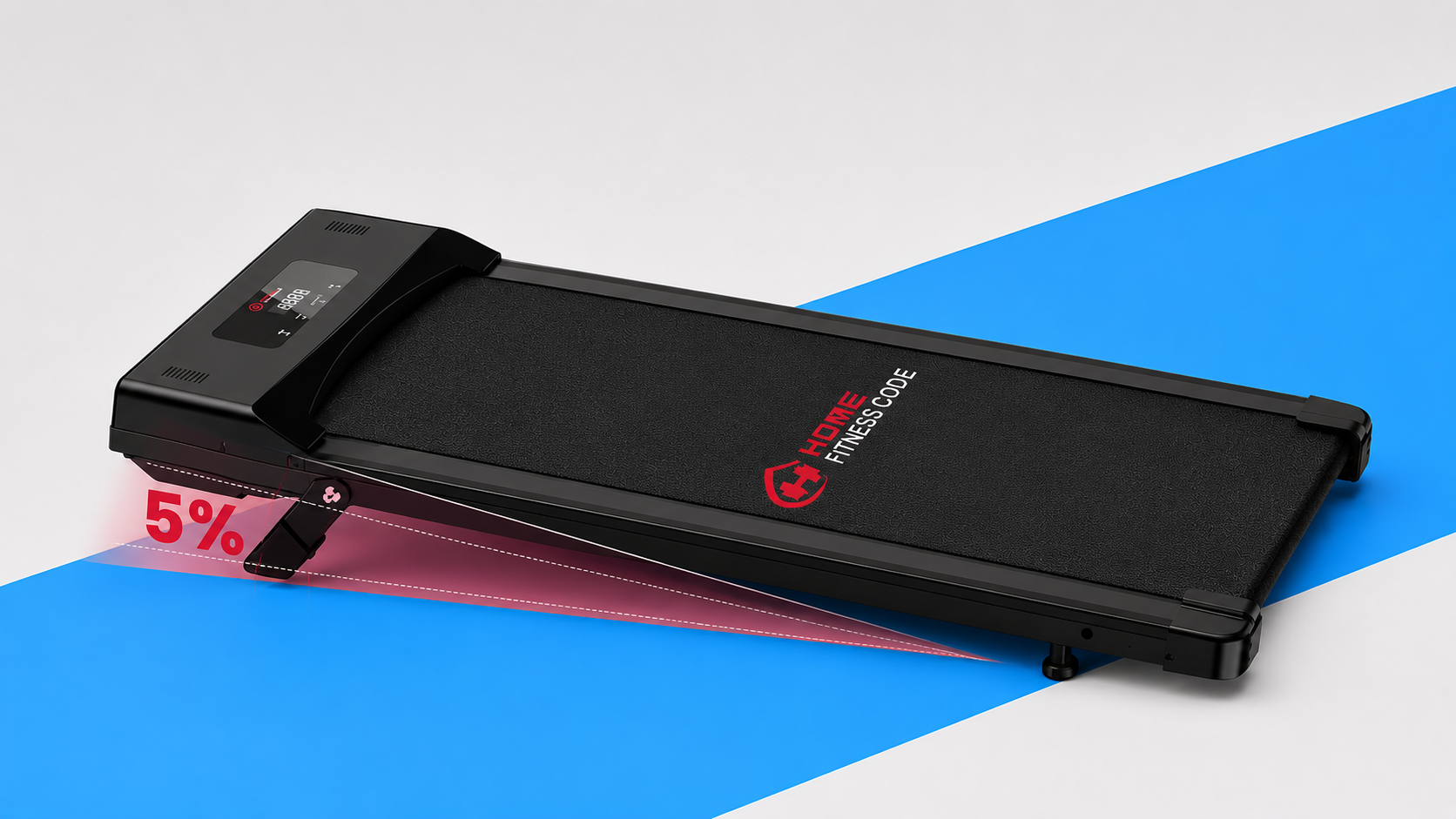
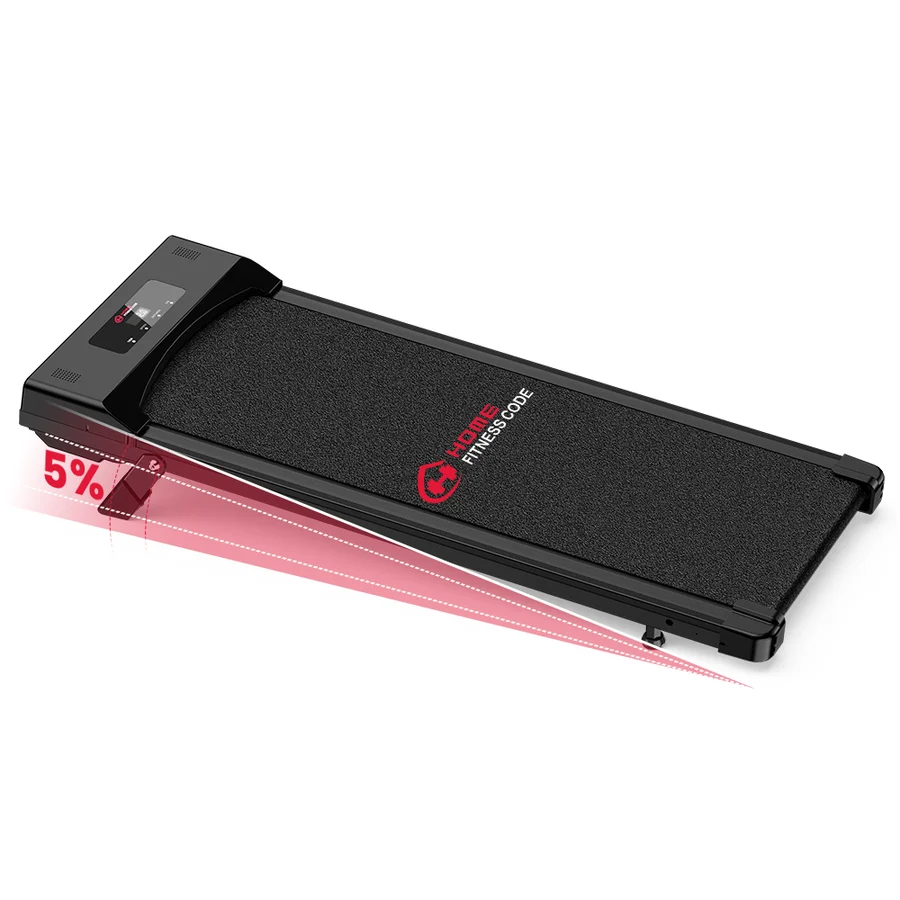
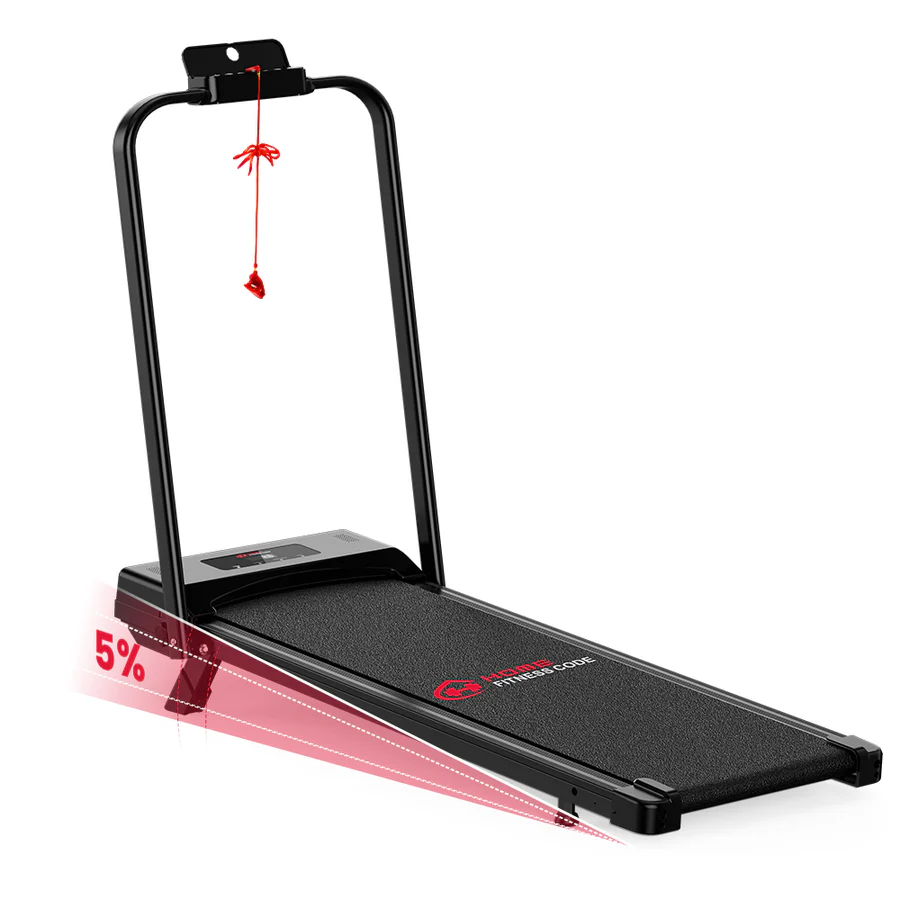
Budget walking pads at this price usually make one of two compromises: a walk-only speed ceiling or an anonymous brand with no UK support behind it. The C1 avoids both. It is a genuine 2-in-1, running from 0.6 to 6.2 mph (1 to 10 km/h), sold direct by a UK-registered retailer with 30-day returns and a 12-month warranty, and it keeps a 5% manual incline that even the pricier Q2 Pro lacks. Add an LCD console, a remote, and black or pink colourways, and the specification reads like a machine from the next price band up.
The honest accounting is what was cut to get there. The motor is a brushed 2.5 HP peak unit rather than brushless, which costs it noise and long-term durability. The 120 kg user limit is adequate rather than generous; heavier users should look at the 145 to 150 kg machines up the range. And the feature list stops at the basics: no app, no Bluetooth, no programmes, with calories estimated from speed and time rather than measured. None of that is unusual at £99.99, but it frames what kind of machine this is.
Motor and noise: the £20 question
The C1 uses a brushed motor, rated by Home Fitness Code at under 50 dB, against under 35 dB for the brushless Q2 Pro. Treat both figures as motor-only ratings at walking pace, but the 15 dB gap between them is real and audible: decibels are logarithmic, so the C1’s motor is producing several times the sound energy of the Q2 Pro’s. Owner feedback matches the numbers, describing the C1 as reasonable rather than silent, with the motor audible in a quiet room and footfall on the deck adding to it.
What that means in practice depends entirely on where the machine lives. Under a desk in a home office with the door shut, or in a garage or spare room, the noise is a non-issue and the £20 saving is free money. Sharing a room with a partner watching television, or walking through video calls, is where the brushed motor earns its discount. Brushed designs also wear their carbon brushes over time where brushless units do not, which is worth weighing if you expect daily use for years rather than months.
Speed and incline: honest numbers
The speed range splits the same way as the rest of the range: walking mode covers 0.6 to 3.7 mph (1 to 6 km/h) for desk use, and running mode extends to 6.2 mph (10 km/h), best used on the folding version with the handrail raised. Most people type comfortably at 1.5 to 2.5 mph, and 6.2 mph is a genuine jog rather than a run; the 97 by 39 cm belt is compact for a full stride, so treat the top end as an occasional gear rather than the point of the machine.
The 5% manual incline is set by hand at the rear feet before you step on, not adjusted mid-session. It is a modest gradient that adds a little intensity to a walk, and it is more than the Q2 Pro offers, but it is not the powered, remote-adjusted incline that makes routines like the 12-3-30 workout practical. If incline is the reason you are shopping, the Y1 and Y3 exist for exactly that and cost £50 to £70 more.
Size, deck and storage
At 116 by 50 cm and 12 cm tall, the C1 slides under most sofas and beds, and at 17.5 kg with transport wheels one person can move it between rooms without drama. The LCD console shows time, speed, distance and calories, controlled from the included remote or, on the folding version, buttons on the handrail. The 120 kg user limit matches the other pads in the range; if that is close to your weight, the Y3 and Q8 at 150 kg are the sensible step up rather than running a budget deck at its limit.
Flat or folding: which C1 to buy
C1 vs Q2 Pro: which to buy
| Model | Motor | Noise | Top speed | Incline | Display | Price |
|---|---|---|---|---|---|---|
| C1 | Brushed | <50 dB | 6.2 mph | 5% manual | LCD | £99.99 £189.99 |
| Q2 Pro | Brushless | <35 dB | 6.2 mph | None | LED | £119.99 £249.99 |
Strip away the marketing and the two machines are the same size, the same speed and the same weight limit. The C1 wins on price and its manual incline; the Q2 Pro wins on the motor, and the motor is what you live with every session. Our rule of thumb: if anyone else will be in the room while it runs, buy the Q2 Pro; if the machine gets a room to itself, buy the C1 and pocket the £20. The wider four-pad picture, including the walk-only Z3 and T7, is in our Home Fitness Code walking pad guide, and the whole market is ranked in our best walking pads UK roundup.
What owners say
Across the Home Fitness Code range, roughly nine in ten customer ratings sit at four or five stars, and the C1’s feedback follows the brand pattern: value for money and compact size draw the praise, and the recurring criticisms are occasional shipping damage in transit, slow support responses at busy times, and noise or assembly not quite matching expectations. The noise point deserves particular weight on this model given the brushed motor. As with any HFC machine, inspect it on arrival and raise transit damage inside the 30-day return window rather than living with it.
Warranty, returns and support
Standard budget-tier cover. The C1 carries a 12-month warranty with 30-day returns, handled by posting parts rather than an engineer visit, with Klarna and PayPal instalments at the checkout. That is normal at £99.99, and clearly short of the two-year in-home cover premium brands offer; at this price the honest framing is that the machine costs less than a single year of most gym memberships, and the cover matches the outlay. The brand picture, including the legitimacy question, is covered in our Home Fitness Code guide.
Pros and cons
- Cheapest 2-in-1 in the range at £99.99
- Same 6.2 mph (10 km/h) top speed as the Q2 Pro
- 5% manual incline, which the Q2 Pro lacks
- LCD console, remote, black or pink colourways
- Slim 12 cm profile, 17.5 kg, easy to store and move
- UK retailer with 30-day returns behind it
- Brushed motor rated under 50 dB, the loudest trade-off here
- Brush wear shortens motor life against brushless rivals
- Incline is set by hand before you step on, not powered
- 120 kg user limit; heavier users need the Y3 or Q8
- No app, Bluetooth or programmes
- 12-month warranty, handled by post
RunRank breakdown
Frequently asked questions
Is the Home Fitness Code C1 any good?
For £99.99, yes. It matches machines £50 pricier on speed and format, and its weaknesses, a louder brushed motor and a basic feature set, are the standard trade-offs at this price rather than flaws unique to it. It is the machine we point most budget buyers at within the range.
Can you run on the Home Fitness Code C1?
You can jog. Running mode covers 3.7 to 6.2 mph (6 to 10 km/h), best used on the folding version with the handrail raised. The compact belt and 6.2 mph ceiling make it a jogger rather than a runner; the Q8 at 7.5 mph is the machine in the range built for running.
How do you set the incline on the C1?
By hand, at the rear feet, before you step on. It is a fixed 5% gradient rather than a powered adjustment. For incline you can change mid-session with a remote, the Y1 (£149.99) and Y3 (£169.99) offer up to 12% auto incline.
How loud is the C1?
Home Fitness Code rates the brushed motor at under 50 dB, against under 35 dB for the brushless Q2 Pro. Owner feedback describes it as reasonable rather than quiet: fine behind a closed door, audible in a shared room. Regular oiling with the included silicone bottle keeps it from getting louder over time.
Where is the C1 manual, and how do I oil it?
The printed manual ships in the box; if it goes missing, email support@homefitnesscode.com with the model name for a copy. Oiling is monthly with regular use: lift each belt edge, run a thin line of the included silicone oil underneath, then walk at low speed for a few minutes. Belt adjustment and error codes are covered in the troubleshooting section of our treadmill guide.
What is the difference between the flat and folding C1?
The flat version (£99.99) has no handrail; the folding version (£109.99) adds a fold-up handrail with controls and a safety key and folds for storage. Motor, deck and speeds are identical, so choose on whether you will use running mode.
Is Home Fitness Code a legitimate company?
Yes: a UK-registered budget retailer with a UK store, support and a returns process. Our brand guide covers the company, the warranty and the owner-review picture in full.
Is the C1 the right pad for you?
The cheapest jog-capable pad Home Fitness Code sells, £99.99 at the time of writing. Check the current price, or see how it ranks against every pad we have reviewed.
This review is based on the manufacturer’s published specifications, the machine’s documentation and verified owner feedback; we have not used this machine hands-on, and we say so rather than pretend otherwise. Prices checked for 2026 and subject to change. HomeTreadmill.co.uk is reader-supported: if you buy through links on this page we may earn a commission, at no extra cost to you. This does not influence our assessment. Every machine is scored with our RunRank system, an editorial score rather than a measure of customer ratings.