 sponsored

Hands-on review
The DeerRun A1 Pro Move+ has a lot going for it at £299: a solid, planted deck, a useful display remote and a frame that folds almost completely flat. For everyday walking at home, those are practical strengths we’d value over a longer list of headline features. DeerRun sells it as a walk, jog and run machine, though we’d see walking as its strongest suit. The arms and manual incline adjustment could be better, but there’s a useful, space-saving treadmill here for the money.
RunRank 3.8 / 5
For everyday walking and compact storage
£529£299
A planted walking deck and a frame that folds almost flat, at a sensible budget price.
Check Latest Price at DeerRun →
Black or green · Direct from DeerRun UK
- Top speed advertised16 km/h / about 10 mph
- Incline6% manual
- Belt advertised112 × 42 cm
- ControlsLCD remote and console
- StorageFolds almost flat
- Warranty advertised2 years, subject to terms
Price checked 2 November 2026; offers can change.
DeerRun supplied this treadmill for review. Our assessment reflects our experience with the machine. If you buy through our links, we may earn a commission at no extra cost to you.
Our verdict, up front
At £299, the A1 Pro Move+ is a good option for someone who wants to walk at home without giving up a room to a permanent treadmill. The reassuring deck, simple remote and almost-flat fold are its strongest selling points. It isn’t free of budget compromises, but the things it gets right are the ones you’ll appreciate during an ordinary walk.
The deck feels solid and planted, and the belt is a comfortable size for this price bracket. The high arm position is welcome if you’re taller, too. The screws feel a little stiff and aren’t especially smooth on first setup, though there’s very little assembly involved. We’d also like the arms to feel a touch firmer once tightened, as there is still a little play. That’s a criticism of the upper frame, rather than the stable deck underneath.
Then there’s the incline. The support arrangement underneath feels sturdier than the small extendable feet we often see on budget walking pads. However, getting to it means tipping the treadmill onto its side, which becomes awkward with the arms raised. If you like to set one gradient and leave it there, that compromise is easier to accept. If you want to switch between flat and uphill walking during a session, it isn’t the right setup.
The Move+ makes most sense as an everyday walking treadmill with the convenience of a raised frame and low-profile storage. Buy it for that job, rather than simply for the advertised maximum speed, and the appeal is much clearer.
- The deck feels solid and well planted.
- A nicely sized belt for an affordable compact treadmill.
- The remote is straightforward and shows session data.
- A generously sized tablet shelf.
- High arm position works well for a taller user.
- Arrives pre-assembled and folds almost flat.
- The manual incline support feels secure once set.
- Arm screws feel a little stiff on first setup.
- Some movement remains in the arms after tightening.
- Changing the incline means tipping the machine onto its side.
- The tablet holder is a shelf, not a clamp.
- Better suited to everyday walking than buyers focused on running.
What this review is based on
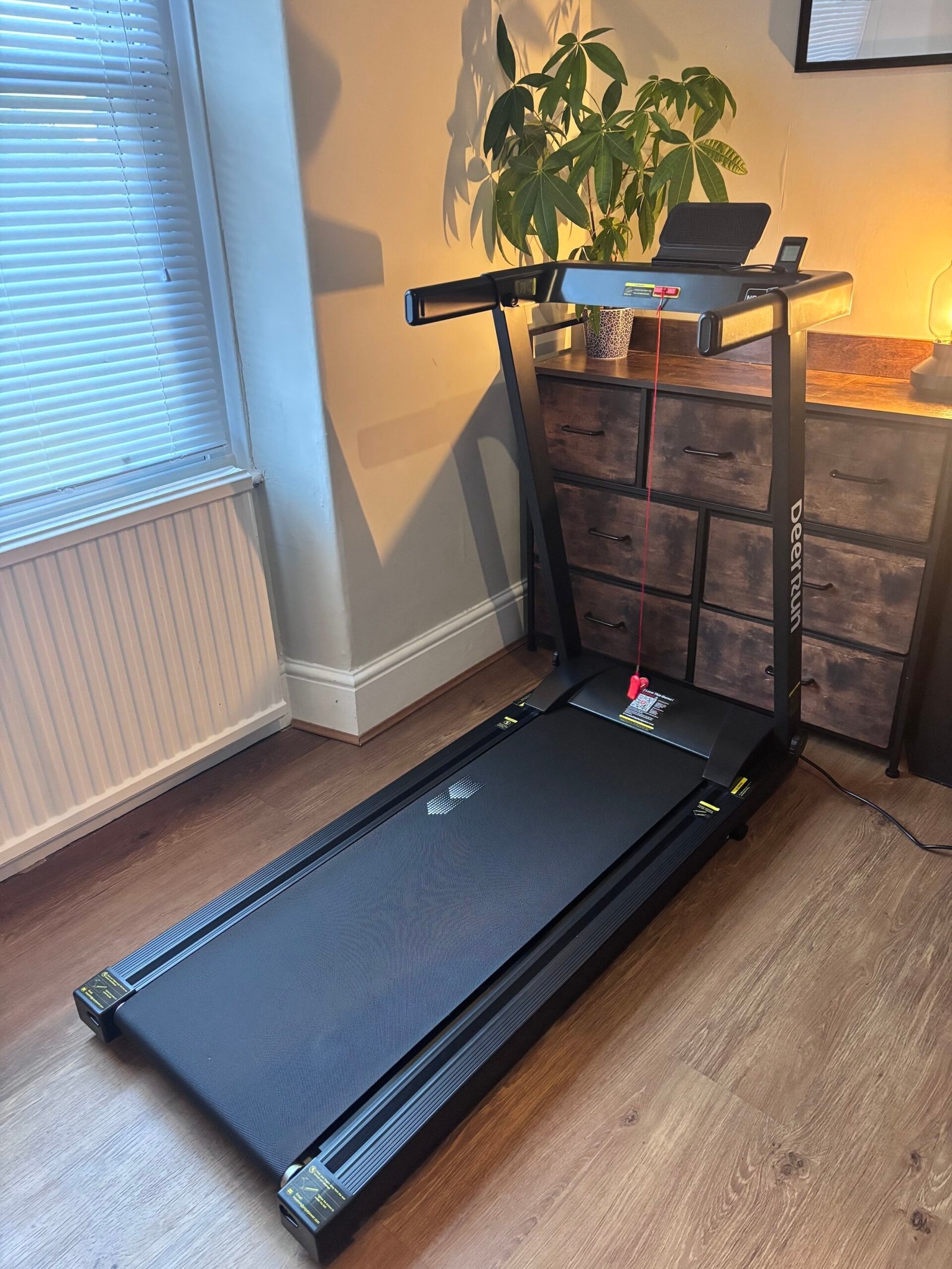
We’ve handled and used the A1 Pro Move+, looking at the setup, walking deck, arms, remote, tablet holder, manual incline and folding arrangement. The photographs throughout this review are of the unit in our testing space. The verdict focuses on those practical details. We have not yet added a sustained-running assessment.
Unboxing and setup: very little assembly needed
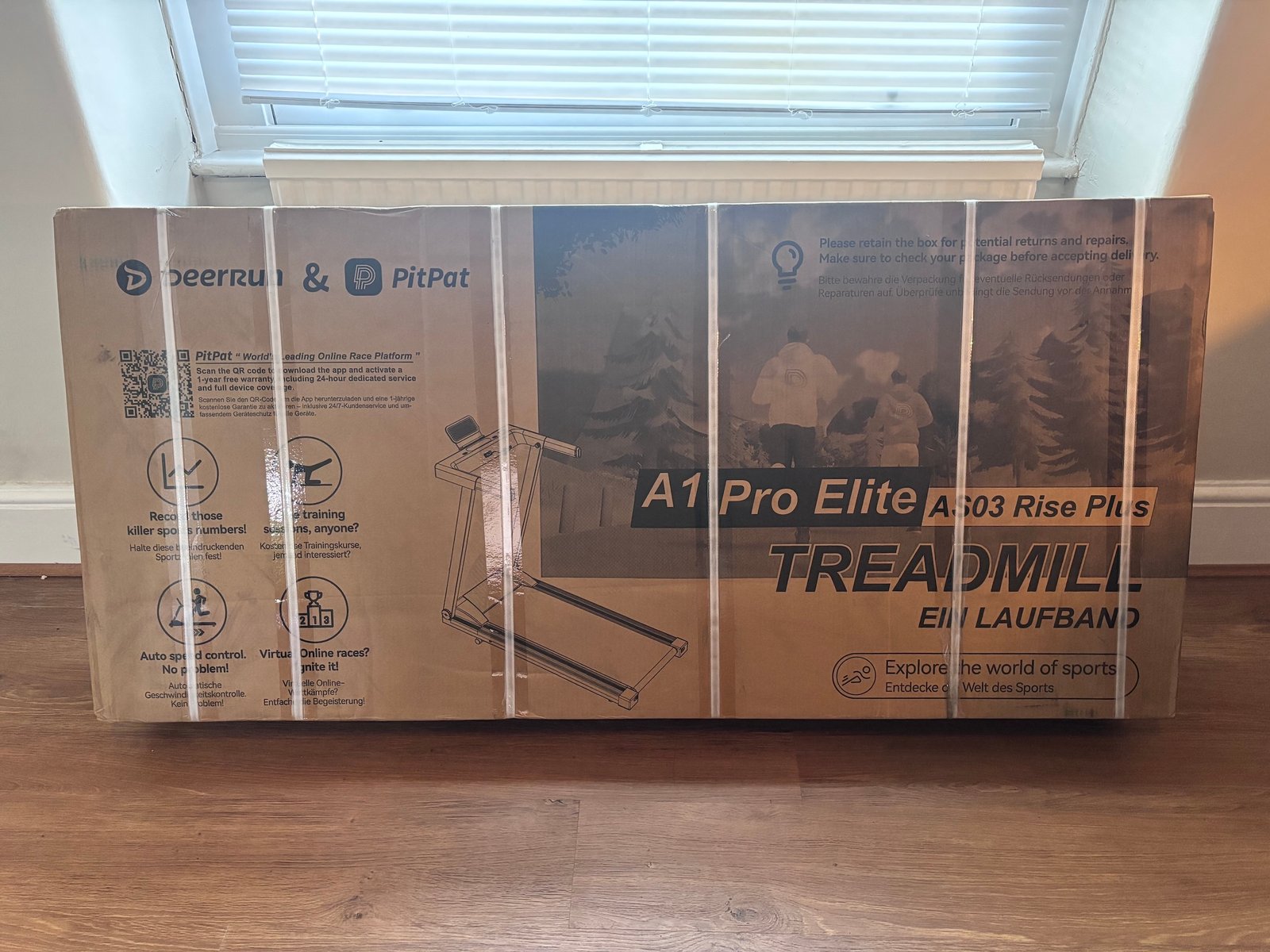
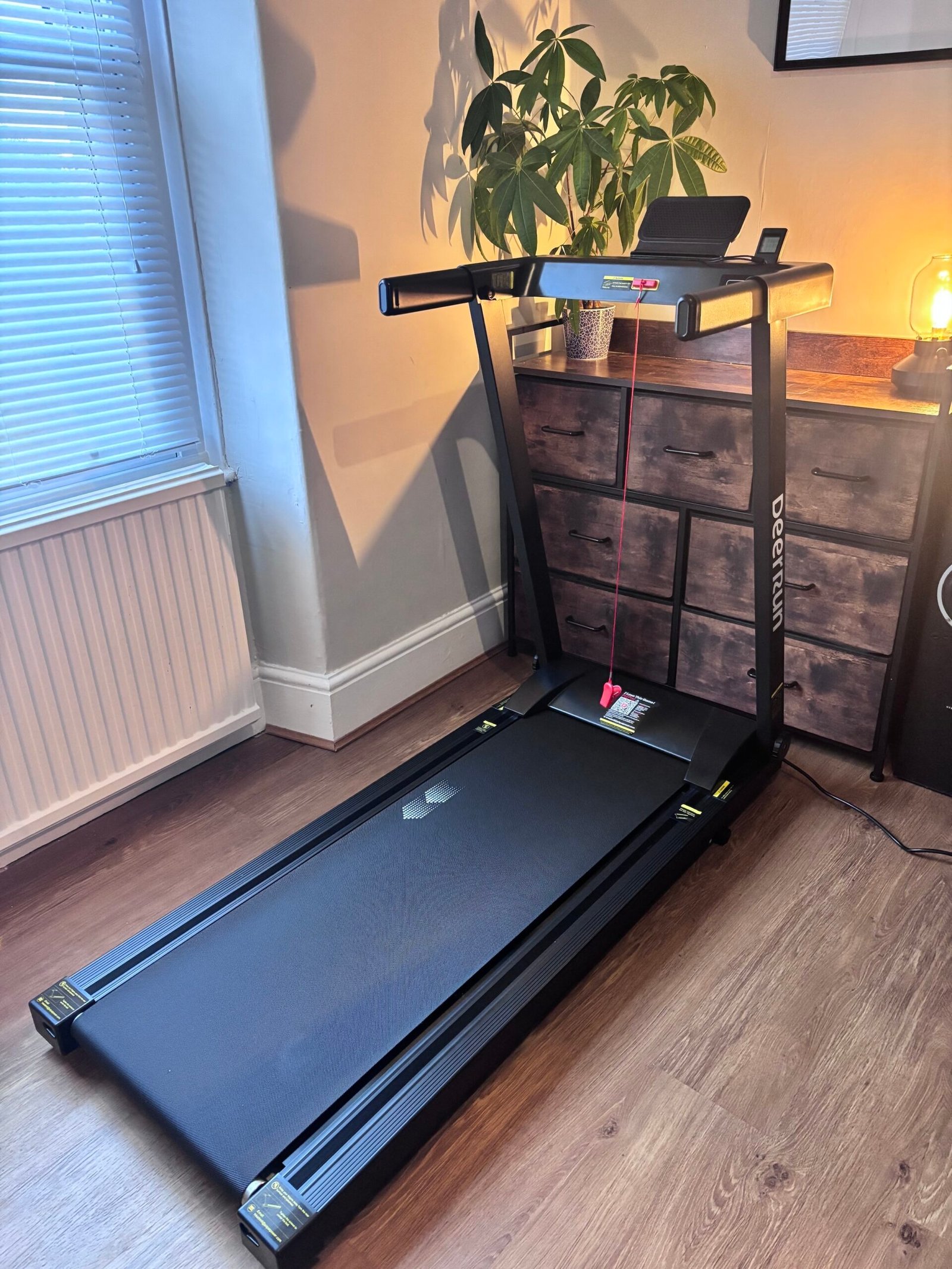
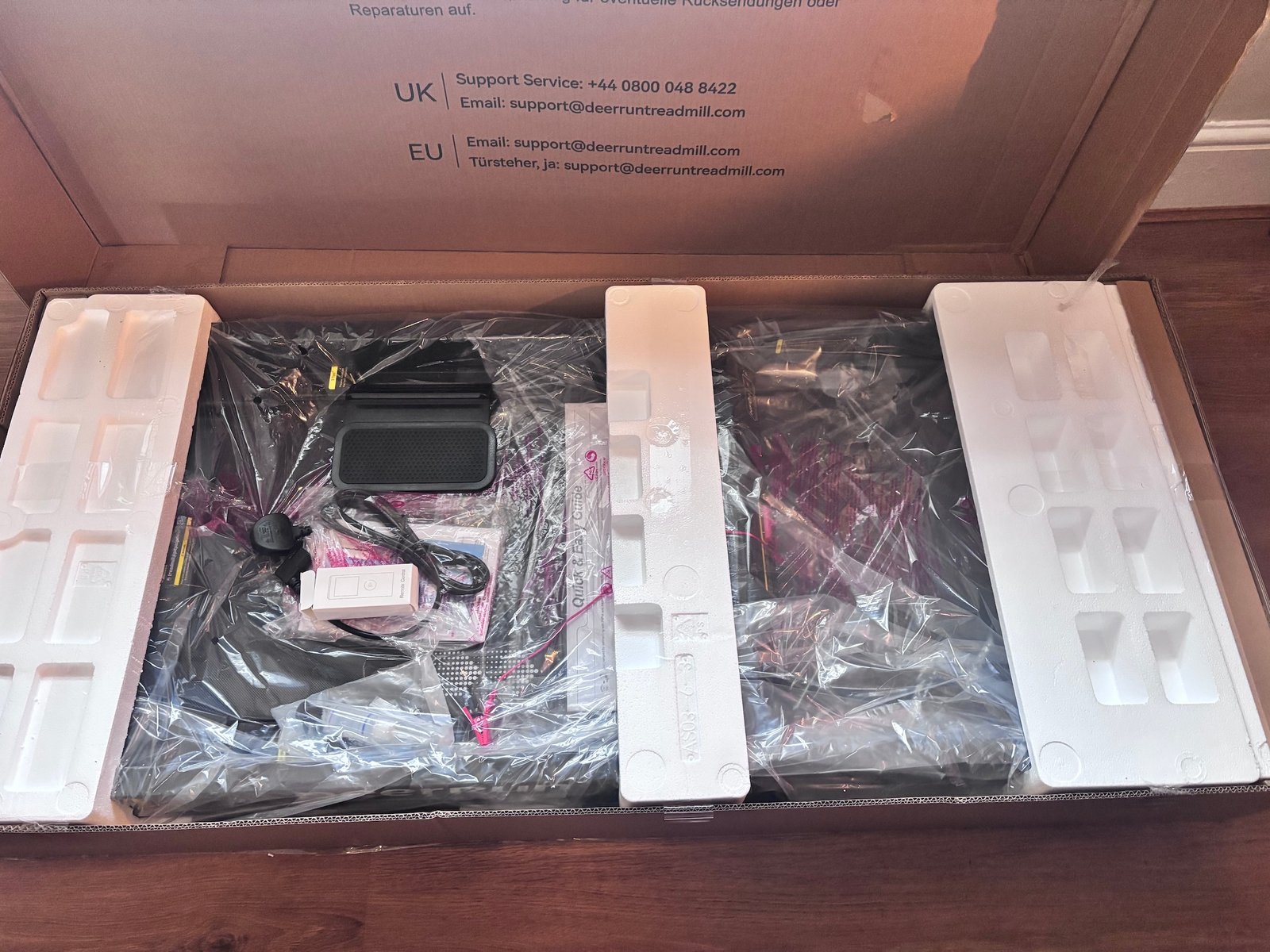
The treadmill arrives flat-packed with the main machine already assembled. That takes a lot of the usual budget-treadmill assembly out of the equation. You aren’t starting with a box of frame sections and working through a long build before you can try it.
Our box included the remote, power cable, safety key, paperwork, small tools and belt lubricant. There’s a quick-start sheet as well as the manual. It is a sensible collection of basics rather than a pile of parts that still need turning into a treadmill.
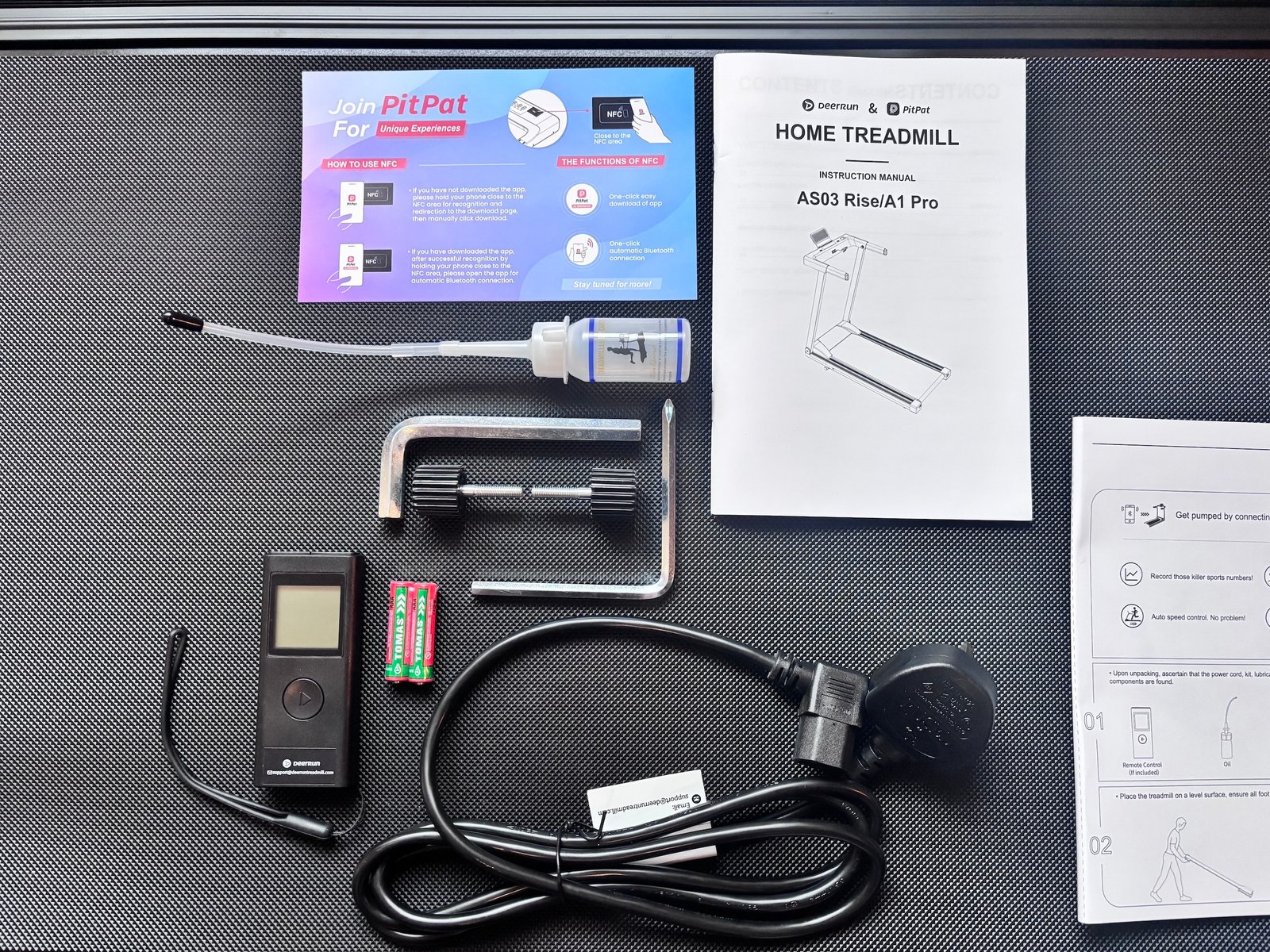
Getting the arms into position is most of the setup work. The screws feel a little stiff the first time and don’t turn as smoothly as we’d like, but this is a small niggle rather than a difficult assembly job. The machine is already built; you’re mainly unfolding and securing it.
Take a moment to line up the screws and secure the locking points as the instructions describe. Overall, there’s very little to do before you can try the treadmill, which is a welcome advantage over building a larger machine from separate frame sections.
The walking deck is the best part
Once you’re on it, the deck makes a better impression than the arms do. It feels solid and planted, which is exactly what we want from a machine we’ll be stepping onto repeatedly at home. It doesn’t have the insubstantial feel that can make some cheaper equipment difficult to relax on.
The belt is also a nice size for the money. It gives the Move+ a more convincing everyday walking feel than the price alone might suggest. The textured surface is shown in the close-up below; what matters more in practice is that the walking area feels usable rather than squeezed around a headline feature list.
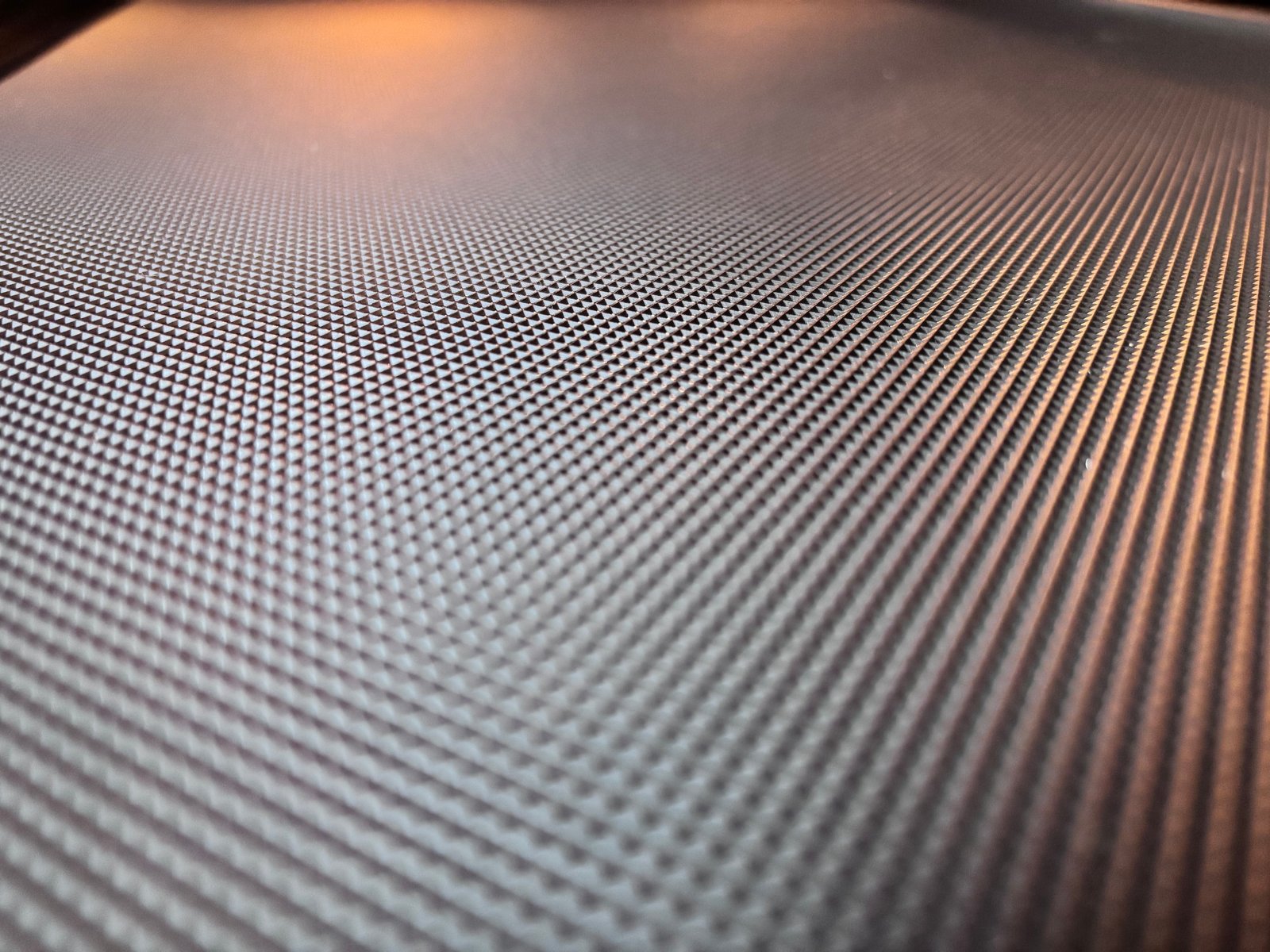
DeerRun advertises a 112 × 42 cm belt. That is useful context when comparing machines, but it doesn’t make this a long running deck. If your main aim is regular running, particularly with a longer stride, the DeerRun X20 is the better option because its longer belt gives you more room. You can compare it with the wider market in our best home treadmills guide, rather than judging it only by motor output or top speed.
The arms are high enough, but we’d like them firmer
The arm position is one of the more thoughtful parts of the design. For a taller user, they sit at a comfortable height rather than feeling like something intended for a much shorter person. That’s an easy detail to miss when buying online and a noticeable one once the treadmill is in front of you.
Once secured, we could still feel a little play in the arms. We’d prefer them a touch firmer, but it’s a minor reservation about the upper frame rather than the treadmill as a whole. The deck itself feels solid and planted.
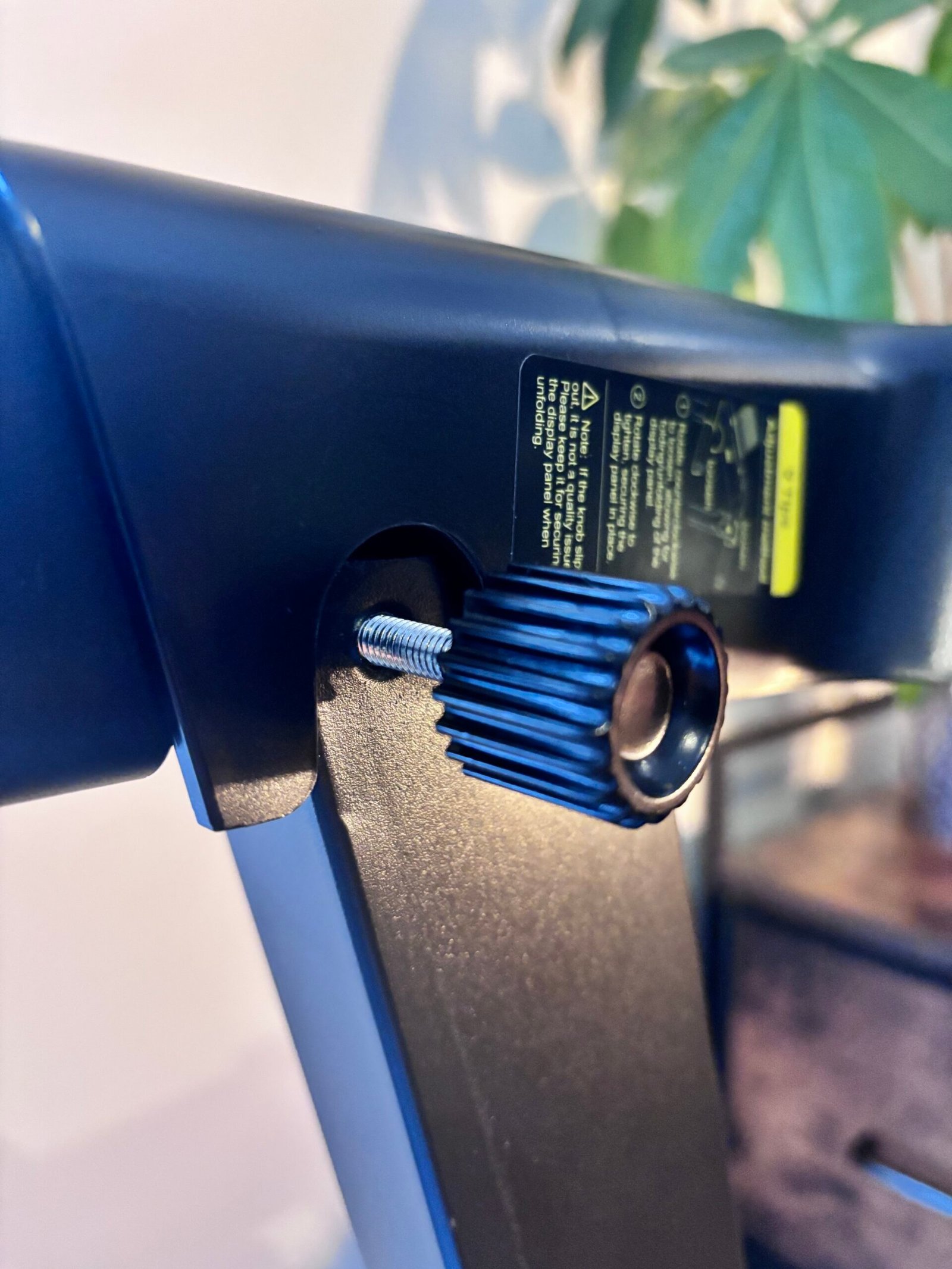
If you only want the frame around you as a reference point while walking, that may be an acceptable budget compromise. If you expect to lean heavily on the rails for balance, we’d look for a more rigid support arrangement.
A solid incline support, with an awkward adjustment
The manual incline is the most unusual part of this machine. Instead of the two little extendable feet found on many budget pads, there’s an arm or bar underneath that extends and locks with metal pins. It’s the first arrangement of this kind we’ve come across in our testing.
Once set, it feels solid. That’s the good bit. A more substantial support underneath the deck makes sense, and the result feels less makeshift than the small feet sometimes used to add a basic slope.
The awkward bit comes before that. To extend and secure the support, you need to tip the treadmill completely onto its side. Doing that with the arms fully extended is a faff: the upper frame gets in the way and you need enough room beside the machine to work around it.
In other words, this is a setup adjustment, not a workout control. We’d decide whether we wanted an inclined session before starting, follow the manual and make the adjustment with the treadmill switched off and unplugged. Don’t try to reach under it while it is running or while someone is standing on the belt.
The advertised incline is 6%, which also matters if you’ve arrived here looking for a machine for the 12-3-30 workout. This isn’t a treadmill that can reproduce that routine’s 12% setting.
The remote makes everyday use simpler
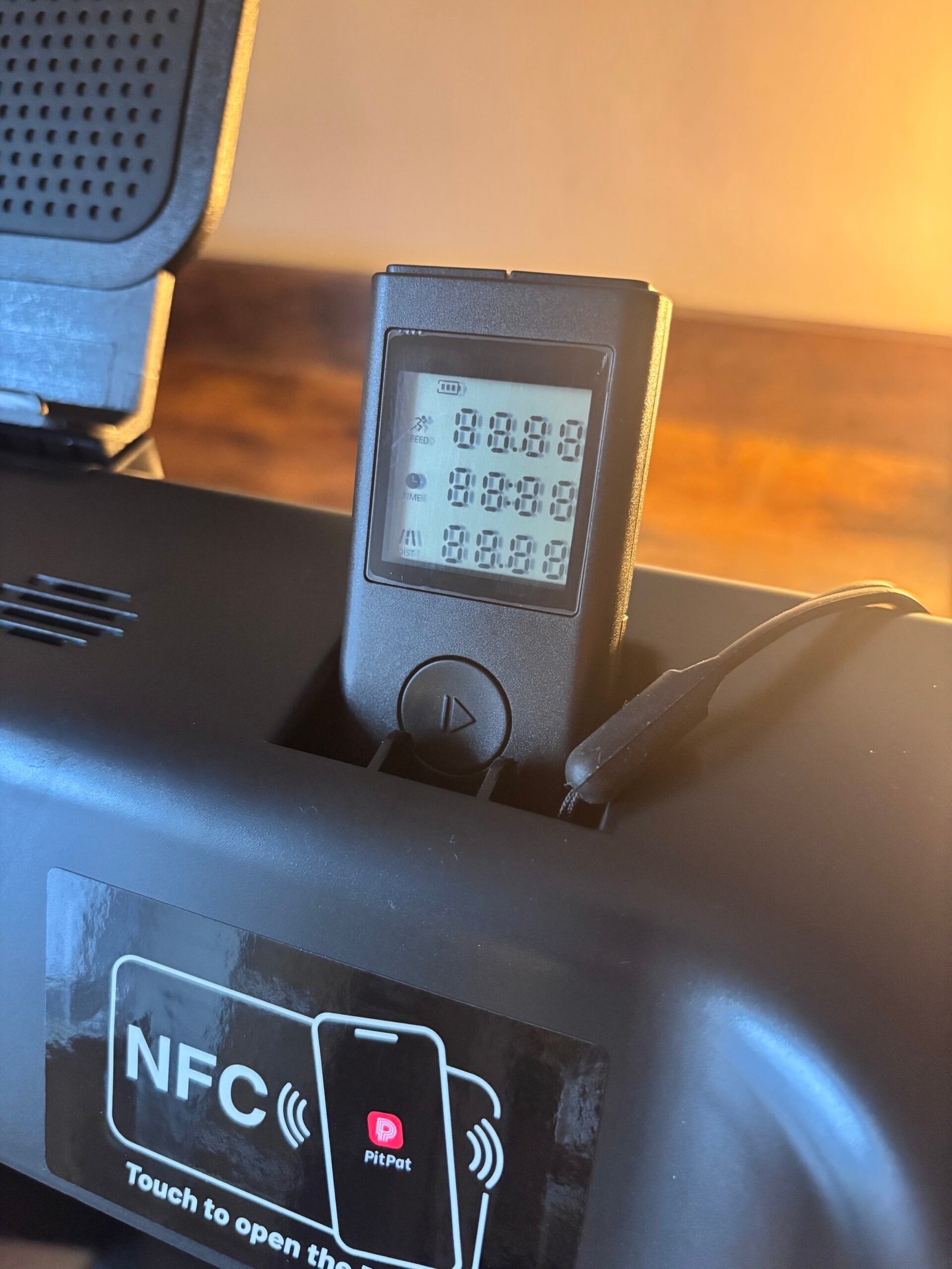
The remote is straightforward to use and includes its own display for the current session data. That makes it more useful than a basic start-and-stop handset. Being able to glance at the remote is convenient when you’re watching something or don’t want to keep looking towards the front of the deck.
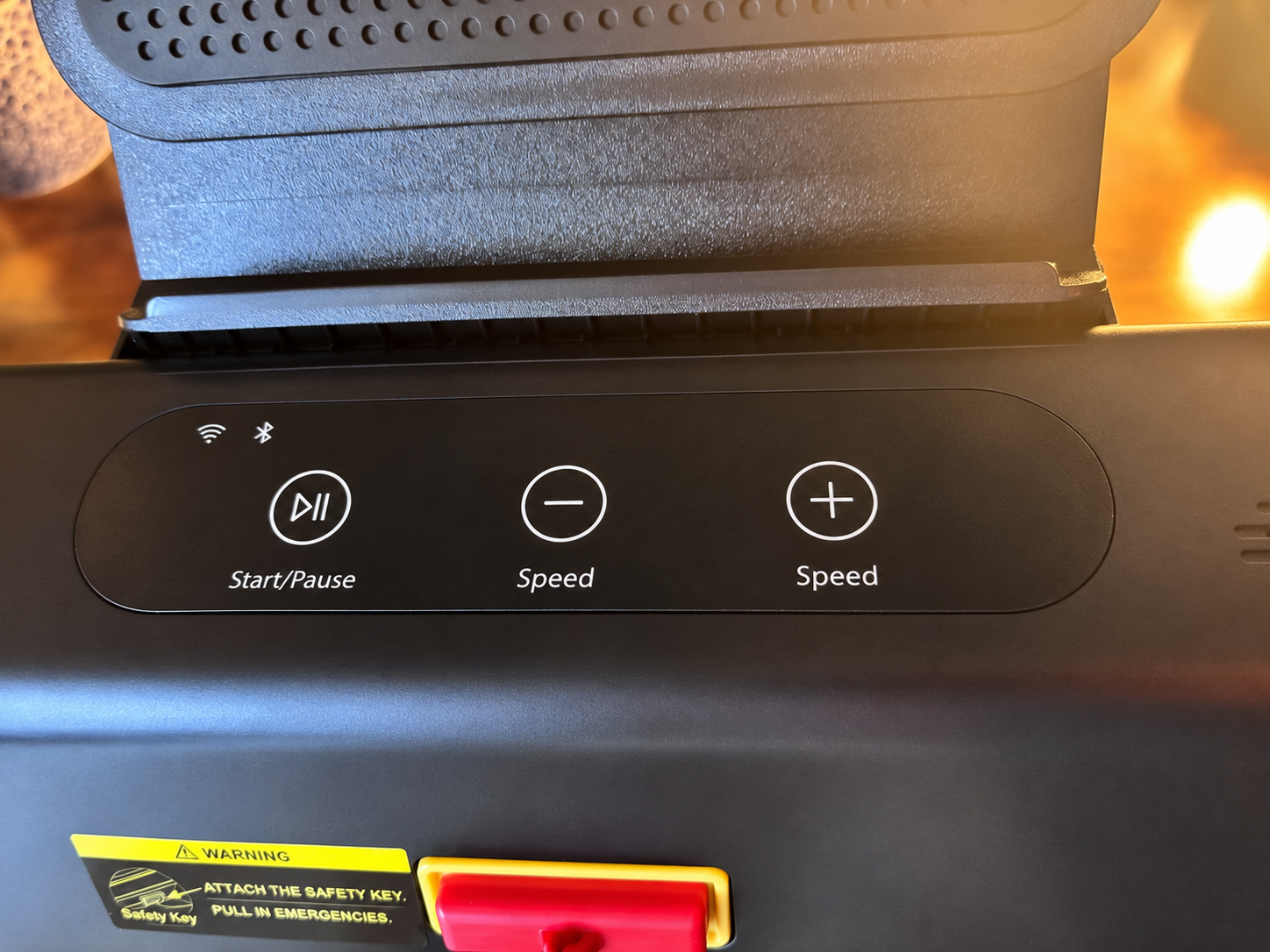
The console also keeps the main controls simple, with start/pause and speed buttons. There isn’t a large integrated entertainment screen taking over the front of the machine. For the kind of walking use we’d recommend this for, the simpler approach makes sense.
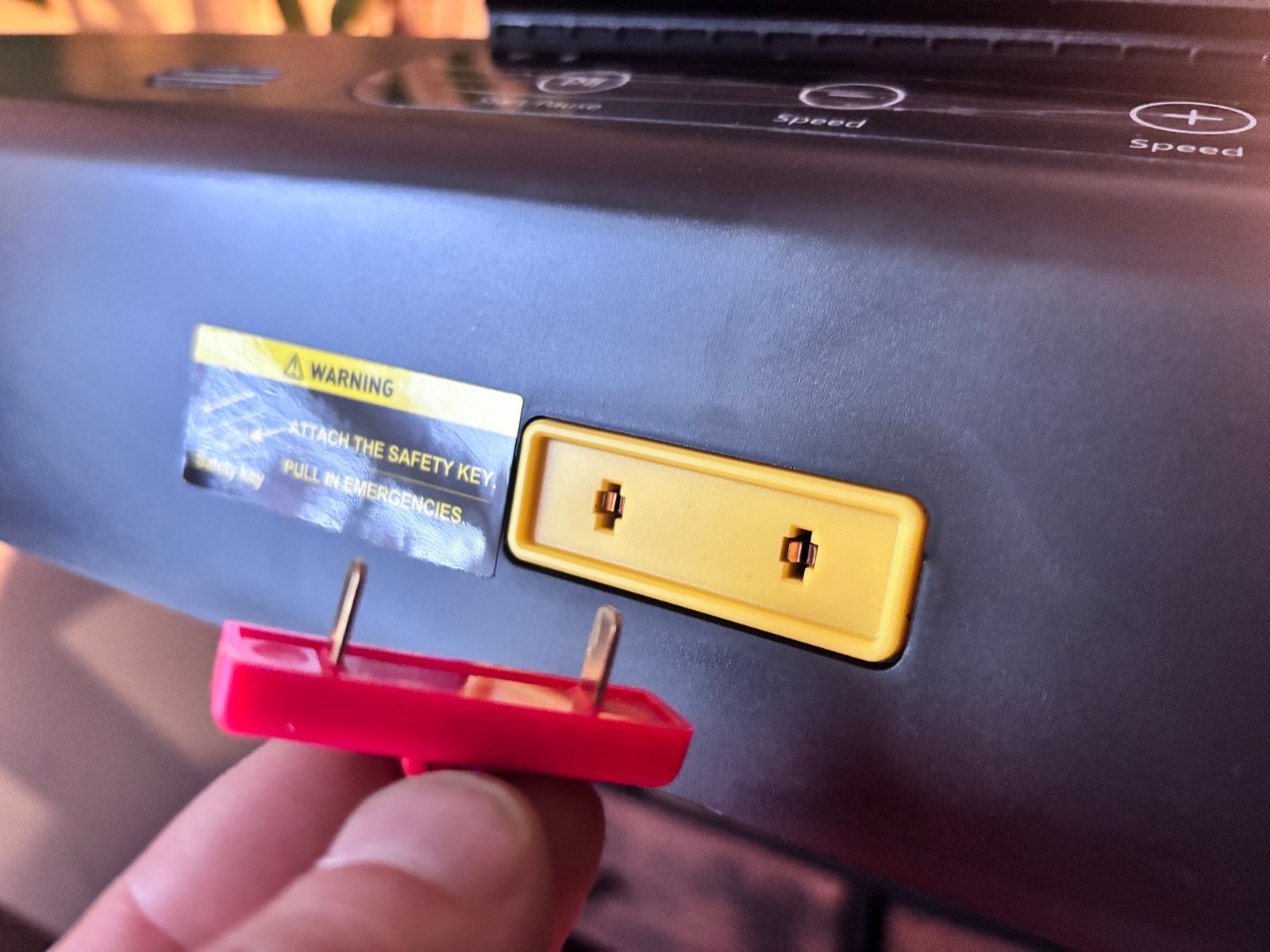
There’s also a magnetic safety key at the front. Attach its clip as the instructions describe whenever you’re using the treadmill.
The tablet holder is a useful shelf, not a clamp
The tablet holder is a nice size, and we’d rather have a properly usable shelf than a tiny slot squeezed into the console. It gives you somewhere to put a tablet for a show or something to watch while walking.
However, the tablet only rests on the holder. There is no clamp securing it in place. That’s worth understanding before you balance an expensive device on it and start increasing the speed. A tablet that sits comfortably during a steady walk isn’t automatically secured against vibration or an accidental knock.
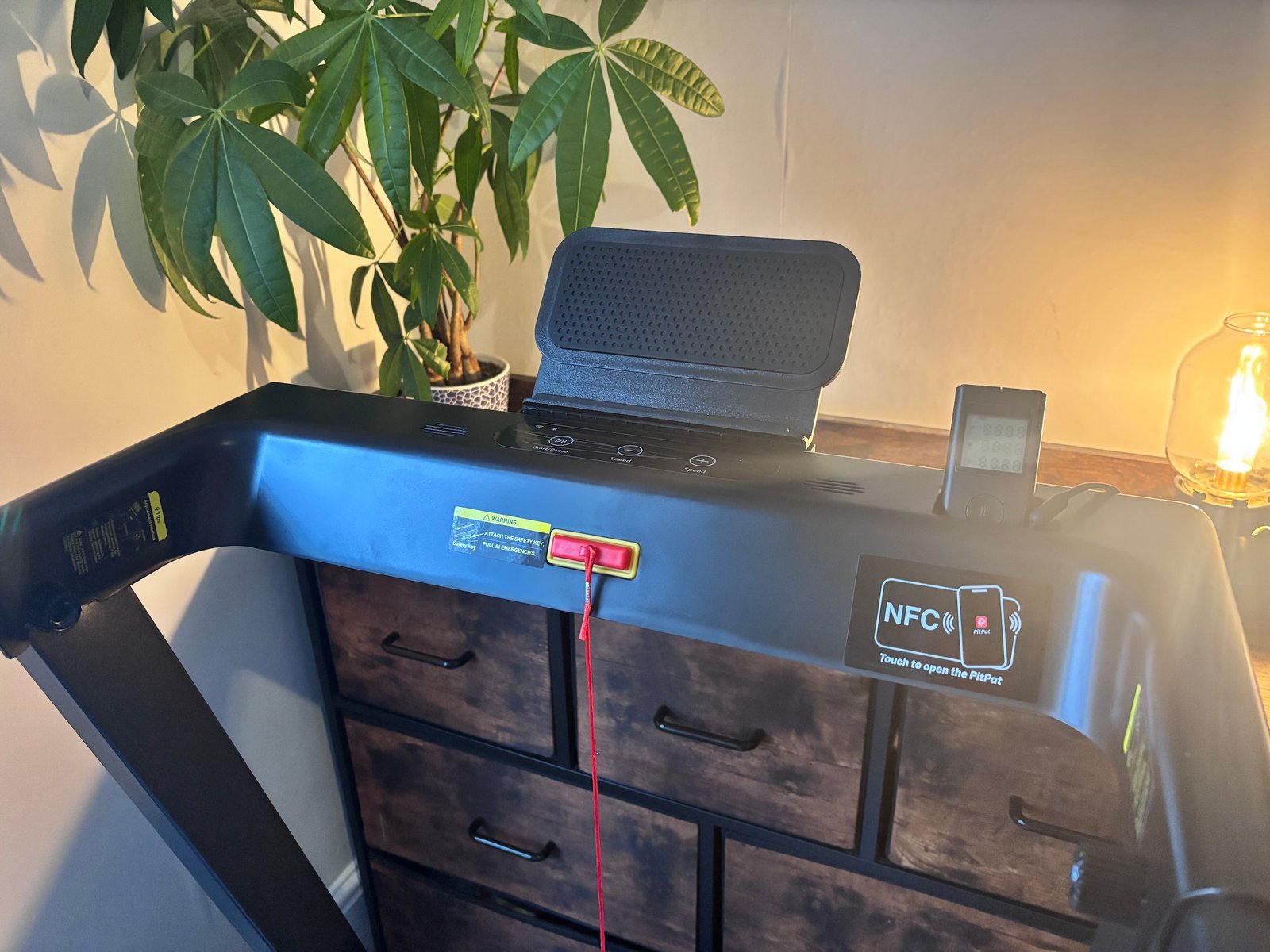
Check the fit of your own device and case before exercising, and don’t assume the holder is suitable for every tablet just because it looks wide enough. This is another reason our recommendation leans towards straightforward walking rather than treating the machine as a compact substitute for a gym runner.
PitPat app support and the NFC shortcut
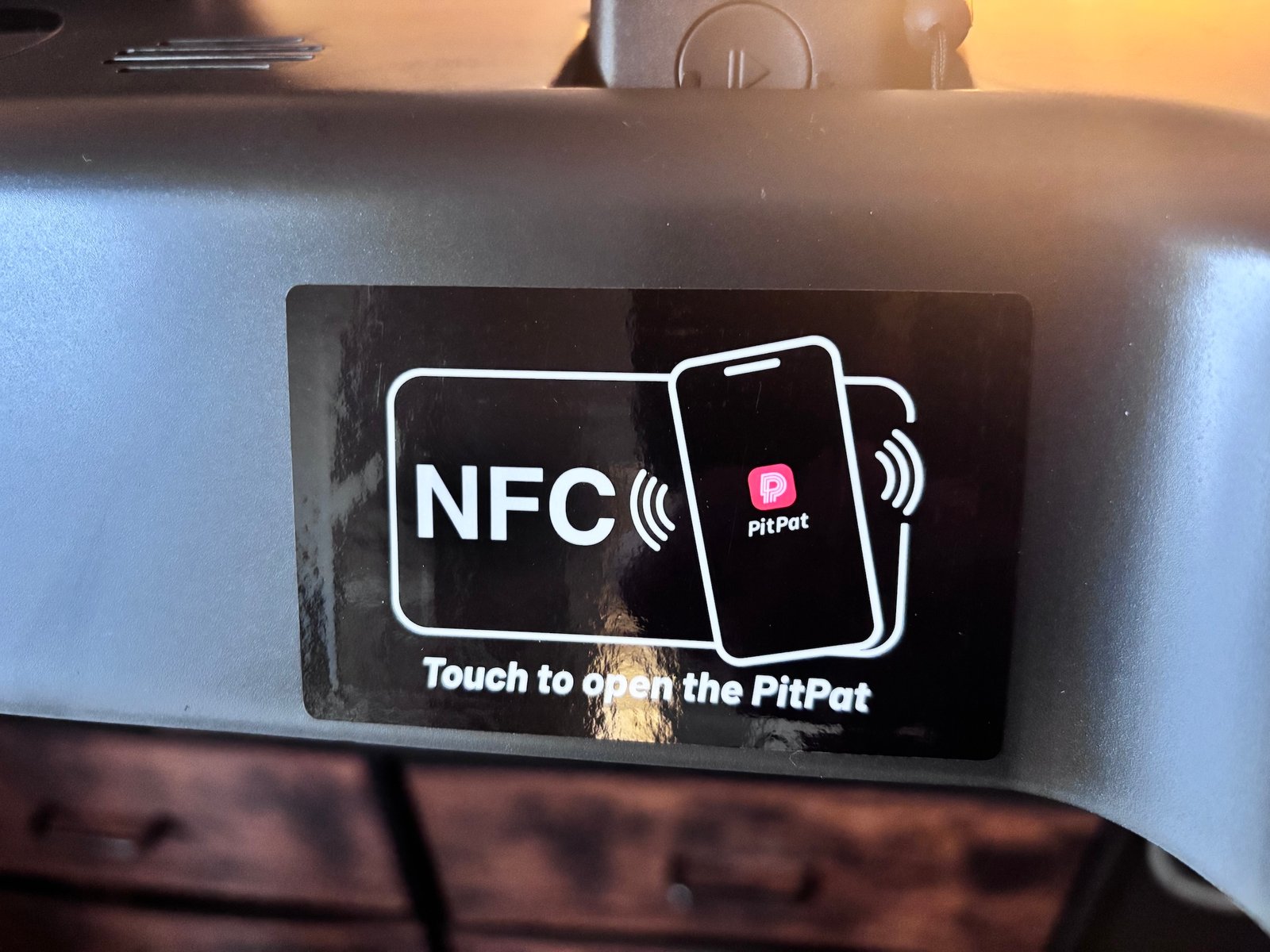
The console carries an NFC shortcut for opening PitPat, and DeerRun lists app connectivity as part of the package. The sticker is clearly visible on our unit. That’s useful to know if you’re comparing connected features, but the presence of an app isn’t what makes a treadmill good to walk on.
For everyday walking, the remote already gives you a straightforward way to control the machine and see your session data. PitPat is an additional advertised feature; it isn’t the basis of our recommendation here.
Folding flat is a genuine advantage
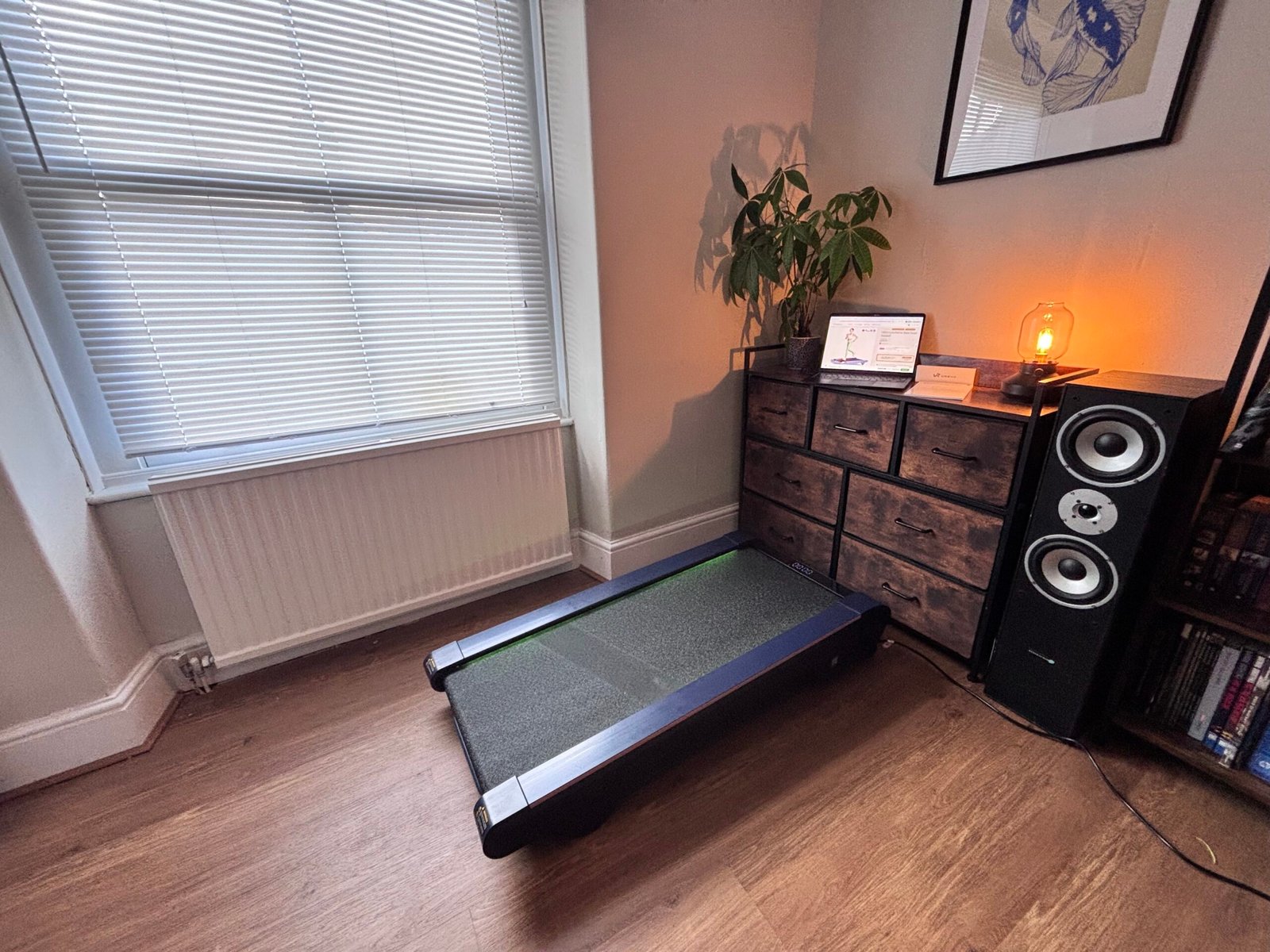
The Move+ folds virtually flat, which is one of the clearest reasons to choose it. You get the raised upper frame while using it, then a much lower shape for storage. For a room that needs to be an office, lounge or bedroom again after your walk, that is useful.
Sliding a treadmill under a sofa or bed sounds simple until you meet the central support, a low frame or a rug underneath. Measure the actual gap and the available depth before ordering. “Folds flat” doesn’t mean it will fit under every piece of furniture, and you still need somewhere to stand while moving it.
Folding it away still means dealing with the manual securing points, so the process isn’t completely one-touch. The screws were a little stiff on first setup, but the amount of work involved is small. The low folded shape remains a useful advantage if you need the room back after a walk.
If low-profile storage is your main requirement, compare the mechanisms as well as the folded shape in our best folding treadmills guide. Some save floor space by standing up, while others are designed around low clearance under furniture.
Key specifications and buying details
Manufacturer figures are not independent measurements. “Maximum horsepower” is not a continuous-duty motor rating. The retailer’s dimensions and machine-weight figures are inconsistent across its page, so we have not presented one set as verified. Check those details with DeerRun if they determine whether the machine will fit or whether you can move it.
DeerRun also advertises a 60-day trial. Read the current return conditions before relying on that offer, including any collection or transport charges. Its warranty wording covers domestic use and says customers are responsible for transport costs during repairs. A headline warranty length doesn’t tell you the whole ownership story.
For floor protection, our treadmill mat guide explains the options. Choose the mat and placement to suit both the machine and your flooring, and follow the manufacturer’s requirements for a level, suitable surface.
What we’d compare before buying
Before deciding whether £299 is good value, start with what you actually want the treadmill to do. There’s no point paying for a running-speed headline if your routine is almost entirely walking, or buying a manual-incline machine when changing the gradient is central to your workouts.
For simple walking
Our best walking pads guide is the starting point if a raised frame isn’t essential. The WellFit TM037 review also offers a useful comparison for buyers weighing a budget deck and handrail against more expensive features.
For a more premium walking experience
The UREVO CyberPad review covers a walking-only machine that impressed us with its motor noise, app and powered incline. Its different priorities make it a useful comparison, rather than a direct specification-for-specification rival.
For running and easier incline changes
Look at the best treadmills under £500 and, if your budget stretches, our under-£1,000 guide. Compare belt length, frame rigidity and powered incline. The DeerRun X20 review is another place to assess a different approach to folding and gradient control.
Be careful with the names, too. This is the A1 Pro Move+. Our earlier DeerRun A1 Pro review covers the older listing. Don’t assume every measurement, price or accessory applies across similarly named versions. The wider DeerRun treadmill guide helps put the range in context.
Who we’d recommend it to
It makes most sense for: someone who mainly wants to walk at home, likes a raised frame around them, appreciates a display on the remote and needs the machine to fold low enough to store away. You’re happy with a small amount of setup and treat incline selection as something you do before a session.
We’d look elsewhere if: you want particularly rigid rails, need to change incline repeatedly, expect to fold and unfold it several times a day, or are buying primarily for sustained running. A good deck doesn’t make every other compromise disappear.
Final verdict: a good-value option for everyday walking
The A1 Pro Move+ gets the part under your feet right. The deck is planted, the belt is a nice size for the money, the remote is easy to use and the high arm position suits a taller user. Its ability to fold almost flat gives it a practical place in a home that can’t spare a permanent exercise corner.
The setup niggles are fairly minor: the arm screws are a little stiff on first use, and we’d prefer slightly less play once they’re tightened. There’s very little assembly overall. The incline adjustment is the bigger inconvenience, as tipping the machine onto its side takes more effort than we’d like. The tablet holder is useful, provided you remember it is only a shelf.
For £299, the combination of a solid deck, useful remote and almost-flat storage makes the Move+ worth shortlisting for everyday walking. The manual incline adjustment is worth knowing about if you’ll change the gradient often, but it doesn’t take away from the reassuring feel underfoot. If walking and saving space are your priorities, there’s a lot to like here.
Check the current DeerRun offer →
Confirm the selected model, colour, delivery and return terms before ordering.
DeerRun A1 Pro Move+ FAQs
Is the A1 Pro Move+ better for walking or running?
DeerRun advertises running capability, but our recommendation leans towards walking. The solid deck is a strength; the shorter compact layout and movement in the arms make us more cautious about choosing it primarily as a running treadmill.
Can you change the incline with the remote?
No. It is manually adjusted using the support underneath the machine. In our experience, reaching and setting it involves tipping the treadmill onto its side, so it is an adjustment to make before your workout.
Does it need assembling?
The main machine arrives pre-assembled and flat-packed, so there is very little setup. You mainly unfold and secure the upper frame. The arm screws were a little stiff on first use, but it was a minor niggle rather than a difficult assembly job.
Will a tablet be held securely?
The holder supports a tablet on a shelf but doesn’t clamp it in place. Check how your device and case sit before use, and don’t treat the holder as protection against vibration or accidental knocks.
Can it fit under a sofa or bed?
It folds almost flat, making that type of storage possible if your furniture has sufficient clearance. Measure the gap and available depth rather than assuming it will fit under every sofa or bed.
Is this the same as the older A1 Pro?
The Move+ has its own current product listing. Similar names don’t guarantee identical dimensions, equipment or prices, so check the exact model on the product page.
Hands-on observations and photographs by HomeTreadmill. Price and advertised specifications checked against the DeerRun UK listing on 2 November 2026. Advertised figures come from DeerRun’s UK product listing.