
 sponsored

Walking & everyday fitness
It’s dark before you’ve finished work, it’s raining again, and the walk you planned suddenly feels much less appealing. A simple indoor backup can help you keep your walking habit through winter without turning your home into a gym.
You don’t need to turn your spare room into a gym or start an ambitious winter training programme. The useful question is much smaller: what can you do on the days when your usual walk doesn’t happen?
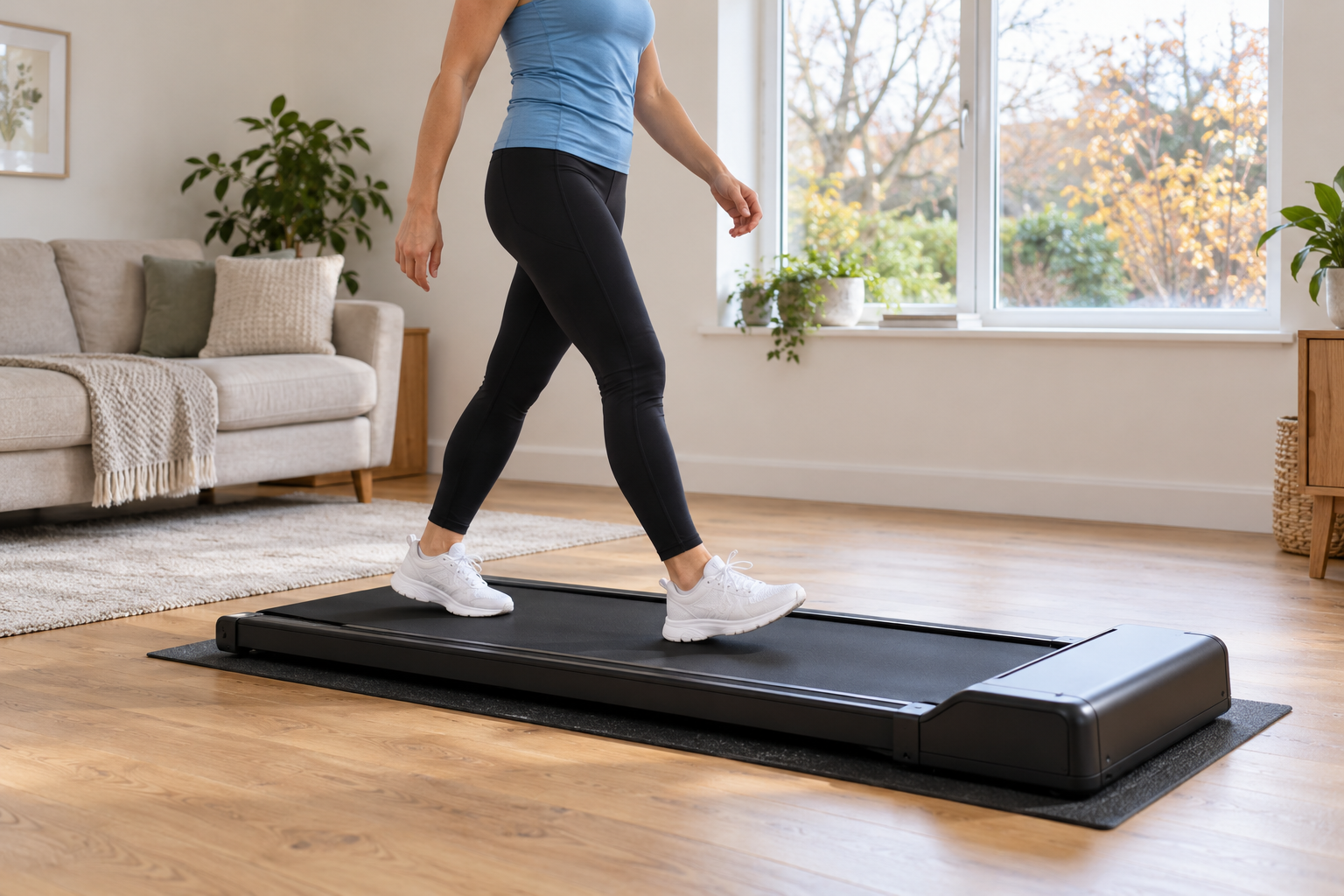
For some people, that’s a few laps around the house. For others, it’s a walking pad while listening to a podcast or a short treadmill session before dinner. The aim is to make movement convenient enough that you’ll actually repeat it.
Do we really move less when the weather turns?
If you find yourself moving less in winter, you’re not alone. A study by researchers at Cambridge and the University of East Anglia found that older adults in England were less active when the days were shorter and the weather was colder or wetter.
In the poorest conditions, they recorded up to 10% less activity and around 15 extra minutes spent sitting each day, compared with the best conditions.
That won’t describe everyone’s winter, but it’s a familiar pattern: the lunchtime stroll gets shorter, the evening walk gets skipped, and you spend more of the day indoors. Having an easy alternative gives you a way to keep moving when your usual plans fall through.
The small movements are worth protecting, too
A missed run is obvious. Losing the walk to the shops, the lunchtime loop and the habit of getting up from your desk is easier to overlook.
A study from Australia’s Baker IDI Heart and Diabetes Institute found that getting up for a two-minute walk every 20 minutes helped reduce the rise in blood sugar after a meal, compared with sitting continuously. Even gentle walking made a difference.
It was a small, short-term study of 19 middle-aged adults with overweight or obesity. It gives us a useful reason to take walking breaks, rather than a promise about anyone’s long-term health.
The practical takeaway is to give yourself opportunities to move during a long seated day. You don’t have to save every bit of activity for a formal workout.
Indoor walking counts, but pace still matters
The World Health Organization recommends 150–300 minutes of moderate activity each week for adults. That could include brisk walking. If you prefer more demanding exercise, the equivalent is 75–150 minutes, or a mixture of the two. Strength exercises on at least two days a week are part of the advice, too.
You can build that activity up in short sessions. Just bear in mind that slowly walking while typing isn’t the same as a brisk walk. Both get you moving, but an easy desk walk won’t necessarily count towards the moderate-activity target.
Build a winter routine around the day you already have
Start with one predictable gap in your day. You can add more once it feels easy to stick with. Here are a few places to start:
- Before work: try five or ten comfortable minutes before you open your inbox.
- During the working day: use natural breaks to get up and walk around. You don’t need equipment for this.
- After work: give your usual outdoor walk an indoor alternative, so poor weather doesn’t automatically cancel it.
- On brighter days: keep the outdoor walks you enjoy. Your indoor option can simply fill the gaps.
If you’re starting from very little activity, choose a duration you can manage comfortably and build gradually. If you already walk regularly, focus on maintaining that habit when conditions change.
For more structured ideas, our walking pad workout guide includes routines you can adapt to your experience and available time.
Do you need a walking pad or a treadmill?
You can start without either. Walking around your home and taking regular movement breaks are free, and they’re useful ways to discover which time slots actually work.
If you’d prefer a continuous walking surface, our UK walking pad guide compares options for home and desk use. Look beyond the folded dimensions: you’ll need the operating space and safety clearance specified by the manufacturer.
A full treadmill may suit you better if you also want to run, need handrails or want a broader range of training options. Our home treadmill buying guide covers those differences.
Start slowly on unfamiliar equipment, keep the surrounding area clear, and keep children and pets away from moving belts. If you need support for balance, choose equipment that provides it rather than relying on a desk.
Make the next walk easier to start
A useful winter routine doesn’t need to be impressive. It needs to be available when it’s dark, wet and you’ve already had a long day.
Choose your indoor fallback now: a short walk around the house, a regular walking-pad slot or a treadmill session you can fit between other commitments. That gives you something concrete to do when the weather interrupts your usual plans.