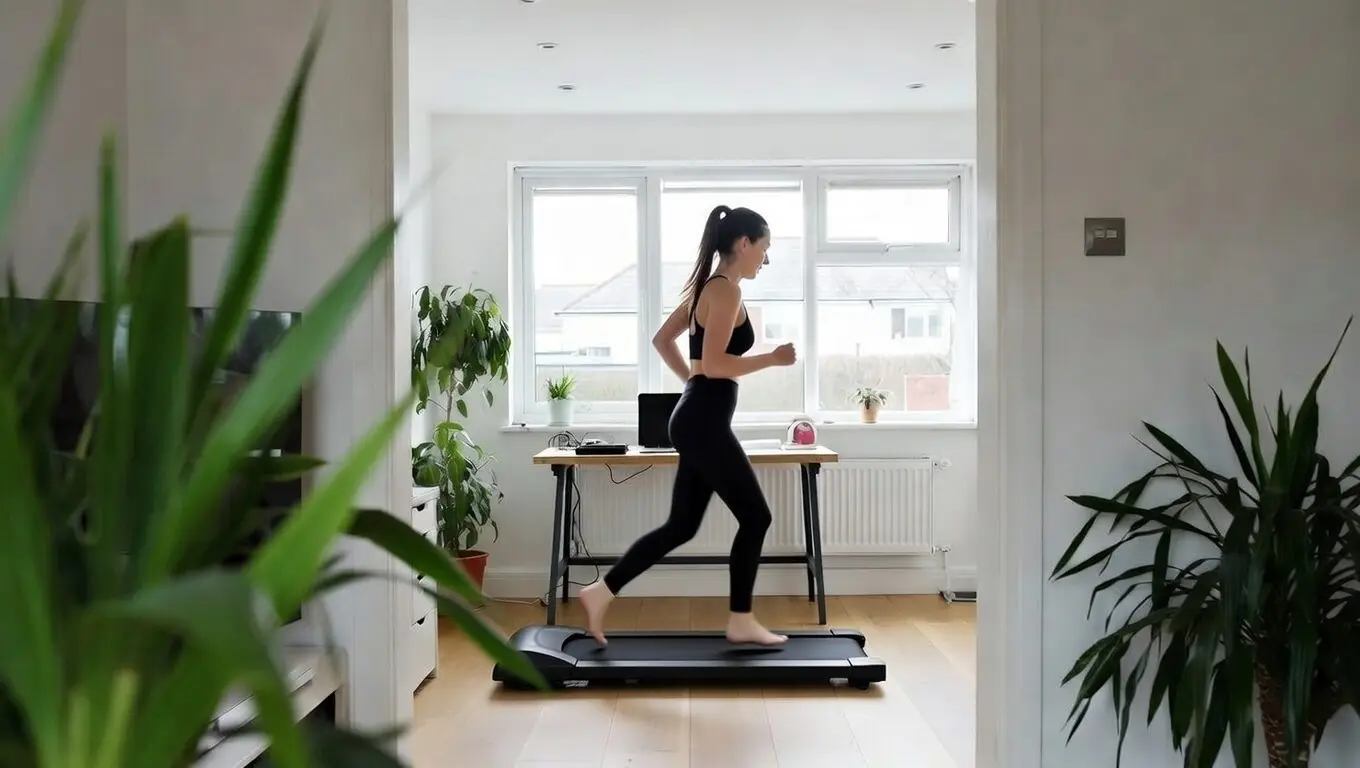
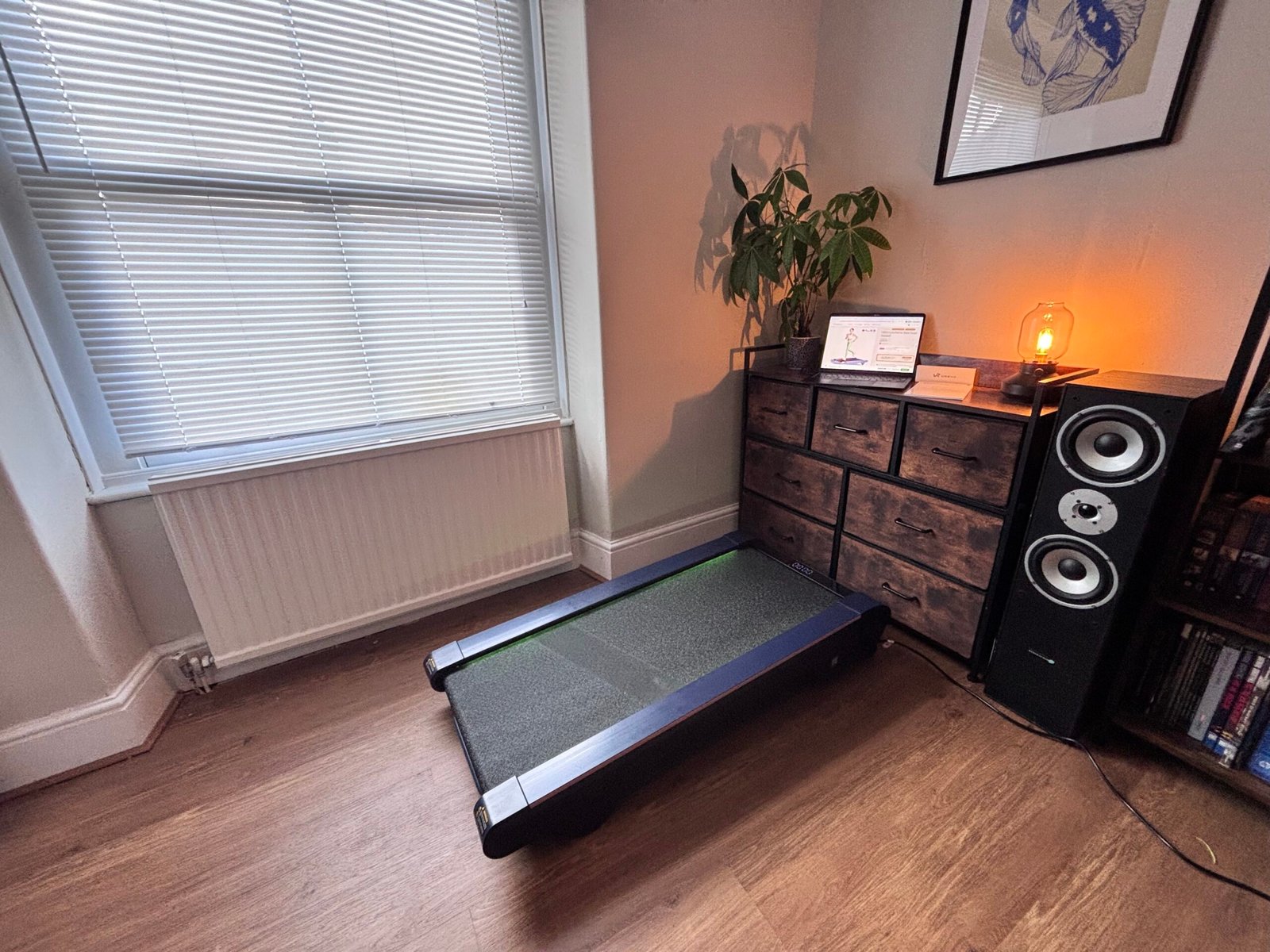
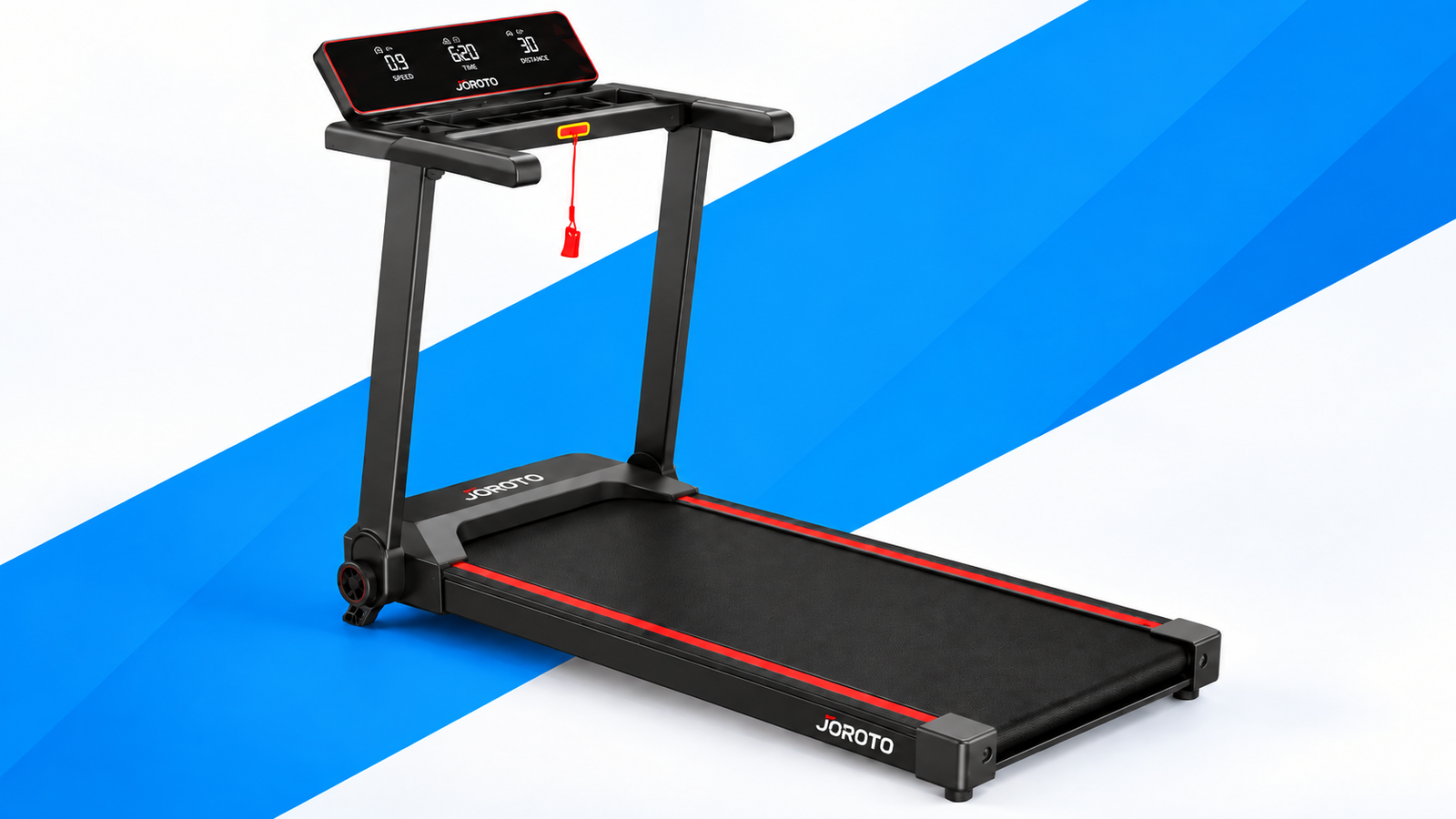
You’ve spotted those sleek, compact walking pads that slide under desks and tuck behind sofas, and now you’re wondering: could this be your secret weapon for getting miles in on busy days?
Perhaps you’re thinking about keeping your base fitness ticking over while working from home, or squeezing in some movement during those endless video calls.
But inevitably, there’s a question every walker eventually asks: can you run on a walking pad?
The honest answer is that it depends. Most walking pads are built purely for walking and will struggle with running, but some models can handle light jogging perfectly well.
The key is knowing what to look for and being realistic about what these machines can and cannot do. And we’re here to help you find out.
Walking Pads and Treadmills: Not Just a Size Difference
At first glance, a walking pad looks like a treadmill that went on a diet. But the differences go far deeper than dimensions.
Walking pads are designed with portability and convenience as the priority. They typically feature compact motors (around 2 HP, with most full size and folding treadmills starting at 2.5+), narrow belts around 40 to 45 centimetres wide, and lengths of 100 to 120 centimetres.
Most lack handrails entirely, and their slim profiles mean minimal cushioning underfoot. They’re brilliant at exactly what they’re named for: walking. But there are exceptions to this rule.
Traditional treadmills, by contrast, are engineered to absorb punishment. We’re talking beefier motors (2.5 to 4+ HP), generous belt dimensions, solid frames, proper shock absorption systems, and sturdy handrails.
They’re built to handle the repeated impact of running, which generates forces of two to three times your body weight with every footstrike.
This isn’t snobbery about equipment. It’s physics. Running demands more from a machine than walking does, and not every machine is up to the task.
Why Your Average Walking Pad Won’t Cut It for Running
If you’ve ever tried to run on a budget walking pad, you’ll know the experience is underwhelming at best and genuinely sketchy at worst. Here’s why.
The motor is the heart of the problem. A 1.5 or 2 horsepower motor handles walking beautifully, maybe even a brisk power walk or a slow job. But ask it to cope with the surging demands of running and it starts to protest. Motors can overheat, belts slip at crucial moments, and the whole machine feels like it’s working against you rather than with you.
Then there’s the running surface itself. A belt that feels perfectly adequate for walking suddenly becomes a tightrope when you’re trying to run. Your stride lengthens, your feet need more lateral room, and that 40-centimetre-wide strip of belt starts to feel very narrow indeed. One slightly off-centre footstrike, and you’re dancing on the edge.
The lack of cushioning matters too. Your joints can absolutely tell the difference between a properly sprung running surface and a thin walking pad deck. The occasional jog or power walk won’t cause issues, but regular running on an unforgiving surface is a recipe for unhappy knees, joints, and feet.
What separates these from standard walking pads? Better motors, wider and longer belts, improved cushioning, and frames built to handle higher speeds and greater impact forces. But naturally, they sacrifice some of the ultra-slim portability of pure walking pads in exchange for workout versatility.
If you’re a runner looking at walking pads, these hybrid models deserve your attention. They won’t replace your local parkrun or handle serious speed sessions, but they can absolutely serve as a tool for easy recovery runs, gentle base-building, or maintaining fitness when getting outside isn’t practical.
What to Look For If You Want to Jog
If you’re set on finding a walking pad that can handle some running, here are the specifications that actually matter.
Motor power (continuous, not peak): Look for at least 2.5 horsepower continuous rating. Peak horsepower figures are marketing fluff; continuous horsepower tells you what the motor can actually sustain. Anything under 2 horsepower will struggle with jogging, but it will be fine for walking.
Belt length: You need at least 120 centimetres, and 130 to 140 centimetres is better. A shorter belt forces you into an unnatural, choppy stride that feels awkward and increases injury risk.
Belt width: Minimum 45 centimetres, ideally closer to 50. Your feet don’t land in a perfectly straight line when you run, and a wider belt gives you the margin for error you need.
Maximum speed: If the machine tops out at 5 mph, you’re limited to a very gentle shuffle. Look for machines that comfortably reach 6 to 7.5 mph, even if you don’t plan to use those speeds often.
Weight capacity: Choose a machine rated for at least 20 to 30 kilograms above your body weight. This headroom accounts for the additional forces generated when your feet hit the belt during running. This is very important for safety and treadmill longevity.
Handrails or handles: Not essential for walking, but genuinely useful when jogging. Even small handles give you something to grab if you need to steady yourself. There are good walking pads available in the UK with optional handrails.
Safety: Don’t Skip This Section!
Running on equipment that isn’t designed for it is a gamble, and not a particularly clever one. Falls from walking pads tend to happen fast and without warning, often when the belt slips or the machine shifts unexpectedly if you’re running at a speed that it can’t handle.
Without handrails, there’s nothing to catch yourself on, and if there’s not proper cushioning, your joints absorb forces they shouldn’t have to. And without adequate motor power, the belt can stutter or stop at exactly the wrong moment, which could lead to a nasty fall.
If you’re going to jog on a walking pad, make sure it’s rated for jogging. Start slowly, get comfortable with the machine’s behaviour, and always use the safety key if one is provided. Position the machine away from walls and furniture so a stumble doesn’t become a collision.
We recommend a good treadmill mat that can prevent the machine from slipping as you’re using it.
And honestly? If the machine feels unstable, makes worrying noises, or the belt slips under your feet, stop. No workout is worth an injury.
Here’s the Thing: Walking Is Actually Brilliant
If your walking pad genuinely isn’t suitable for running, don’t write it off as useless. Walking is a seriously underrated form of exercise, and us runners in particular often overlook its benefits.
The NHS highlights brisk walking as an effective way to improve cardiovascular fitness, strengthen bones, and boost mental wellbeing. It counts towards the recommended 150 minutes of moderate-intensity activity per week, and it does so without battering your body.
The British Heart Foundation notes that regular walking reduces the risk of heart disease and stroke, helps manage blood pressure, and supports healthy weight maintenance. For runners, that translates to better cardiovascular efficiency and improved recovery between harder sessions.
According to the World Health Organization’s physical activity guidelines, adults should aim for 150 to 300 minutes of moderate-intensity aerobic activity weekly. Walking is one of the most accessible ways to hit that target, and it’s activity you can accumulate throughout the day rather than needing a dedicated workout block.
There’s also the issue of what happens when you’re not exercising. Research in the British Journal of Sports Medicine has linked prolonged sedentary behaviour to increased risks of cardiovascular disease, type 2 diabetes, and premature mortality.
A walking pad under your desk actively combats that, keeping you moving during hours you’d otherwise spend sitting.
For runners, walking pads offer something valuable: active recovery. Easy walking increases blood flow to tired muscles without adding training stress. It’s the kind of gentle movement that helps you bounce back faster between proper running sessions.
Walking Pad Workouts That Actually Work
If you’re going to use a walking pad primarily for walking, you might as well make those walks count. Here are some approaches that deliver genuine fitness benefits.
The Desk Walker
Set your walking pad at a comfortable pace (1.5 to 2.5 mph) and walk while you work. You won’t break any speed records, but you’ll accumulate steps, burn calories, and counteract hours of sitting. Many people find they can walk for two to three hours this way without it affecting their concentration. You won’t be able to type at speeds much faster than this.
The Brisk Blast
Crank the speed up to 3 to 4 mph and walk with purpose for 30 to 45 minutes. At this pace, you should be breathing harder and feeling your heart rate climb. It’s proper cardio, just without the impact of running. In you have a walking pad with incline, you’ll feel the burn even more. Careful you’re camera isn’t on if you’re on a call!
The Interval Walker
Alternate between two minutes at a moderate pace (2.5 mph) and two minutes at a challenging pace (3 mph+). This keeps things interesting, elevates your heart rate more than steady walking, and burns more calories without requiring you to run.
The Long Slow Distance
Stick on a podcast or film and walk at a comfortable pace for 60 to 90 minutes. It’s the walking equivalent of a long slow run: low intensity, high volume, surprisingly effective for building aerobic base.
The Weighted Walk
Add a light weighted vest (start with 2 to 5 kilograms) and walk at your normal pace. The extra load increases the cardiovascular and muscular demand without requiring faster speeds. Build up gradually; your body needs time to adapt.
Frequently Asked Questions
Can I run on any walking pad?
No. Standard walking pads lack the motor power, belt size, and stability required for safe running.
However, some higher-specification models are explicitly designed to handle light jogging. Always check the manufacturer’s specifications and stated intended use before attempting to run.
What speed counts as running versus walking?
The transition from walking to running typically occurs around 4 to 5 mph, though this varies between individuals.
Running is defined by having a flight phase where both feet leave the ground simultaneously, which doesn’t happen during walking regardless of speed.
Will jogging on a walking pad void the warranty?
Potentially, yes. If the manufacturer states the machine is for walking only and you damage it through running, you may find your warranty claim rejected.
Check the terms before you buy, especially if jogging is part of your plan.
Is walking as effective as running for fitness?
They offer different benefits. Running burns more calories per minute and builds cardiovascular fitness faster.
Walking is gentler on joints, more sustainable long-term for many people, and easier to fit into daily life. For overall health outcomes, total activity volume often matters more than intensity.
How fast should I walk for it to count as exercise?
A brisk walking pace of 3 to 3.7 mph qualifies as moderate-intensity exercise. At this speed, your breathing should be noticeably elevated, but you should still be able to hold a conversation. If you can sing comfortably, you’re probably not going fast enough.
Can a walking pad help with marathon training?
A walking pad won’t replace proper run training, but it can complement it. Use it for active recovery between hard sessions, for maintaining movement on rest days, or for accumulating additional aerobic volume without impact stress.
Some runners find desk-walking helps them stay loose when work demands long hours at a computer.