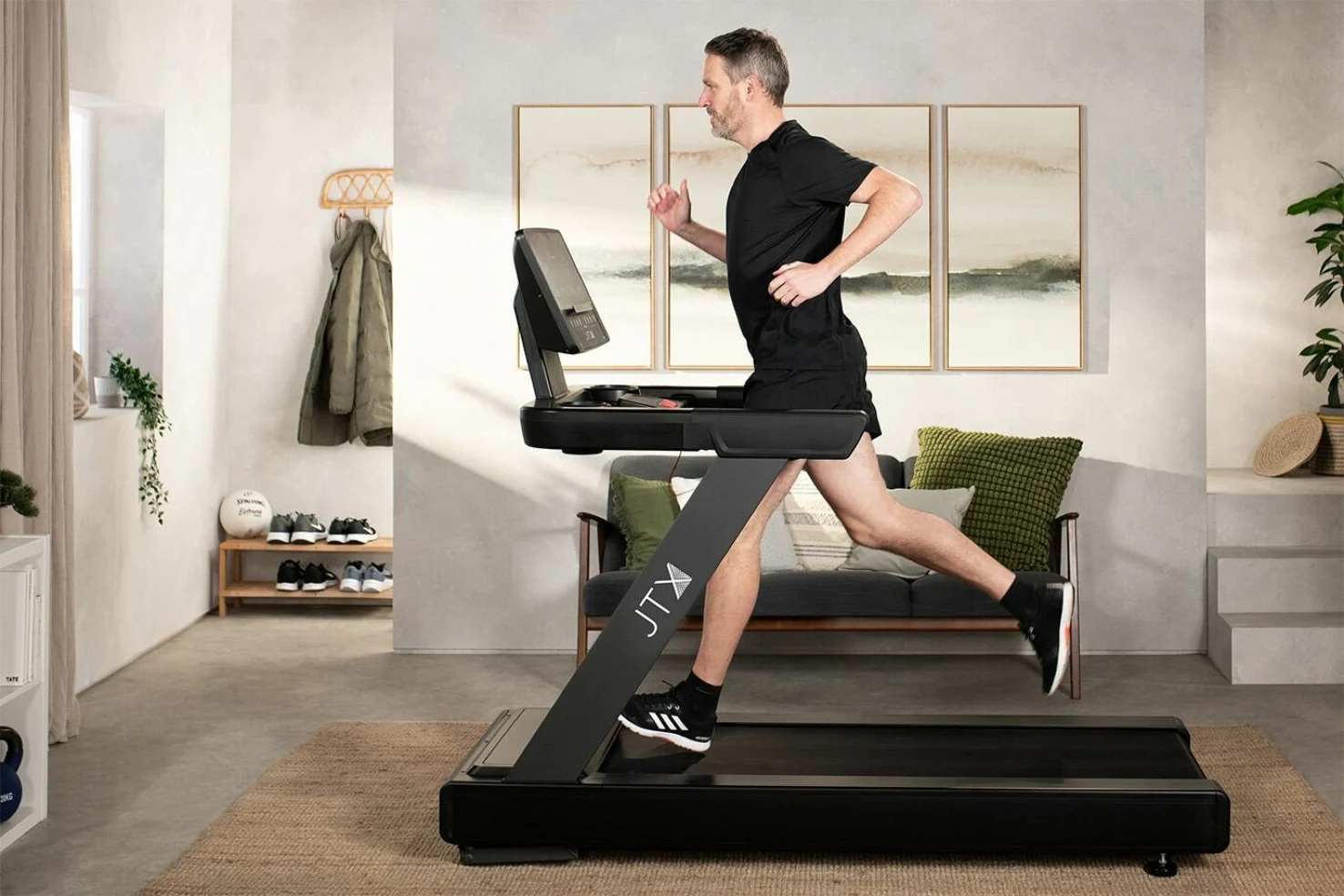
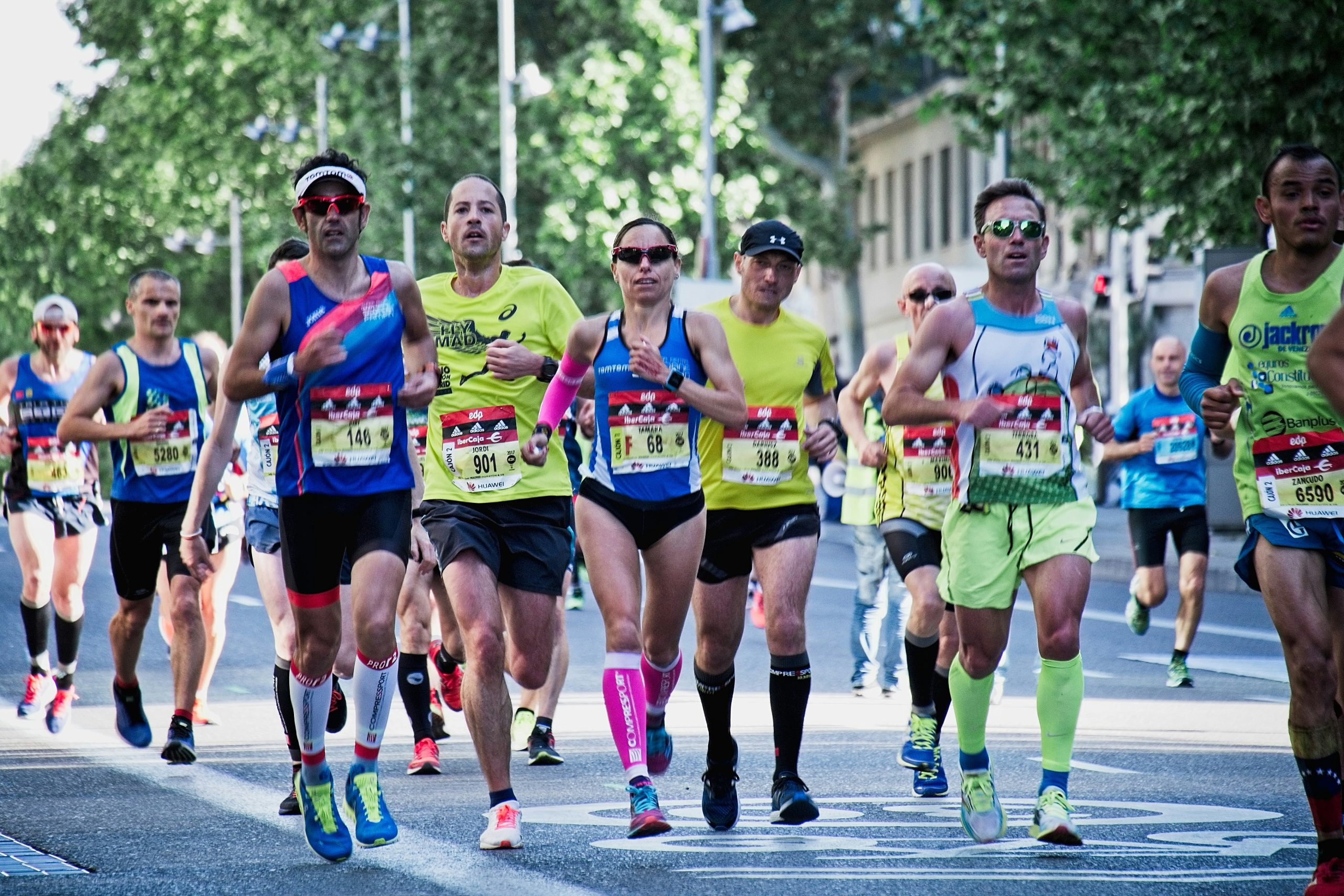
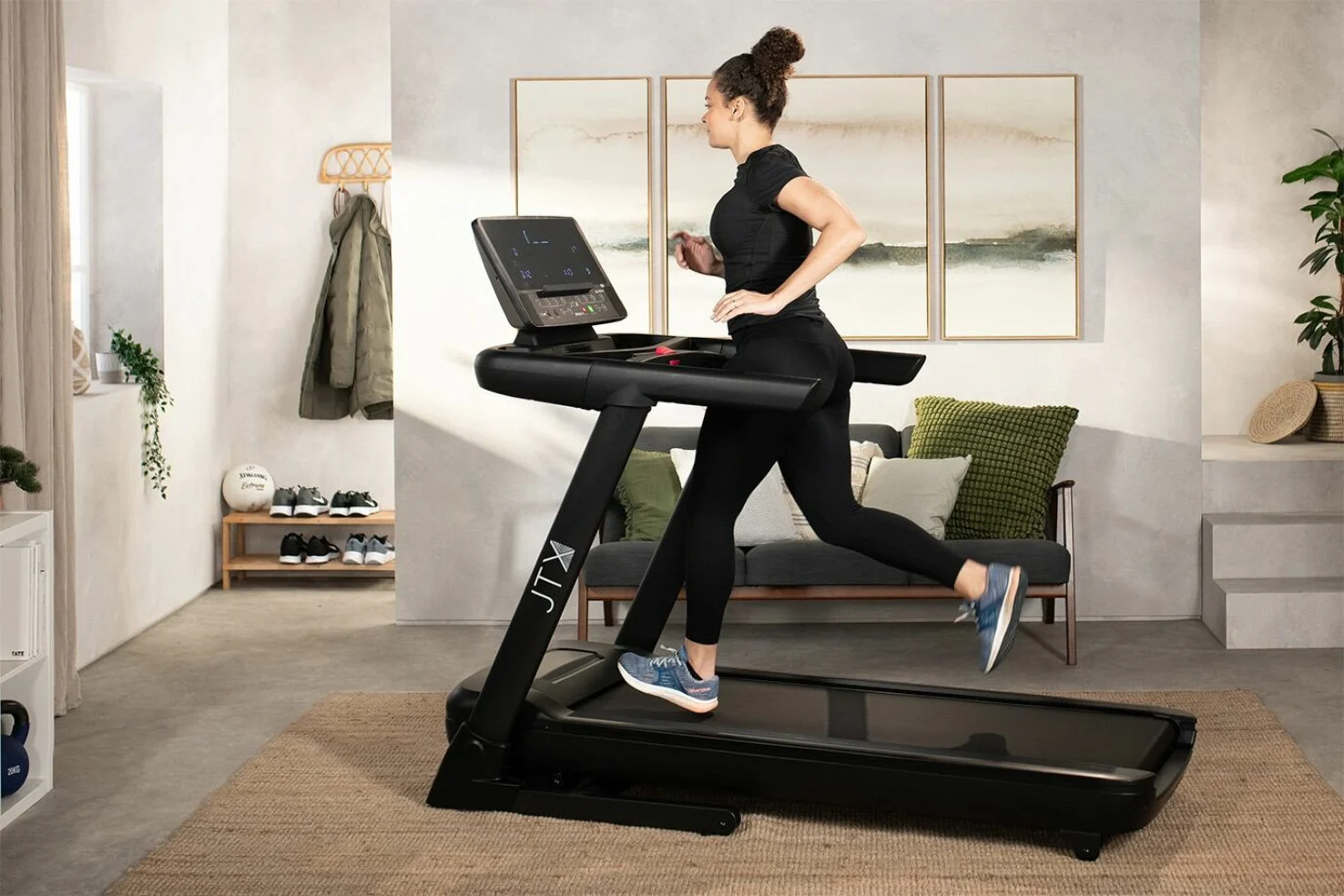
Why Treadmill Marathon Training Works
The fundamental adaptations your body needs for marathon running are cardiovascular endurance, muscular endurance, and the ability to sustain effort over time. A treadmill delivers all three. Your heart does not know whether you are running through a park or staring at a garage wall. It responds to sustained effort regardless of the surface beneath you.
Research has shown that physiological responses to treadmill and overground running are broadly comparable when pace and gradient are matched. Heart rate, oxygen consumption, and perceived effort are all similar. The training stimulus is real.
Treadmill training also offers some genuine advantages for marathon preparation. You can control your pace precisely, which matters enormously during long runs where the temptation is to go out too fast.
You can run in any weather, at any time of day, without worrying about route planning, traffic, or personal safety. And you can simulate specific race conditions, including elevation profiles, by programming incline changes into your session.
The 1% Incline Rule
This comes up in every treadmill training discussion, so let us address it properly.
A commonly cited 1996 study by Jones and Doust found that setting a treadmill to 1% gradient most accurately reflects the energy cost of outdoor running at speeds above about 7:00 per mile pace.
The reasoning is straightforward: outdoors, you push through air resistance. On a treadmill, the belt moves beneath you and there is no headwind. A slight incline compensates for this difference.
For most of your training runs, setting the treadmill to 1% is a sensible default. For easy and recovery runs at slower paces, 0% is fine. The difference at those speeds is negligible.
What You Need to Adjust
Treadmill marathon training is not simply a case of following an outdoor plan indoors without changes. There are a few things you need to account for.
Surface and terrain variety
Road running involves camber, gradient changes, different surfaces, and subtle lateral movements as you navigate corners and uneven paths. A treadmill belt is perfectly flat and perfectly consistent. This is great for your joints in the short term, but it means certain stabilising muscles get less work than they would outdoors.
The fix is straightforward. Vary your incline throughout your runs rather than leaving it fixed. Even small changes between 0.5% and 3% throughout a session introduce enough variation to engage those stabilising muscles. Hill repeat sessions on the treadmill are excellent for this, and most treadmills with powered incline make programming intervals easy.
Pacing and effort perception
Running at 8:00 per mile on a treadmill can feel harder than it does outside, particularly during longer sessions. This is partly psychological (the monotony factor) and partly because you lack the natural pacing cues that come from running a familiar route. Without landmarks and terrain changes, your brain has fewer reference points for effort.
Use our treadmill speed calculator to convert your target race pace into the correct treadmill speed setting. Knowing exactly what speed corresponds to your goal marathon pace removes guesswork and keeps your training honest.
Heat management
This one catches people out. Running indoors generates significant heat with no natural airflow to cool you down. Without proper ventilation, your core temperature rises faster than it would outside, your heart rate climbs, and your perceived effort increases. A session that should feel easy starts feeling moderate. A tempo run starts feeling like a threshold effort.
Position a fan directly in front of the treadmill, keep the room cool, and hydrate more than you think you need to. If your garage or spare room turns into a sauna during long runs, the quality of the session suffers regardless of what pace you are holding.
Mental endurance
The biggest challenge of treadmill marathon training is not physical. It is mental. A 20-mile long run on a treadmill is a different kind of hard compared to the same distance outdoors. There is no scenery change, no downhill sections where you can switch off, no social element of running with a club or passing other runners.
Experienced treadmill marathon trainers use a few strategies to manage this. Breaking long runs into segments (for example, four blocks of five miles with a brief pause to stretch and drink) makes the distance feel more manageable. Podcasts, audiobooks, and music help. Some runners follow virtual routes through apps like Zwift or Kinomap, which add visual engagement. Others simply learn to sit with the boredom, which, arguably, is useful mental training for the later miles of a marathon anyway.
Can You Train for a Half Marathon on a Treadmill?
If anything, treadmill training is even better suited to half marathon preparation. The longest runs in a half marathon plan rarely exceed 10 to 12 miles, which is a much more manageable duration indoors than the 18 to 22 mile long runs required for a full marathon.
Every principle above applies equally to half marathon training. Set the incline to 1% for the majority of your runs, vary the gradient to simulate real terrain, manage heat and hydration, and use the treadmill’s precise pacing to nail your goal race speed.
Many half marathon runners actually prefer treadmill training for tempo and interval sessions because the controlled environment makes it easier to hit exact splits. There is no traffic, no junctions to wait at, and no wind to disrupt your rhythm. You set the pace and the treadmill holds you to it.
A Sample Treadmill Marathon Training Week
This is what a typical week might look like during the middle block of a 16-week marathon plan, adapted for treadmill use. Paces are illustrative and should be adjusted to your own fitness level.
Monday: Rest or easy 30-minute walk
Tuesday: 7 miles easy at 1% incline. Conversational pace. This is your bread-and-butter aerobic run.
Wednesday: Interval session. 2-mile warm-up, then 6 x 800m at 10K pace with 400m jog recovery between each. 1-mile cool-down. Use the speed buttons to switch between intervals rather than gradually building up.
Thursday: 5 miles easy at 1% incline. Keep this genuinely easy. If in doubt, slow down.
Friday: Rest
Saturday: Long run. 16 miles at marathon pace or slightly slower. Vary the incline between 0.5% and 2.5% every two miles to simulate road undulation. Take a 60-second pause at miles 8 and 12 to drink and reset mentally.
Sunday: 4 miles recovery jog at 0% incline, or cross-training (cycling, swimming, rowing).
Total weekly mileage: approximately 39 miles. Adjust up or down depending on where you are in the plan and your experience level.
What Treadmill Specs Do You Need for Marathon Training?
Not every treadmill is suitable for sustained high-mileage training. If you are putting in 30 to 50 miles a week over 16 weeks, the machine needs to handle it. Here is what to look for.
Motor: At least 2.5 CHP (continuous horsepower), ideally 3.0 CHP or above. A stronger motor runs cooler and more quietly over long sessions. Weaker motors strain at sustained speeds and wear out faster under marathon training loads.
Deck size: Minimum 140 cm long for easy runs, but 150 cm or longer is strongly recommended for faster-paced sessions. When you are running at tempo or interval pace for extended periods, a short deck creates anxiety about clipping the back edge. Width of at least 46 cm, ideally 51 cm.
Speed range: You need at least 12 mph (19 km/h) to cover interval training at 10K pace for most runners. If your top speed is only 10 mph, you will run out of headroom for faster sessions.
Incline: Powered incline of at least 10%, ideally 12% or more. You will use 1 to 3% for the majority of training, but having the range for hill repeats is important.
Cushioning: Named cushioning systems (SelectFlex, Floatride+, ProShox, Air Motion) matter more for marathon training than for casual use. You are putting serious mileage through the deck week after week, and proper shock absorption protects your joints over the full training cycle.
If you are looking for a treadmill that ticks all of these boxes without spending a fortune, our guide to the best treadmills under £1,000 covers the strongest options currently available in the UK.
The Transition to Race Day
This is the part that catches treadmill-trained runners off guard if they do not plan for it.
Running a marathon on the road after training predominantly indoors is a different sensory experience. The surface is harder. The terrain varies. There is wind, camber, and the unpredictability of running in a crowd. None of these things are insurmountable, but they can feel jarring if your legs have only known a cushioned belt for four months.
The standard advice is to do your final three to four weeks of training with at least some outdoor running mixed in. Even one or two road runs per week during the taper period helps your body readjust to the impact and variability of real terrain. Your long runs can stay on the treadmill throughout the plan, but getting outside for a few easy and moderate runs towards the end makes race day feel less like a shock.
Pay particular attention to your shoes. Treadmill running is forgiving on footwear because the belt surface is consistent and cushioned. Road surfaces are not. Make sure your race day shoes have adequate mileage on them before the event so there are no surprises.
Frequently Asked Questions
Is treadmill running easier than outdoor running?
Biomechanically, slightly. The moving belt assists leg turnover and there is no air resistance. Setting the treadmill to 1% gradient compensates for this and makes the effort broadly equivalent to outdoor running.
Can I do my entire marathon training plan on a treadmill?
You can, and people do. Ideally, mix in some outdoor runs during the final few weeks before race day to readjust to road surfaces and conditions. But if that is not possible, treadmill-only training still works.
How do I stop long treadmill runs from being boring?
Break them into segments with brief pauses. Use podcasts, audiobooks, or music. Try virtual running apps like Zwift or Kinomap. Vary the incline to simulate a real route. Some runners find that the mental discipline of treadmill long runs actually helps them cope better with the tough final miles of a marathon.
What speed should I set for marathon pace?
This depends on your target finish time. Use our treadmill speed calculator to convert your goal marathon pace into the correct treadmill speed. For example, a 4-hour marathon requires a pace of roughly 9:09 per mile, which is approximately 6.6 mph on the treadmill.
Do I need a specific treadmill for marathon training?
You need a treadmill with at least a 2.5 CHP motor, a deck length of 140 cm or longer, powered incline, and a top speed of at least 12 mph. Budget walking treadmills and under-desk walking pads are not suitable for sustained running at marathon training volumes.
Can I train for a half marathon on a treadmill?
Absolutely. Half marathon training involves shorter long runs (typically 10 to 12 miles maximum), which are very manageable on a treadmill. The same principles of incline adjustment, pacing, and heat management apply.