
The 12-3-30 workout has taken social media by storm, and for good reason. It is one of the simplest treadmill routines you can do, it requires zero running, and the science behind it is genuinely solid. If you have been scrolling past 12-3-30 videos on TikTok and wondering what all the fuss is about, this guide breaks down exactly what it is, how to do it properly, and whether it actually delivers results.
What Is the 12-3-30 Workout?
The 12-3-30 method is a treadmill workout created by American content creator Lauren Giraldo back in 2019. The concept is straightforward: set your treadmill to a 12% incline, walk at 3 miles per hour, and keep going for 30 minutes. That is where the name comes from, in case you had not guessed.
Giraldo shared the routine on social media claiming it helped her lose 30 pounds, and the video has since racked up over 14 million views. What started as one person’s gym habit has become one of the most popular treadmill workouts in the world, and it shows no signs of slowing down.
The appeal is obvious. There is no complicated programming, no intervals to remember, and no running whatsoever. You set the machine, start walking, and that is your session done. For anyone who finds the treadmill monotonous or dreads the idea of running, the 12-3-30 offers a genuinely challenging cardio workout without the impact. It is also slow enough to do comfortably while you watch a show, or even work through if you have an under-desk treadmill with incline.
The 12-3-30 in Kilometres: UK Settings
If you are attempting the 12-3-30 in the UK, most gym treadmills and many home treadmills display speed in kilometres per hour rather than miles per hour, as we are closer to the European market than the US. Do not despair though: 3 mph equals 4.8 km/h.
So the UK version of the workout is 12% incline, 4.8 km/h, 30 minutes. It does not roll off the tongue as nicely as 12-3-30, but unless you have set your treadmill to show miles, that is how it will look. Some people round this to 5 km/h for simplicity, which bumps the intensity up slightly but keeps you in the same ballpark. Either setting works perfectly well. For an exact conversion between km/h and mph, plus effort and intensity levels, use our treadmill speed calculator.
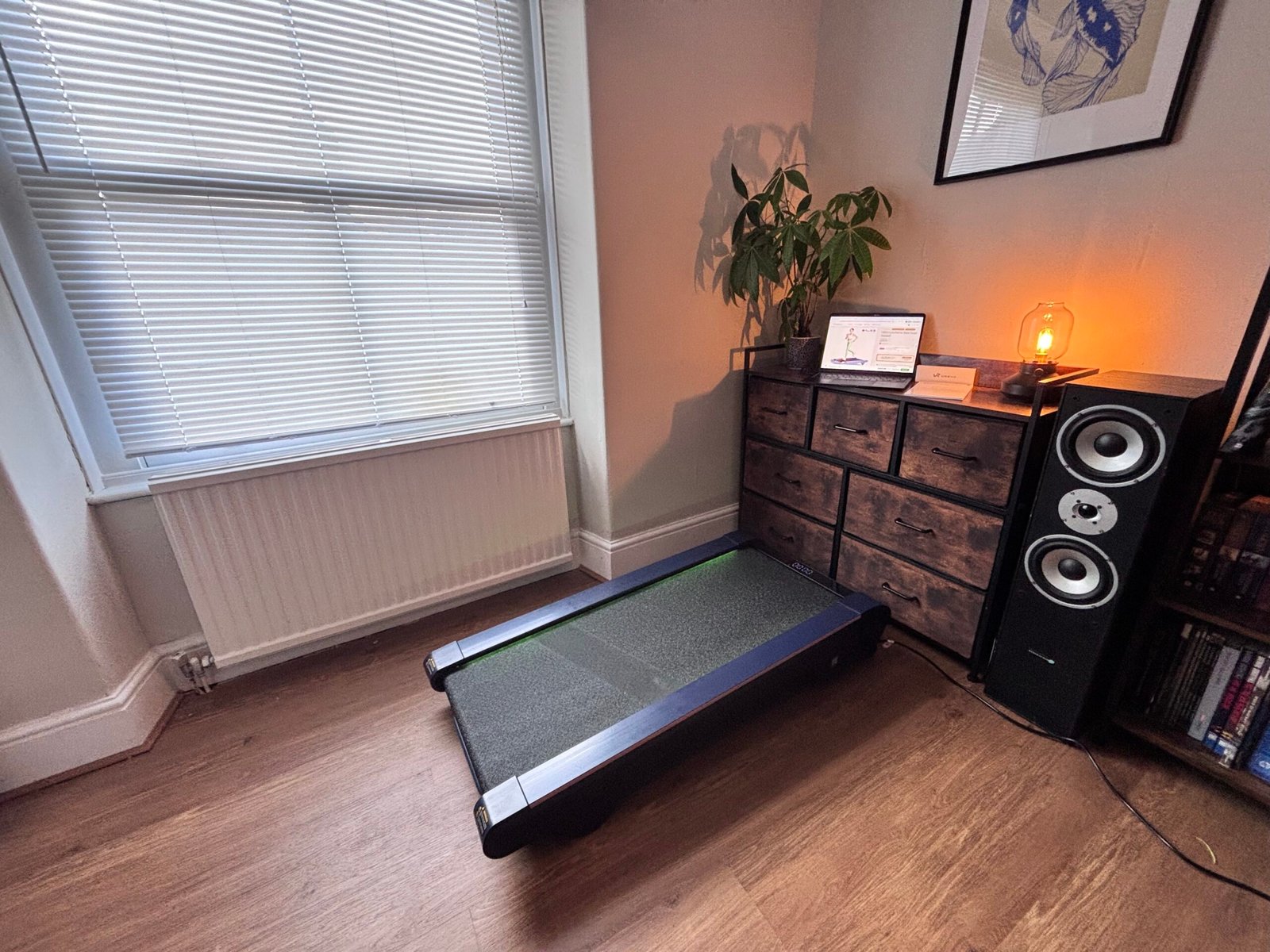
As for the incline, a 12% grade is the same regardless of whether your treadmill uses metric or imperial units. Just dial in 12 and you are sorted. One thing worth noting: not every treadmill reaches 12% incline. Many budget models and walking pads top out around 5% to 8%. If your machine does not reach 12%, go as high as it allows and increase the speed slightly to compensate. A 10% incline at 3.42 mph (5.5 km/h) gives a similar level of effort. If you are set on the exact parameters, see our home treadmills with incline.
How to Do the 12-3-30, Step by Step
The beauty of this workout is its simplicity. Warm up, set the machine, hold good form for half an hour, then cool down. Here is the session at a glance.
The Session
Intermediate| Phase | Incline | Speed | Effort |
|---|---|---|---|
| Warm-up, 3-5 min | 2-3% | 2.5 mph (4 km/h) | Loosen calves and Achilles |
| Main set, 30 min | 12% | 3 mph (4.8 km/h) | Steady, working hard by minute 20 |
| Cool-down, 3-5 min | Flat | 2.2 mph (3.5 km/h) | Bring the heart rate down |
Form check
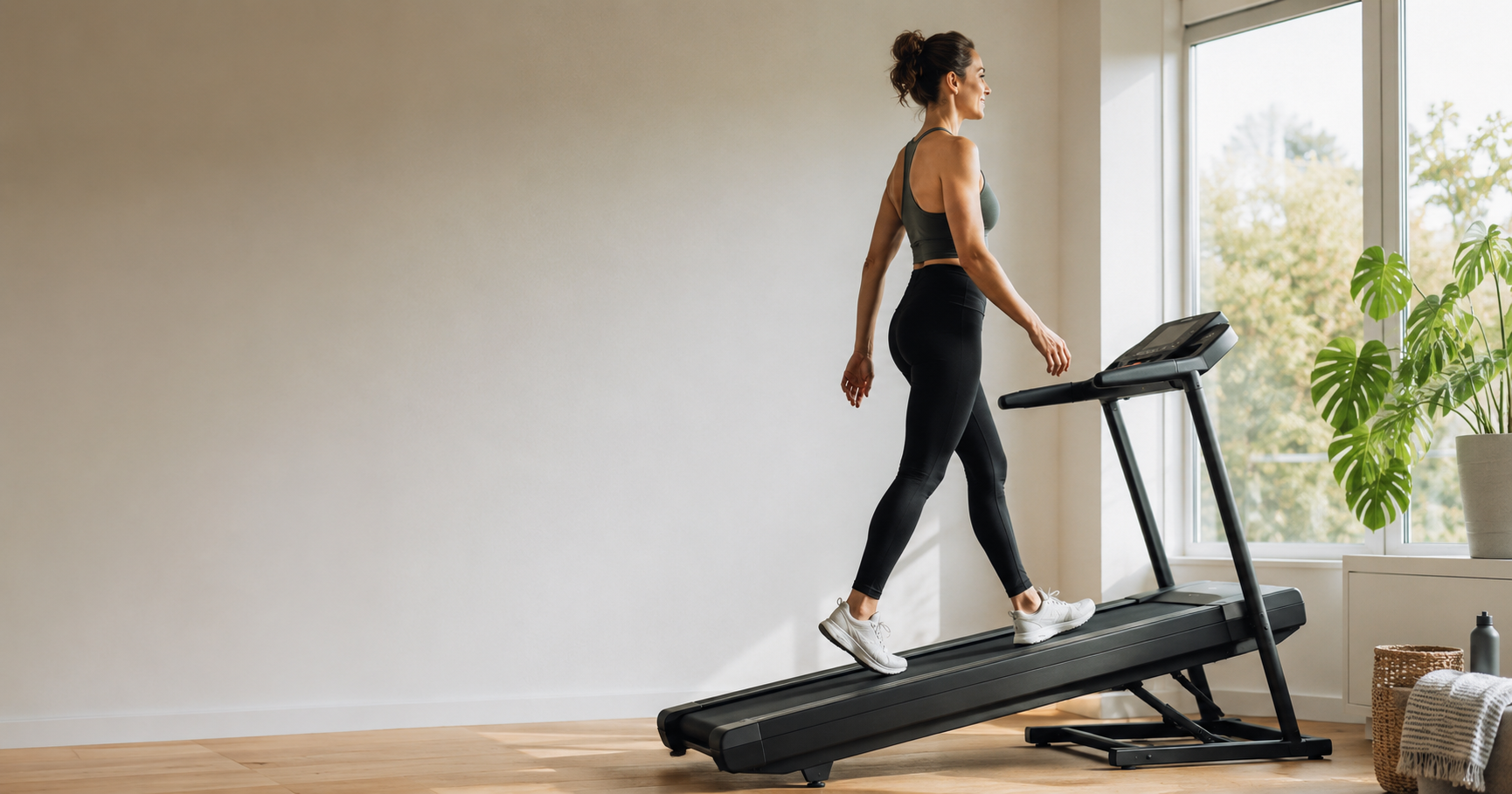
Stand upright rather than leaning forward into the incline, keep your core engaged, and resist the urge to grip the handrails. Holding on significantly reduces the workload and changes your natural gait. If you need support for balance, rest your fingertips lightly on the side rails rather than gripping with both hands.
What Does the 12-3-30 Actually Do to Your Body?
Walking on a steep incline is not the same as strolling through the park. Here is what happens physiologically when you do the 12-3-30.
Cardiovascular fitness
Walking at a 12% incline lifts your heart rate into the moderate-intensity zone for most people. The NHS recommends adults get at least 150 minutes of moderate-intensity activity a week, and doing the 12-3-30 five times a week hits exactly that. Even three sessions delivers 90 minutes, a meaningful contribution to your heart health. The British Heart Foundation notes that regular brisk walking lowers the risk of heart and circulatory disease, with as little as 11 minutes a day of moderate activity enough to reduce the risk of an early death.
Lower body strength
A steep incline forces your glutes, hamstrings, calves and quadriceps to work far harder than flat walking. You are essentially walking uphill for half an hour, which builds muscular endurance in the posterior chain over time. Think of it as somewhere between a flat walk and a weighted lunge, repeated for thousands of steps. Research in the journal Gait and Posture has shown incline walking increases lower-limb muscle activation compared with level walking, particularly the quadriceps and hamstrings.
Calorie burn
This is the question everyone asks. The honest answer is that it depends on your body weight, age, fitness and metabolism, but as a rough guide most people burn between 150 and 300 calories in a 30-minute session. Incline walking burns substantially more than flat walking at the same speed: one study found a 10% grade increased calorie expenditure by around 113% compared with flat walking at a similar pace.
| Per session | 12-3-30 | Self-paced running |
|---|---|---|
| Calorie burn rate | ~10 kcal/min | ~13 kcal/min |
| Energy from fat | ~41% | ~33% |
| Joint impact | Low | High |
Figures from a peer-reviewed comparison in the Journal of Exercise Science and Fitness. Running is quicker for raw calorie burn, but the 12-3-30 uses a greater proportion of fat as fuel.
Joint-friendly cardio
One of the biggest advantages of the 12-3-30 over running is reduced impact. Walking, even on a steep incline, puts far less stress on the knees, ankles and hips than running. A 2014 study in Gait and Posture found walking at a steep incline actually lowered peak knee joint loading compared with level walking. For anyone with joint issues, recovering from injury, or simply wanting cardio that will not leave them hobbling the next morning, that matters. It also makes a solid foundation if you want to build toward running later, much like how Couch to 5K ramps up demand gradually.
Mental health
The mental health benefits of regular walking are well documented. The NHS notes walking can reduce stress, improve mood and support better sleep. The 12-3-30 fits neatly into this, offering a structured 30-minute session that many people find meditative once they settle into a rhythm. Put on a podcast, queue up a playlist, and the half hour flies by.
12-3-30 Results: What to Expect
Let us be realistic about what the 12-3-30 can and cannot do.
| Timeframe | What to expect |
|---|---|
| First 2 weeks | Feels genuinely hard if you are not already active. Calves and glutes will be sore, and you may not manage the full 30 minutes at 12% straight away. Start lower and build up. |
| After a month | Improved stamina. Sessions that had you reaching for the handrails feel manageable, your legs feel stronger, and daily energy tends to improve. |
| After 3 months | With three to five sessions a week, most people report changes in body composition, better cardiovascular fitness, and improved endurance in other activities. |
As for weight loss specifically, the 12-3-30 alone is unlikely to produce dramatic results without dietary changes. Losing weight on a treadmill comes down to sustaining a calorie deficit over time. The 12-3-30 contributes to that deficit, but what you eat matters just as much, if not more. It is one piece of the puzzle, not a magic solution.
Who Is the 12-3-30 Best Suited For?
The 12-3-30 is not for everyone, but it suits a wide range of people:
- Beginners who want a structured routine that does not involve running. There is nothing to overthink, you just turn up and walk.
- People who dislike running but still want genuine cardiovascular benefits.
- People with joint concerns who need a lower-impact alternative to running or HIIT.
- Experienced exercisers wanting an active recovery day or a change of pace alongside their resistance training.
That said, if you are already very fit with a low resting heart rate, the 12-3-30 might not push you hard enough to count as moderate-intensity cardio. In that case, increase the speed, the incline, or both. A 15% incline at 5.5 km/h is a different beast entirely.
Common mistakes to avoid
- Holding the handrails. By far the most common error. Gripping the rails takes load off your legs and core, turning a challenging incline walk into something much easier. If you cannot walk at 12% hands-free, drop the incline until you can and build up.
- Skipping the warm-up. Walking straight onto 12% from standing invites tight calves and sore Achilles. Warm up on a flat or gentle incline first.
- Doing it every single day. Muscles need recovery. Three to five sessions a week with rest days is more sustainable and effective than seven days straight.
- Leaning forward excessively. Hunching at the waist shifts effort away from your glutes and strains the lower back. Stand tall, chest open, and let your legs do the work.
- Expecting overnight transformations. Real results come from weeks and months of consistency. If weight management is the goal, your diet matters just as much.
How Many Steps Is the 12-3-30?
At 4.8 km/h (3 mph) for 30 minutes you cover roughly 2.4 kilometres, or about 1.5 miles. In step terms, most people rack up between 3,000 and 4,000 steps per session, depending on stride length. The British Heart Foundation points to research showing that as few as 3,867 steps a day reduces the risk of dying from any cause, with every extra 1,000 steps linked to a further 15% reduction. A single 12-3-30 session essentially gets you to that baseline in half an hour, before any other walking you do that day.
How Often Should You Do the 12-3-30?
The creator suggests five times a week, which conveniently hits the NHS-recommended 150 minutes of moderate activity. But that is a target to work towards, not a starting point. If you are new to exercise, begin with two or three sessions a week and see how your body responds, paying attention to any soreness in your calves, Achilles or lower back. Increase frequency gradually once you are confident you are recovering well. For more experienced exercisers, the 12-3-30 works well as one part of a broader programme: use it on your cardio days and add strength training on at least two other days, as the NHS recommends.
Do you need a specific treadmill?
You need a treadmill that reaches a 12% incline and holds at least 4.8 km/h. Most mid-range and higher-end machines manage this easily.
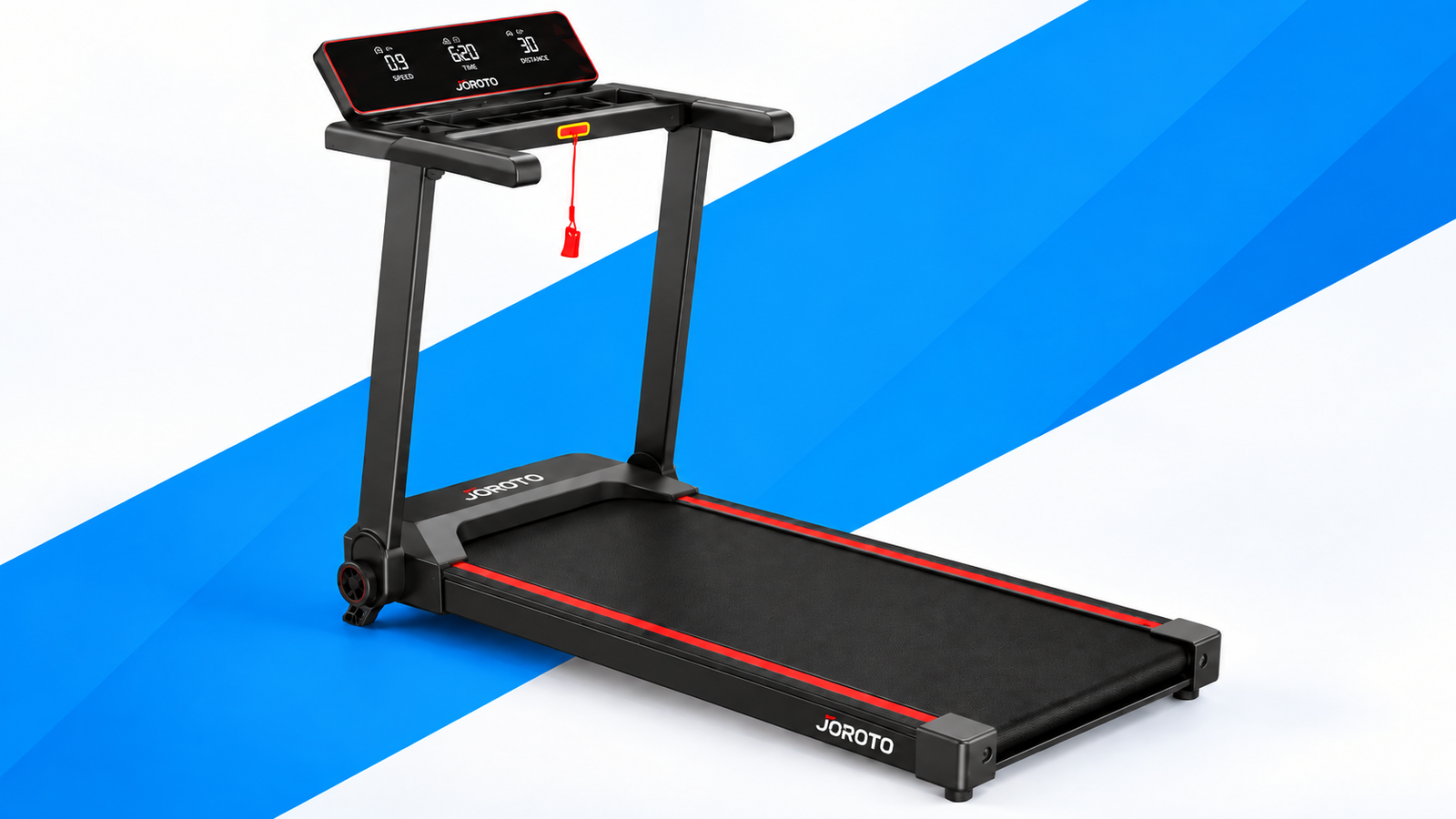
- Folding treadmills in the £400 to £800 range often offer inclines up to 12% or 15% and suit this workout well. See our best treadmills with incline guide.
- Walking pads and basic budget treadmills usually have limited or no incline. If the 12-3-30 is why you are buying, confirm the model hits 12% before you commit.
- Already have a flat pad? You can still get a strong walking session in. Our walking pad workout guide uses speed intervals to make up for the missing incline.
Not sure a pad can run fast or long enough for you? Our can you run on a walking pad guide covers the limits.
Modifications and Progressions
The 12-3-30 does not have to stay static. Adjust it to your fitness level:
| Situation | How to adjust |
|---|---|
| 12% is too hard right now | Start at 6% to 8% incline at the same speed, then add 1% each week until you reach 12%. You still get a solid workout at lower inclines. |
| It is becoming too easy | Raise the incline to 14% or 15%, lift the speed to 5.5 or 6 km/h, or extend to 40 to 45 minutes. You can also alternate 12% and 15% every five minutes. |
| You want variety | Alternate the 12-3-30 with flat interval sessions on other days. Mixing it up prevents boredom and reduces overuse injuries. |
Frequently Asked Questions
Is the 12-3-30 workout effective for weight loss?
It can contribute to weight loss as part of a calorie deficit, but it is not a guaranteed fat-loss solution on its own. The workout burns roughly 150 to 300 calories per session depending on your body weight. Combined with sensible eating, consistent sessions can absolutely support gradual, sustainable weight loss. The workout alone, with no dietary changes, is unlikely to produce dramatic results.
Does the 12-3-30 work for building muscle?
It will build some muscular endurance in the glutes, hamstrings and calves over time, especially if you are new to exercise. However, it is not a substitute for dedicated resistance training. Think of it as a lower body endurance workout with cardiovascular benefits rather than a muscle-building programme.
Is the 12-3-30 bad for your knees?
For most people, no. Walking on an incline is lower impact than running, and some research suggests it actually reduces peak knee loading compared with flat walking. If you have existing knee issues, start at a lower incline and build up gradually. If you feel pain, stop and consult a physiotherapist before continuing.
Can I do the 12-3-30 every day?
It is not recommended, especially when starting out. Your calves, Achilles tendons and lower back need time to recover from sustained incline work. Three to five sessions a week with rest days in between is more sensible. Doing it daily raises your risk of overuse injuries.
What is the 12-3-30 equivalent if my treadmill does not reach 12%?
If your treadmill maxes out at 10%, raise the speed to around 5.5 km/h to compensate. The goal is to hold a heart rate in the moderate-intensity zone, where you can talk but would struggle to sing. Adjust the settings until you find that sweet spot on your machine.
How does the 12-3-30 compare to running?
Running burns more calories per minute but is higher impact. The 12-3-30 burns a higher proportion of fat as fuel and is far gentler on the joints. For most people who are not training for a race, it offers an excellent balance of challenge and sustainability. If you enjoy it and stick with it, it will serve you better than a running programme you abandon after two weeks.
The Bottom Line
The 12-3-30 treadmill workout is not a fad. It is a simple, evidence-backed incline walking routine that delivers genuine cardiovascular and lower body benefits across a wide range of fitness levels. It is not magic, and it will not replace a comprehensive training programme, but as a standalone cardio session or part of a broader routine it is one of the most accessible and effective things you can do on a treadmill. Set the incline, set the speed, walk for half an hour. No gimmicks, no complicated programming, just consistent effort over time.
HomeTreadmill.co.uk is reader-supported. When you buy through links on our site, we may earn an affiliate commission at no extra cost to you. The information in this guide is general fitness guidance, not personalised medical or training advice. Consult a GP before starting a new exercise programme if you have existing health conditions.