Peloton Tread RunRank:
Commercial 2450 RunRank:
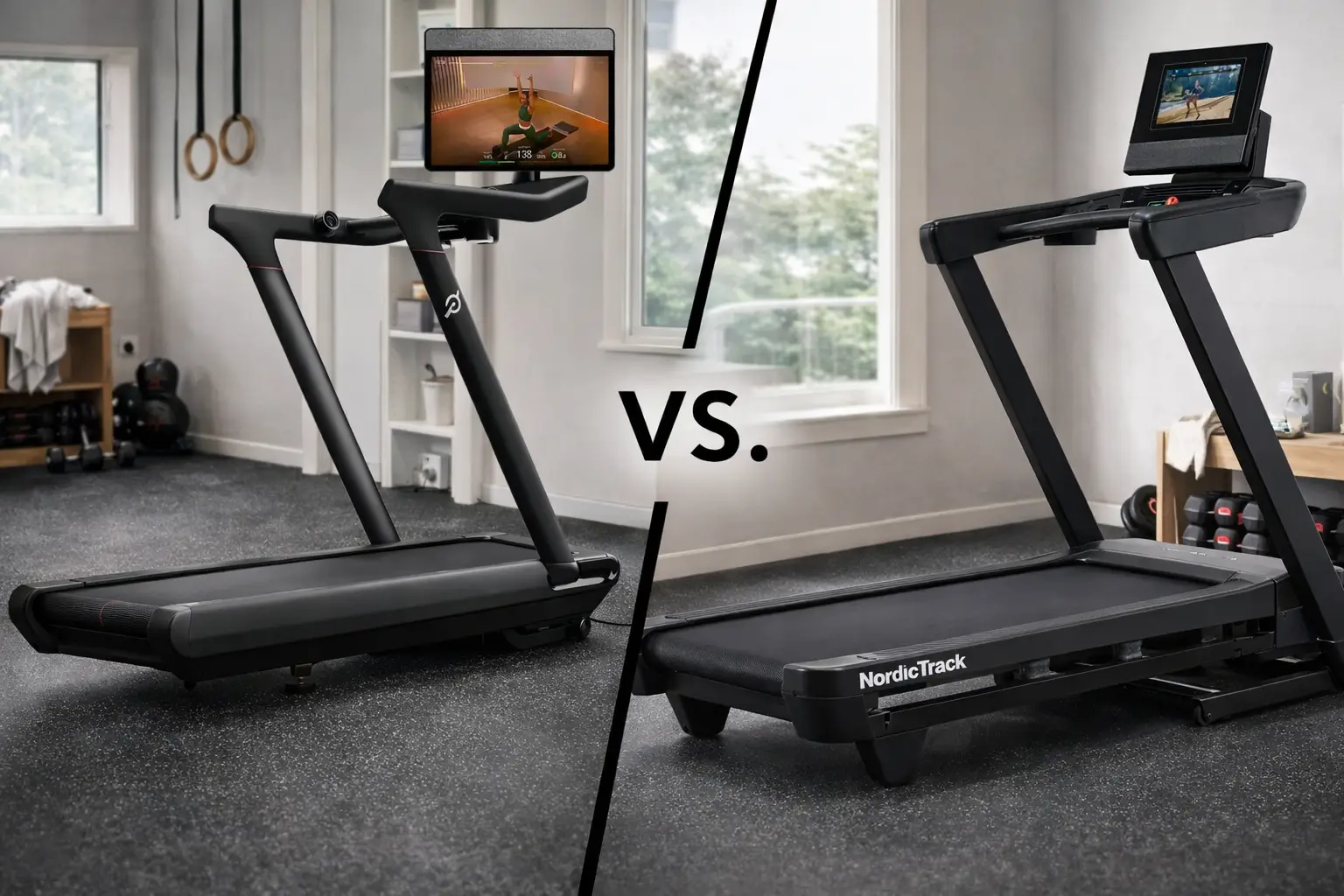
The Peloton Tread and the NordicTrack Commercial 2450 are two of the most talked-about premium treadmills you can buy in the UK.
They both cost over two grand, they both come with massive touchscreens and subscription-based training platforms, and they both promise a gym-quality experience in your spare room. But they are very different machines built around very different philosophies.
The Peloton Tread is a studio fitness machine. It is built for people who want energetic, music-driven, instructor-led classes beamed into their home. The NordicTrack 2450 is a true runner’s treadmill.
It is built for people who want raw performance, immersive outdoor training, and a machine that can handle serious mileage. One prioritises the workout experience. The other prioritises the hardware.
Here is how they stack up side by side, with UK pricing, metric specs, and an honest verdict on which one deserves the space in your home.
Quick Navigation
Quick Specs Comparison
| Feature | Peloton Cross Training Tread | NordicTrack Commercial 2450 |
|---|---|---|
| UK Price | £3,499 | £2,499 |
| Monthly Subscription | £45/month (Peloton All-Access) | ~£30/month (iFIT Pro) |
| Motor | 3.0 HP | 4.25 CHP |
| Max Speed | 12.4 mph (20 kph) | 13.7 mph (22 kph) |
| Incline Range | 0% to 12.5% | -3% to 12% |
| Running Surface | 150 x 50 cm | 152 x 55 cm |
| Screen | 21.5″ Full HD swivel | 24″ HD tilt & pivot |
| Dimensions | 173 x 84 x 157 cm | 196 x 94 x 161 cm |
| Weight | 130 kg | 146 kg |
| Max User Weight | 136 kg | 181 kg |
| Folding | No | Yes (SpaceSaver design) |
| Cushioning | Firm | Soft (RunFlex) |
| Fan | No | Yes (AutoBreeze) |
| Warranty | 12-month limited | 10-year frame & motor, 2-year parts |
| Delivery & Setup | Included | Available (additional fee) |
Price: A £1,000 Gap That Is Hard to Ignore
We normally dive straight into the performance stats, but the glaring difference between these two treadmills is the price, infotainment, and ongoing subscription costs.
The Peloton Cross Training Tread costs £3,499 in the UK. The NordicTrack Commercial 2450 costs £2,499. That is a £1,000 difference before you even factor in the ongoing subscription costs.
Peloton’s All-Access Membership is £45 per month. Without it, the Tread becomes a very expensive manual treadmill with a locked screen (not literally, but functionally it’s very limited without a subscription).
You can use the basic “Just Run” mode without a subscription, but that defeats the purpose of buying a Peloton in the first place. Over two years, that subscription adds £1,080 to your total cost of ownership, bringing the all-in price to roughly £4,579.
You’re right in thinking that the NordicTrack also needs subscription. The NordicTrack 2450 requires an iFIT Pro subscription to unlock its full feature set, including trainer-led workouts, automatic speed and incline adjustments, and the virtual outdoor routes.
Without iFIT, you can still use the treadmill in manual mode, and it works perfectly well as a standalone running machine with full speed and incline control on the touchscreen. That gives the 2450 more standalone value than the Peloton if you decide to cancel your subscription down the line.
A basic iFit subscription can be picked up through third-party resellers for around £134 for 12-months, significantly less than the Peloton subscription. And if you want the full iFIT Pro subscription, you’re looking at around £349 a year. It’s a significant cost, but less than the Peloton by around £300 over two years.
When you add up the hardware and two years of subscription costs, the NordicTrack 2450 comes in at roughly £1,400 less than the Peloton Tread. For that money, you could buy a decent set of dumbbells, a treadmill mat, and still have change left over.
Motor and Speed: The 2450 Has More Power
The NordicTrack 2450 runs a 4.25 CHP motor with a top speed of 13.7 mph. The Peloton Tread has a 3.0 HP motor that maxes out at 12.4 mph. Both are responsive and smooth, but the 2450 has noticeably more headroom for faster runners.
That 1.3 mph difference at the top end matters more than you might think. A 12.4 mph top speed translates to roughly a 4:50 per mile pace, which is fast, but the 2450 pushes that to a 4:22 per mile pace (you can use our treadmill speed calculator for more information).
If you are training for anything faster than a 20-minute 5K and want to do speed intervals, the NordicTrack gives you more room to work with.
For the majority of home runners, both treadmills are fast enough. You will not outrun either of them during normal training. But for the price Peloton is asking, a 3.0 HP motor honestly feels underpowered compared to what the NordicTrack offers. At this price bracket, 4.0+ CHP should be the baseline. This is reflected heavily in our RunRank scoring of these two treadmills.
Running Surface: Width Matters More Than You Think
The NordicTrack 2450 has a 152 x 55 cm running deck. The Peloton Tread offers 150 x 50 cm. Both are generous, but the 2450 is 5 cm wider and 2 cm longer.
That extra width is where the real difference lives. At 55 cm wide, the 2450 is noticeably more comfortable at pace than the Peloton’s 50 cm deck. When you are running at 10+ mph and fatigue sets in, your form loosens and your feet start to drift.
Those extra 5 cm give you a meaningful safety margin. The Peloton compensates for its slightly narrower belt with a clever open-front design that removes the motor hood, so you never feel like you are going to clip the front of the machine.
It is a nice design touch, but it does not change the fact that the actual running surface is smaller on the Peloton Tread.
On cushioning, these two treadmills take completely opposite approaches. The NordicTrack 2450’s RunFlex deck is soft and forgiving, designed to absorb impact and protect your joints during longer runs.
The Peloton Tread has a deliberately firm deck that mimics road running. Neither approach is wrong. If you are training for road races and want your treadmill to replicate outdoor conditions, the Peloton’s firm feel is actually a benefit. And their interactive and immersive training really helps simulate a road run.
If you want maximum joint protection or you are a heavier runner, the NordicTrack’s cushioned deck is the better choice.
Incline and Decline
The Peloton Tread inclines from 0% to 12.5% with no decline. The NordicTrack 2450 covers -3% decline to 12% inclie. The Peloton has a fractionally higher maximum incline, but the NordicTrack adds decline training that the Peloton lacks entirely.
Decline matters if you are training for hilly races or want to simulate real outdoor terrain. Running downhill uses different muscles and puts different demands on your body.
The NordicTrack’s iFIT platform uses the decline and incline range to automatically match real-world terrain during virtual outdoor workouts, which creates a genuinely immersive experience. The Peloton’s auto-incline follows instructor cues during classes, which works well but is limited to uphill adjustments only.
Both treadmills support automatic incline adjustments through their respective platforms. With the NordicTrack, iFIT controls both speed and incline to match the workout. With Peloton, auto-incline follows the instructor’s cues with a single tap, but you still adjust speed manually using the knobs.
Screen and Console
The NordicTrack 2450 has a 24-inch HD touchscreen that tilts and pivots. The Peloton Cross Training Tread has a 21.5-inch Full HD swivel screen that rotates a full 360 degrees. Both are large, bright, and responsive.
The Peloton’s screen is smaller but higher resolution, and reviews consistently praise its anti-glare coating. The NordicTrack’s larger screen is more immersive for virtual outdoor runs, especially when the camera is sweeping through mountain trails in Norway or coastal paths in New Zealand. Size matters for that kind of content.
Generally, feedback for the Peloton’s screen is better across real user reviews. This isn’t surprising given that it’s the key attraction of the Peloton fitness ecosystem, spanning their entire range of fitness machines.
The Peloton’s 360-degree swivel is the standout feature here. You can rotate the screen completely around to face the floor behind the treadmill, which makes it genuinely useful for off-treadmill workouts like strength sessions, yoga, and Pilates. The NordicTrack’s tilt and pivot function does the same job but with less range of motion.
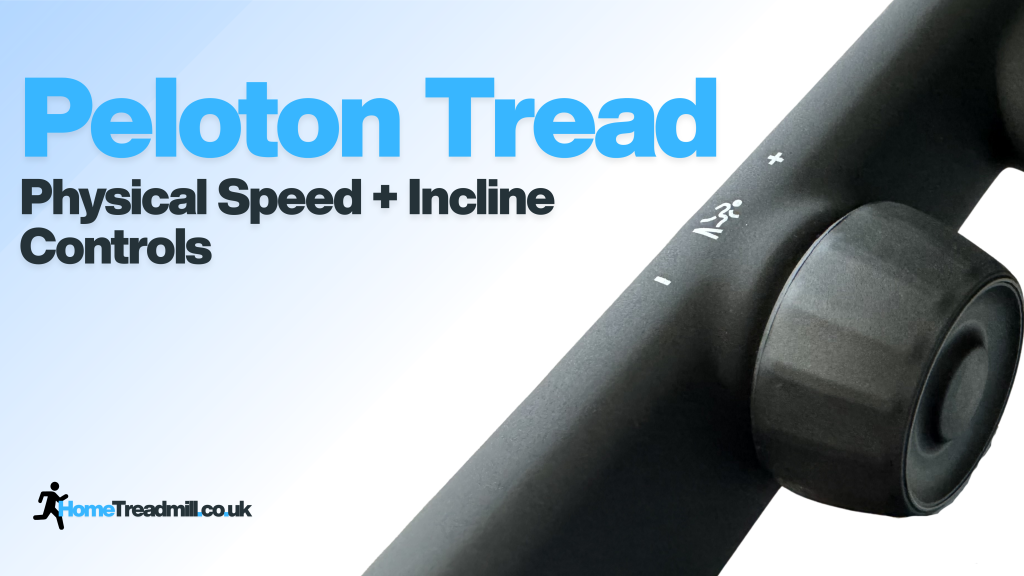
Both consoles are minimal. Peloton uses precision adjustment knobs mounted on the handlebars. You roll them to fine-tune speed and incline in small increments, or press them to jump to the next whole number. It feels intuitive once you get used to it, but it can be imprecise. You might overshoot your target speed during a fast interval, but overall this is a killer feature from Peloton and received high user praise.
The NordicTrack uses digital quick controls on the console with on-screen quick-adjust buttons for preset speeds and inclines. It is more precise but slightly less fluid.
Content: Peloton Classes vs iFIT Outdoor Training
This is where the comparison gets genuinely subjective, because these two platforms offer fundamentally different training experiences.
Peloton is built around studio classes. You pick an instructor, choose a class length and difficulty, and follow along as they guide you through intervals, tempo runs, endurance sessions, or HIIT workouts. The production quality is exceptional.
Peloton films in dedicated studios in New York and London, with professional lighting, curated playlists, and instructors who are genuinely engaging. The live leaderboard and high-five system add a social element that keeps people coming back. If you thrive on being coached and motivated by an energetic instructor, Peloton’s content is best in class.
Beyond the structured classes, Peloton offers Lanebreak (a gamified workout where you switch lanes by adjusting incline and speed to hit targets), scenic runs, and entertainment apps including Netflix, Disney+, and YouTube. You can also use “Just Run” mode for manual sessions with your own metrics on screen.
iFIT takes a completely different approach. Its signature content is virtual outdoor workouts filmed in locations around the world. You run through the streets of Paris, along coastal trails in Portugal, or up mountain passes in Colorado while an iFIT trainer coaches you through the workout.
The NordicTrack 2450 automatically adjusts the incline, decline, and speed to match the terrain on screen, creating a far more immersive experience than any studio class can offer. SmartAdjust learns your fitness level over time and personalises the intensity. ActivePulse uses heart rate data to automatically adjust the workout to keep you in your target zone.
iFIT also offers studio-style classes, strength workouts, yoga, and other content, but outdoor training is where it genuinely excels. If you find treadmill running monotonous and want to feel like you are actually going somewhere, iFIT delivers that better than any other platform. The NordicTrack 2450 also supports Netflix and Prime Video streaming directly on the touchscreen.
Build Quality and Practical Considerations
The NordicTrack Commercial 2450 is a folding treadmill. The Peloton Tread is not. If space is tight, that alone could decide the comparison. The Commercial 2450 uses a hydraulic-assisted SpaceSaver design that lifts the deck vertically. It is still a large machine when folded, but it frees up floor space when you are not using it.
On the other hand, the Peloton Tread’s 173 x 84 cm footprint is permanent. You need a dedicated space for it, full stop. That said, the Peloton is 16kg lighter at 130 kg compared to the Commercial 2450’s 146 kg, but neither treadmill is something you will be moving around regularly. Both need a permanent home.
There might not be much functional difference in the weight of the treadmills themselves, but weight capacity is a significant differentiator. The NordicTrack 2450 supports up to 181 kg (28.5 stone). The Peloton Tread maxes out at 136 kg (21.4 stone). If you are a heavier runner or multiple household members will be using the machine, the 2450 offers substantially more headroom.
Finally, NordicTrack 2450 has an AutoBreeze cooling fan built into the console. The Peloton Tread does not have a fan at all. This might seem like a minor detail, but after 30 minutes of hard running in a warm room, you will notice. Budget for a floor fan if you buy the Peloton.
Warranty: No Contest
The NordicTrack 2450 comes with a 10-year warranty on the frame and motor, two years on parts, and one year on labour. This is pretty standard across NordicTrack’s lineup and even applies to the much cheaper budget home treadmill, the NordicTrack T Series 5.
The Peloton Tread comes with just a 12-month limited warranty covering the touchscreen, frame, motor, belt, and most components.
For a £3,499 treadmill, Peloton’s warranty isn’t fantastic. A 10-year frame and motor warranty is standard at this price point. The fact that the NordicTrack offers substantially better long-term protection at a lower purchase price makes the Peloton’s warranty hard to defend.
Read more about the NordicTrack Commercial’s warranty and how to register it in our full review.
Delivery and Setup
Peloton includes delivery and professional setup with the purchase price. Their team will bring the Tread into your home, assemble it in your chosen room, and walk you through how to use it. The UK delivery estimate is currently 7 to 8 weeks.
NordicTrack delivers the 2450 in a box, and assembly is a two-person job that takes roughly 60 to 90 minutes.
Professional assembly is available for an additional fee if you purchase through Amazon, depending on your location. Given the weight and complexity, paying for professional installation is worth considering.
Using Without a Subscription
If you cancel your subscription or choose not to subscribe from day one, how do these treadmills perform as standalone machines?
The NordicTrack 2450 works well without iFIT. You get full manual mode with speed and incline control, and the 24-inch touchscreen displays your basic workout metrics. You lose the trainer-led content, automatic adjustments, and virtual outdoor routes, but the treadmill itself remains fully functional. The 4.25 CHP motor, 13.7 mph top speed, and cushioned deck do not require a subscription to use.
The Peloton Tread is more limited without a subscription. You can use the “Just Run” mode, which gives you basic speed and incline control with metrics on screen. But the 21.5-inch touchscreen feels underutilised without access to classes, and you lose all the social features, Lanebreak, entertainment apps, and structured training programmes.
At £3,499 for the hardware alone, that represents poor value without the subscription backing it up.
Our Verdict: Which Should You Buy?
The NordicTrack Commercial 2450 is the better treadmill for most UK buyers. It has a more powerful motor, a wider and longer running surface, a bigger screen, decline capability, a folding deck, a higher weight capacity, a built-in fan, a dramatically better warranty, and it costs £1,000 less than the Peloton Tread. On pure hardware specifications, the 2450 wins in almost every measurable category.
That said, the Peloton Tread earns its place if you are specifically buying into the Peloton ecosystem. If you have tried Peloton classes and you know the instructor-led, music-driven, leaderboard-fuelled experience is what motivates you to run, the Peloton Tread delivers that experience better than any other machine. The content production quality is unmatched, and the 360-degree swivel screen makes the Tread a genuine cross-training hub for strength, yoga, and Pilates alongside your running.
But here is the reality check. You can access Peloton’s app content on a tablet propped on any treadmill for a fraction of the subscription cost. You cannot retrofit a 4.25 CHP motor, a 55 cm wide running deck, or a 10-year warranty onto a Peloton Tread.
The NordicTrack 2450 gives you better hardware, better protection, and better value. For most people, that makes it the smarter buy.
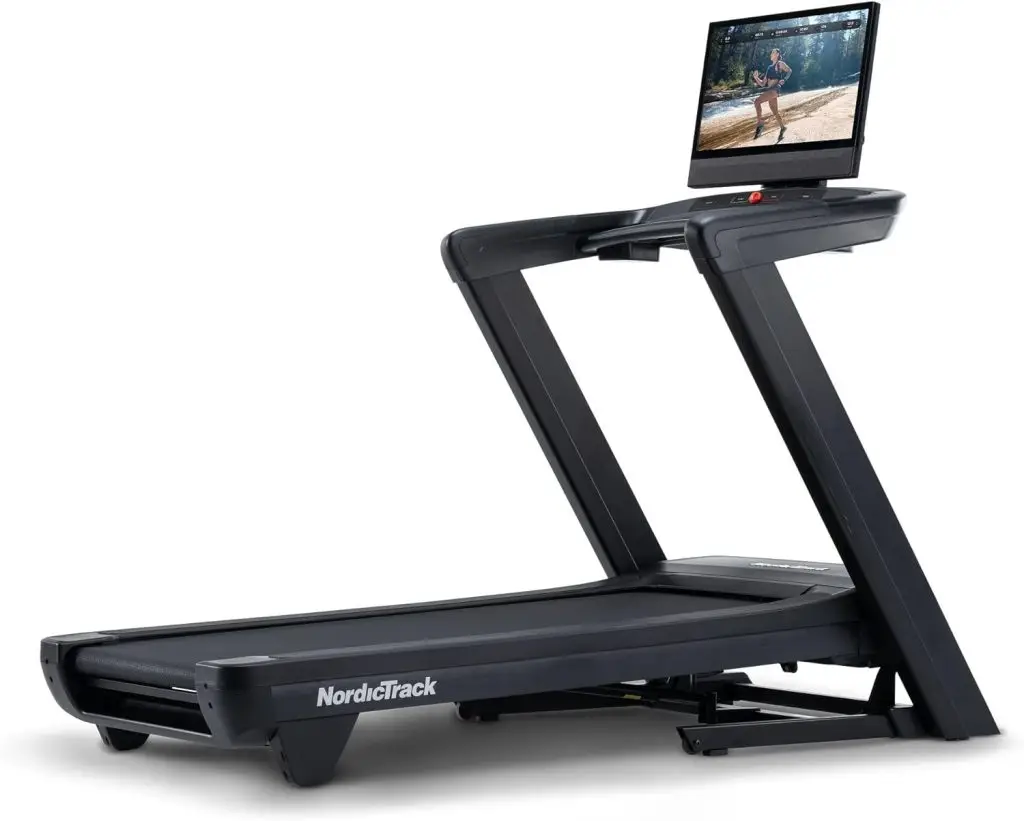
BEST PREMIUM UK TREADMILL – NordicTrack Commercial 2450
- 3.6 CHP motor with 13.5 mph top speed and -3% to 15% incline
- Massive 152 x 56 cm running deck, the widest on this list,
- 22-inch tilting HD touchscreen with iFit integration for guided runs,
- Built-in fans and premium speakers
- Adjustable Runners Flex cushioning switches
Buy the NordicTrack 2450 if:
- You want the most capable hardware for your money
- You are a serious runner who trains three or more times per week
- You love the idea of virtual outdoor routes and immersive terrain matching
- You want decline training for hill race preparation
- You need a folding treadmill
- You weigh over 136 kg or want a higher weight capacity for household sharing
- Long-term warranty protection matters to you
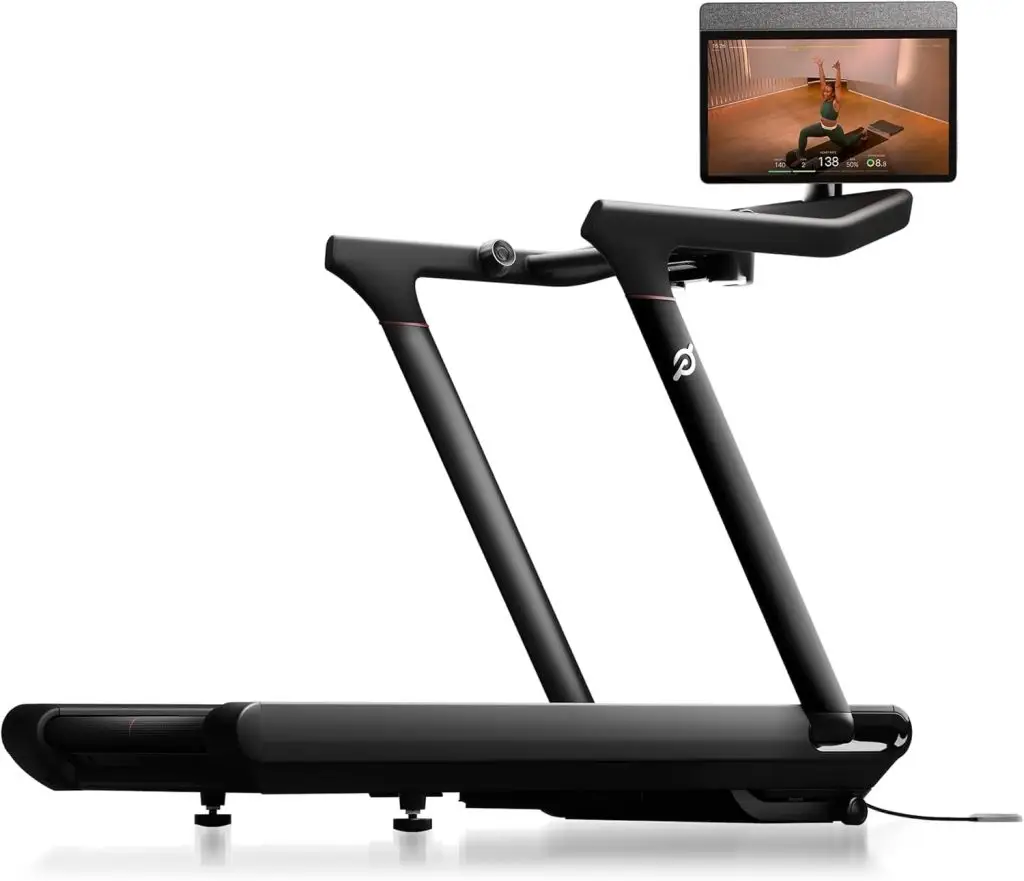
BEST GUIDED WORKOUTS – Peloton Tread
- 21.5″ Full HD swivel screen with 360° rotation for off-treadmill workouts
- 3.0 HP motor with a top speed of 12.4 mph
- Firm running deck with 150 x 50 cm belt and red centre stripe
- Precision knobs for speed and incline adjustment plus auto-incline
- Peloton studio classes, Lanebreak, and entertainment apps including Netflix and Disney+
Buy the Peloton Tread if:
- You are already invested in the Peloton ecosystem and love the class format
- Instructor-led, music-driven workouts are what get you on the treadmill
- You want a cross-training hub that pivots to floor-based workouts
- You prefer a firm, road-like running feel
- Professional delivery and setup is important to you
- You have the budget and value content experience over raw specs
Read our full NordicTrack Commercial 2450 review for a deeper look at the UK’s top-spec home treadmill. Or, if the Peloton Tread is more your thing, check out our in-depth review for UK buyers here.
Looking for something more affordable? Check our best home treadmill UK buying guide for options at every price point.
Affiliate Disclosure: This site contains affiliate links. If you purchase through these links, we may earn a commission at no additional cost to you.